Overweight in Dogs: How to Spot It and Slim Down Healthily
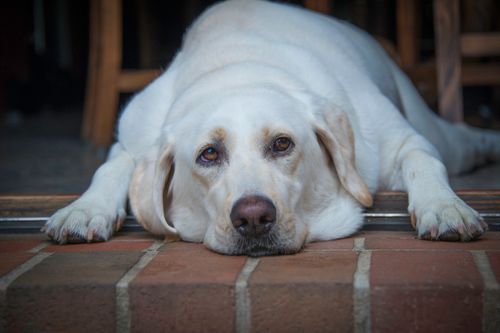
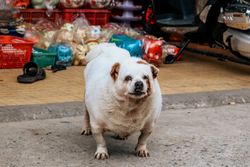
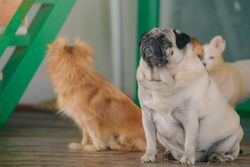
A few extra kilos creep up on a dog very quietly. You see your four-legged friend every day, the change happens slowly – and because a round dog is often seen as especially cosy and lovable, it can be hard to notice the problem at all. Experts estimate that around one in two dogs in our households weighs too much, and many owners do not perceive it as a problem at all. Yet being overweight is not a question of looks, but a real, serious health matter.
One thing matters to us up front: if your dog weighs too much, that is no reason for a guilty conscience. Almost always there is care behind it – the treat given out of love, the extra bowl because he looks at you so devotedly. That is exactly why we approach the topic calmly and without wagging a finger: how do you recognise whether your dog really is too heavy? And how do you help him find his way back to a comfortable weight healthily, slowly and without going hungry?
Why a Few Extra Kilos Should Be Taken Seriously
Excess weight puts a strain on the whole body – day after day. The joints feel it most clearly: every extra kilo bears down on hips, knees and elbows and encourages painful arthritis. Added to this are an increased risk of diabetes, a greater burden on the heart and circulation and laboured breathing, because the fat leaves the chest less room. During anaesthesia, too, an overly heavy dog is considered more delicate – the anaesthetic risk rises.
What that means in everyday life is quickly told: an overweight dog is less keen to move, tires more quickly and pants sooner – his quality of life suffers in the here and now. And it is about more than well-being: estimates suggest that a markedly overweight dog lives on average around two years less than a slim dog. Two years – that is a long, precious time.
That some dogs put on weight more easily than others is partly down to their genes: some breeds are naturally more prone to gaining weight and deserve a slightly closer eye on their food. That is not fate, but simply a reason to be attentive with these dogs from the outset.
Spotting It: The Body Check for Home
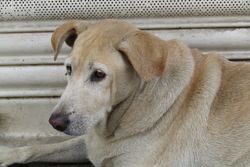
Whether your dog is at his ideal weight is something the scales only tell you to a limited extent – the eye and the hands are far more revealing. Vets use the Body Condition Score (BCS) for this, a scale that assesses the body by shape and fat cover (usually from 1 to 9, with the middle being ideal; some practices use a scale from 1 to 5). You can easily check the most important points yourself – less by numbers than by feel and appearance:
- The ribs: run a flat hand over the chest. You should be able to feel the individual ribs easily under a thin layer of fat, without pressing – roughly like feeling the bones on the back of your hand. If you first have to search and press firmly, there is too much fat over them.
- The waist from above: look down at your dog while he is standing. Behind the chest there should be a clear waist – the silhouette of an hourglass. If the line runs straight or bulges outwards, the dog is probably too heavy.
- The belly line from the side: seen from the side, the belly should noticeably tuck up towards the hind legs behind the chest. If it hangs level or sags, that points to excess weight.
If you do this little check now and then, you will quickly get a feel for how your dog should feel. If you are unsure how to interpret the result, your vet will gladly show you the technique.

The First Step Leads to the Vet
Before you cut the ration, there is an appointment at the vet – that is the most important first step. There it will be clarified whether your dog really is overweight, and together you will set a realistic target weight to guide you. Just as important: a medical cause must be ruled out. Not every weight gain comes from the bowl. An underactive thyroid, for example, can cause a dog to gain weight even though nothing has changed about the feeding. Especially when your dog has become heavier for no apparent reason, this needs to be checked. You will find a practice near you in our directory of vets.
Less on the Plate – With Measure and Sense
Once the target weight is set, it is time for the feeding – and this is where most unintentional mistakes happen. The biggest is guessing: a cup, a handful, a portion by feel – and already there are a few too many calories every day. So weigh the daily ration precisely with a kitchen scale instead of measuring it by eye. Stick to the calorie plan you have discussed with the vet; in some cases a special veterinary diet food for weight loss helps, one that fills the dog up without burdening him. For what a balanced ration looks like in principle, read our guide to dog nutrition.
The trickiest chapter is called treats. They add up faster than you think – and they absolutely must be counted into the daily ration, not added on top. Reduce the amount and reach for low-calorie alternatives: many dogs nibble a piece of raw carrot or cucumber just as enthusiastically as a greasy snack. And however hard it is when he sits under the table and looks up at you: table scraps have no place in a dog's stomach.
Two things additionally affect the requirement. After neutering, the energy requirement drops noticeably, so neutered dogs put on weight more easily – the portion may be adjusted accordingly afterwards. And age plays a part: puppies, adult dogs and seniors have different needs, and it is worth learning the right amount as early as the basics of puppy feeding. Adult and older dogs often need less than you would credit them with.
More Exercise – but Step by Step
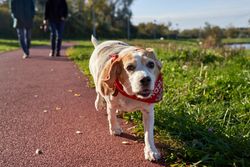
Losing weight works best from two directions: less energy in the bowl, more movement in everyday life. Here an easily overlooked principle matters: increase slowly. An unfit, heavy dog, or one with joint problems, must not become an athlete overnight – that overloads the joints and circulation. Start with what goes well, and build up the workload gently.
In everyday life that means: longer or more frequent walks, playing together, sniffing tours that challenge mind and body. As your dog gets fitter, longer hikes are a lovely way to stay active together. Particularly easy on the joints is swimming: in the water the body carries hardly any weight, and yet the muscles work hard – you can read why bathing and swimming are ideal precisely for heavy dogs in our dedicated article. Moderate but regular is the motto – better a little every day than too much once a week.
Staying With It – Slowly, Steadily, Patiently
Losing weight in a dog, as in a person, is not a sprint but a steady distance. Weigh your dog regularly – many practices are happy to make their scales available for this – and record the progress so that you see it in black and white. The goal is a slow, steady loss, not quick success. Radical crash diets are unhealthy and can even harm the dog; the body needs time to adjust. Small setbacks are part of it. Those who stay patient and stick with it will surely reach the goal – and be rewarded with a dog that moves more easily again, plays with more stamina and visibly takes more joy in his life.
When to See the Vet
On the way to the desired weight, the vet is the right companion from the very start. Make an appointment before you begin the weight loss, so that a target weight and a plan are in place. You should also seek veterinary advice if your dog gains weight for no apparent reason, if he does not lose weight despite consistent feeding, if he seems noticeably sluggish, short of breath or listless, or if he is already lame in the joints or struggling to breathe. Such signs need to be checked – sometimes a treatable illness lies behind them.
Finally, perhaps the most important thought: a healthy weight is one of the greatest gifts you can give your dog – it grants him, in the truest sense, more lifetime and more joy in life. The path there demands no miracles, but attention, measure and a little patience. This guide is general orientation and does not replace a veterinary examination – you should always discuss the right weight-loss strategy for your dog with your vet. Then nothing stands in the way of a lighter, happier dog's life.
Note: this guide offers general orientation and does not replace a veterinary examination or advice. If your dog has a health problem or in an emergency, please consult your vet.