A Puppy in the House: The Checklist for Getting Started in Switzerland
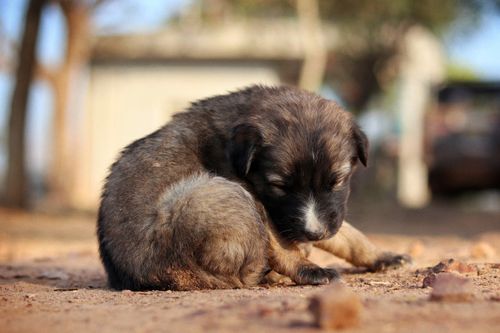
A puppy moves in – and suddenly the flat is full of little teeth, puddles and big eyes. The first few weeks are exhausting, but they lay the foundation for the next twelve or thirteen years. Anyone who goes about it calmly, patiently and with a plan from the start saves themselves a lot of trouble later. This checklist takes you through everything that really counts in the first few weeks – from the legal duties through the equipment to socialisation.
A thought upfront that often gets lost: in the first few days a puppy needs above all peace and quiet. No big welcome party with half the extended family, no non-stop entertainment. Let him arrive, sniff around the flat, sleep – puppies sleep an enormous amount, and this sleep is not a luxury but development.
Use the days before he moves in to make the flat puppy-safe. Lift cables up or cover them, lock away cleaning products and medicines, put toxic houseplants out of reach and collect up small objects that could end up in a puppy's mouth. Set up a fixed corner with a basket and water bowl now, so your dog has a quiet retreat from the very first minute.
The legal duties first
In Switzerland a few things are non-negotiable. Every dog must be identified with a microchip. A reputable breeder will properly have taken care of this before the puppy comes to you. Through this chip the dog is registered in the national database AMICUS.
When the puppy moves in with you, the change of keeper has to be recorded, and you register the dog with your municipality. That's also where the annual dog tax falls due. How high it is varies from municipality to municipality – it's best to ask your municipality of residence directly, so the bill doesn't surprise you later.
No compulsory course any more – but go to puppy class anyway
There used to be a compulsory certificate of competence (SKN) for all dog owners. This nationwide course requirement was abolished in 2017. Does that mean you no longer have to attend anything at all? Not quite: individual cantons still require their own courses or proofs of competence. This differs from canton to canton, so check what applies in your canton of residence.
Quite apart from the legal situation: a good puppy class is worth its weight in gold. There your puppy meets other dogs his own age, learns in a protected setting, and you get feedback from someone who has already seen many puppies. For socialisation that is hard to replace.
The equipment: what should be ready before he moves in
Don't buy up half the pet shop. To get started, something manageable is enough:
- a flat collar and a lead (a harness often comes along a little later)
- an ID tag with your contact details
- food plus a food bowl and a water bowl
- a basket, a bed or a crate to retreat to
- safe chew toys
- poo bags for when you're out
- simple grooming kit such as a brush and nail clippers
- a solution for safe transport in the car
Everything else – the third cuddly toy, the designer lead – can wait until you know what your dog actually likes.
The first vet visit and health
Arrange a first appointment at the vet practice soon after he moves in. There the puppy is checked over, and together you discuss the schedule for vaccinations, worming and parasite and tick protection. The core vaccinations typically include distemper, parvovirus, hepatitis and leptospirosis; a rabies vaccination becomes a subject as soon as you want to travel abroad with the dog.
I deliberately give no fixed weeks and no rigid vaccination schedule here – that belongs in the hands of your vet, who knows the puppy and sets the timing individually. The same goes for the question of neutering: whether, when and how is a decision you make together in your own time, not by a rule of thumb from the internet.
The socialisation window: roughly 3 to 16 weeks
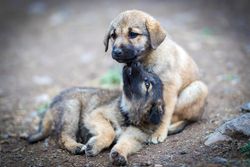
In the first weeks of life a puppy's brain is especially receptive. This socialisation window lies roughly between the 3rd and 16th week. What the dog gets to know calmly and positively during this time usually stays familiar to him for the rest of his life.
Show him the world in small doses: different people, friendly other dogs, traffic, various surfaces under his paws, the perfectly ordinary everyday sounds. Don't overdo it – quality over quantity. A puppy sitting calmly at the roadside watching the cars learns more than one thrown into the thick of it.
A classic that many tackle too late: sounds. If you work early with quiet, recorded fireworks sounds and link them with something nice, you spare yourself and your dog a lot of stress later. How to build this up step by step you can read in our article on fear of fireworks.
Feeding, house-training and being left alone
With food the rule is: don't rush anything. At the start keep the food the breeder used and only switch over slowly, over about a week. An abrupt change quickly upsets the sensitive puppy stomach.
House-training is purely a matter of practice and above all needs patience. Take the puppy straight outside after sleeping, after eating and after playing, and praise him lavishly when he relieves himself out there. Telling him off when mishaps happen achieves nothing – the little one doesn't understand the connection.
Just as important is being left alone. Start small: a few seconds, then minutes, in which you leave the room. That way the dog learns that being alone is normal and that you always come back – the best prevention against separation anxiety. And practise bite inhibition: if play gets too wild and the teeth too sharp, the fun ends briefly. A few simple cues such as sit or his own name round off the first period. Always work with reward and praise, never with harshness.
Safely on the road in the car
Transport in the car is not a side issue but regulated by law: the dog must be secured so that it doesn't become a projectile when you brake and doesn't distract you. This is possible with a transport crate, a safety harness with a belt or a dog guard in an estate car. Get the puppy used to it early with short, positive drives, and the car stays a relaxed place.
What a dog costs – and why you should insure early
The purchase price varies enormously, depending on breed and origin. Far more important than this one-off amount, though, are the running costs: food, dog tax, insurance, vet and equipment realistically add up to well over CHF 1’000 per year. Do the sums honestly before the puppy moves in.
A tip that many only take to heart after the first expensive emergency: insure the dog early, while he's young and healthy. Pre-existing conditions that appear later can make taking out a policy harder. What a dog insurance policy covers and what to look out for, we've put together for you in a separate article.
Where the puppy should come from
A good start begins with the origin. A reputable breeder – for instance in a club of the SKG (the Swiss Cynological Society) – lets you see the mother and the whole litter, can show health tests of the parent animals and asks you at least as many questions as you ask them. A good alternative is a dog from the animal shelter.
What you should avoid is the illegal puppy trade: offers from abroad that sound too good to be true, with a low price and a quick handover in a car park. Such puppies are often separated from their mother too early, sick and poorly socialised – the animals' suffering and the later vet bills are high. Take your time, ask questions, and if something seems off to you, better to walk away.
Still unsure which dog suits your life? Browse our breed wiki or take the which-breed-suits-me test. Once the puppy is here, our overview of vets and dog schools will help you find the right support near you. And for two subjects that come up early, it's worth a look at our articles on fear of fireworks and on dog insurance.