Neutering your dog: pros and cons, procedure and costs
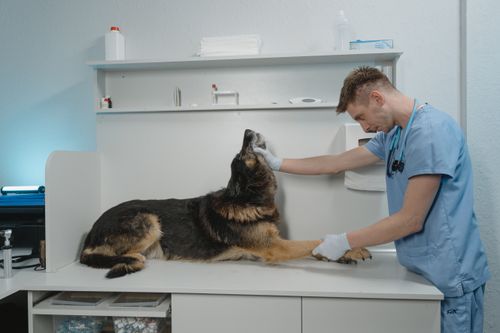
Hardly any question is discussed as often and as passionately among dog owners as the one about neutering. One person swears by it, the neighbour strictly advises against it, and online you'll find a fitting argument for every opinion. No wonder so many people are unsure. The honest answer up front: there's no blanket yes and no blanket no. Whether neutering makes sense for your dog depends on him — on breed, size, sex, age, health and character. This guide shows you what speaks for and against the procedure, how it works and what it costs in Switzerland, so that you can decide, well informed, together with your vet.
What neutering actually means
In neutering, the reproductive organs are surgically removed — in males the testicles, in females the ovaries, often together with the uterus. The procedure takes place under general anaesthesia and makes the dog permanently infertile. Colloquially you often hear the word «sterilisation», but what's usually meant is exactly this: neutering, that is, removing the organs.
For males there's an additional option without surgery, chemical castration. Here the vet places a hormone implant under the skin, which temporarily suppresses fertility. The big advantage: the effect is time-limited and reversible. Many people use the implant like a test — it lets you observe how the dog reacts without the influence of the sex hormones, before deciding on the final, surgical step, or indeed against it.

What speaks for neutering
The most obvious reason is reproduction: a neutered dog can't father or have unwanted offspring. Anyone keeping a male and a female in the same household, or often meeting unneutered dogs, saves themselves quite a bit of stress.
In females the heat cycle falls away. No bleeding twice a year, no weeks in which you have to keep her consistently away from males, and no more false pregnancy — that hormonal state after the heat in which some females really suffer, build nests and mother their toys.
On top of that comes health. Neutering lowers the risk of certain diseases. In females, pyometra above all should be mentioned — a dangerous, potentially life-threatening pus-filled infection of the uterus, which is not all that rare in older, unneutered females. In males the risk of testicular tumours disappears, simply because there are no more testicles.
And finally behaviour — but with caution. Neutering can dampen hormone-driven behaviours. A male that loses his head every time and thinks only of running off for days on end as soon as a female in heat is nearby often becomes calmer and more responsive afterwards. That can noticeably relax everyday life.

What speaks against it — and what you should weigh up
As clear as the advantages sound: neutering is not a harmless procedure that you just do on the side. A few points honestly belong on the other side of the scales.
First, it's an operation under general anaesthesia. The anaesthetic risk in a healthy dog is small, but never quite zero. A thorough health check beforehand is therefore part of it.
Second, surgical neutering is final. Unlike the hormone implant, there's no going back. Anyone who's unsure is often better off with the reversible chemical route as a first step.
Third, neutered dogs tend to put on weight more easily. The metabolism changes, appetite rises in some, the calorie requirement drops. That's no reason against neutering — but afterwards you have to adjust the feeding, keep an eye on the portions and, if needed, switch to a food for neutered dogs. Otherwise the slim dog quickly turns into a rounded one.
Fourth — and this is the biggest misconception of all: neutering is not a solution for behavioural problems. A dog that reacts aggressively out of fear or insecurity does not automatically become more relaxed through the procedure. On the contrary, fear-based behaviour can even get worse, because in the male testosterone also provides a certain self-assurance. If your dog has a behavioural issue, discuss it first with the vet and, best of all, with a good dog trainer — and not with the scalpel.
One more word on timing, especially with large breeds: the sex hormones also play a role in growth. Many vets therefore advise waiting with the procedure in large and very large dogs until the dog is physically fully grown. And in some females a weak bladder can occur after neutering; it can usually be managed well with medication, but it should be known about beforehand.
Male or female: the differences
A male and a female are two different calculations. In the male the procedure is smaller: the testicles lie on the outside, access is straightforward, recovery usually quick. In the female it's abdominal surgery, because the ovaries — and often the uterus — are removed from the abdominal cavity. That's more involved, takes longer and needs a bit more rest afterwards. That, as we'll come to shortly, is also reflected in the costs.
In the female the point in the cycle also matters. During or shortly after the heat the tissue is more strongly supplied with blood, so many vets prefer to operate in the hormonal resting phase in between. Your practice plans the appointment accordingly.
An individual decision — together with your vet
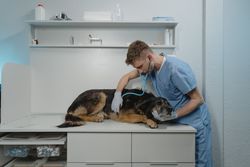
Perhaps the most important message: there's no rule that fits all dogs. Your dog's breed, size, sex, age, health and character all belong in the consideration. A small, healthy family male with no problems is a different starting point from a large young female or an anxious dog.
Important for Switzerland: neutering is not required by law here. No one forces you into it. It's your personal, informed decision — and that's exactly why it's worth discussing calmly with a vet who knows your dog. Take time for the conversation, ask your questions and have the pros and cons explained for your dog specifically.

What neutering costs in Switzerland
The costs depend heavily on whether it's a male or a female, how big the dog is and which region you live in. As a rough guide:
- Chemical castration (hormone implant, male): around CHF 100–200.
- Surgical neutering, male: roughly CHF 250–500.
- Neutering, female: roughly CHF 450–800, because the abdominal surgery is more involved.
On top of that there's usually the pre-examination and the pain medication for the days afterwards. The exact prices vary from practice to practice. It's best to ask for a cost estimate in advance, then there are no surprises. How to keep an overview of vet costs in general, and what an insurance policy can cover, you can read in our further articles.
The procedure and the recovery afterwards
On the day of the operation the dog comes to the practice on an empty stomach — so no food in the morning, because the anaesthesia is safer on an empty stomach. After a final check he's given the anaesthetic, the actual procedure doesn't take long for routine operations, and usually the dog is allowed back home the same day.
The first few days afterwards are the most important. A few points for the recovery:
- Prevent licking: a cone (the funnel collar) or a recovery suit keeps the dog off the wound. Licking can open the stitches or trigger an infection.
- Give rest: a few quiet days without romping, jumping and wild games, ideally without climbing stairs too.
- On the lead only: for a while keep the walks short and lead the dog on the lead, so the wound can heal in peace.
- Check the wound: look daily to see that everything is clean and dry. If there's redness, swelling or if the dog seems listless, call the practice.
- No bathing, no swimming, until the wound has healed.
Your vet will give you the exact aftercare to take home, including an appointment for the stitch check. Stick to it, then the whole thing is usually over and done with without complications.
Conclusion: no one-size-fits-all
Neutering is neither a cure-all nor a taboo. For one female it's a wise decision on health grounds, for the next male perhaps unnecessary, and for an anxious dog, in the worst case, even counterproductive. Weigh the advantages — no offspring, no heat cycle, a lower risk of certain diseases — honestly against the disadvantages: an operation, the tendency towards being overweight and no solution for behavioural problems. And then decide, together with your vet, what's right for your dog.
You'll find a suitable vet practice near you through our services and professionals. If you want to look into the money side first, our overview of the costs of owning a dog and our guide to dog insurance will help you further.
Note: this guide offers general orientation and does not replace a veterinary examination or advice. If your dog has a health problem or in an emergency, please consult your vet.