What does a dog cost in Switzerland? The honest calculation
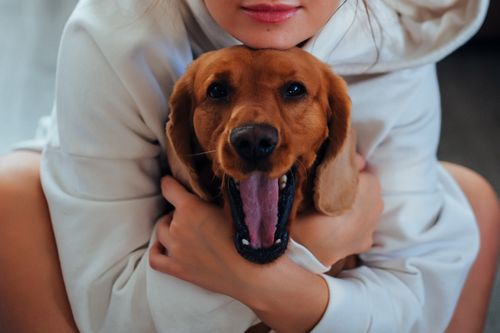
The puppy in your arms is the cheapest moment of a whole dog's life. It sounds harsh, but it's true. The purchase price from the breeder, or the roughly 250 francs for the shelter, hurts once – and then the real bill only begins. Food, the vet, tax, insurance, dog school, holiday care: it runs month after month, year after year, for ten to fifteen years.
Here we work through honestly what a dog really costs in Switzerland – in the first year, per year and over a whole lifetime. Not to scare you. A dog is worth every franc. But you should know what you are getting into before the little fellow moves in, and not only when the first big vet bill lands in your letterbox.
The first year: before and just after the dog moves in
Before the dog even sleeps at your place, you have already spent a fair bit. Let us start with the animal itself. From a breeder you pay, depending on breed and pedigree, roughly 500 to 3,000 francs. Purebred dogs of popular breeds with a registered pedigree sit at the upper end. Anyone who adopts from a shelter instead gets away with about 250 francs – and for that the dog is usually already chipped, vaccinated and often neutered too. In purely financial terms the shelter is clearly the cheaper route, and you give a dog a second home.
Then the basic equipment: lead, collar, bowls, a bed, a blanket, toys and a transport crate for the car. From around 200 francs you are set if you shop sensibly. A simple bed starts at about 30 francs, a transport crate from around 100. As always, the sky is the limit – nice gear can easily cost over 400 francs. The dog will not notice the difference, your wallet will.
On top of that come the first vet items: a microchip and pet passport from about 120 francs, the first vaccinations from around 100 francs, worming from around 10 francs. And, especially with a puppy, one thing really matters: dog school. A good course starts at about 500 francs and is some of the best money you will spend in the first year.
One item many people forget is neutering. If the dog comes from a breeder, you often pay for it yourself. Chemically it costs around 100 to 200 francs, surgically about 250 to 500 for a male and roughly 450 to 800 for a female. With a shelter dog this is usually already done. Add it all up and a realistic first year starts at around 1,580 francs – and climbs quickly from there once food, tax and the first insurance come on top.

The running costs, year after year
The first year is expensive, but it is a one-off. More interesting is what recurs every year after that. And here one thing matters above all: the size of your dog.
Food is the best proof of that. A Chihuahua eats a fraction of what a Bernese Mountain Dog puts away. Reckon on about 50 to 100 francs a month, so roughly 250 to 1,500 francs a year – depending on size and food quality. A large dog on high-quality food sits at the upper end, a small one on solid standard food at the lower end.
You pay the dog tax everywhere in Switzerland, but the amount varies. Depending on the canton and municipality it is about 100 to 200 francs a year – from around 70 francs in Tessin, up to nearly 190 in Waadt. The best thing is to quickly check what applies in your municipality; you will find the calculator linked below.
With insurance there are two topics. Liability insurance is compulsory in many cantons and sensible in any case; it costs from around 100 francs a year and is sometimes already included in your private liability cover – a quick look is worth it. The optional health insurance for the dog is the bigger item: for a medium-sized dog, comprehensive cover costs roughly 80 to 160 francs a month. Whether it is worth it depends on your nerves and your savings account – more on that below.
At the vet you distinguish routine from reality. The annual check-up with vaccination and parasite protection will cost you about 150 francs in a quiet year. Realistically, though, vet spending over the year often starts at around 600 francs as soon as some little thing needs treating – an inflamed ear, a limping leg, a gastrointestinal bug.
Grooming varies enormously. A short-haired dog costs you almost nothing – a brush, the occasional bath, done. A Poodle, a Terrier or another dog that needs regular trips to the groomer, on the other hand, can swallow up to nearly 1,000 francs a year. Many people overlook this point completely when choosing a breed. Add toys and odds and ends, about 50 to 100 francs a year.
The bottom line is a realistic annual budget of roughly 1,500 to over 4,000 francs. Swiss benchmarks cite ranges of around 1,500 to 3,000 and of around 1,690 to 4,100 francs – depending on how big your dog is and how you live.
The bills nobody plans for
Up to here everything is predictable. Now comes the part that hurts – and the reason we are talking about insurance at all. Swiss veterinary medicine is excellent, but it is not price-regulated. If your dog gets seriously ill or has an accident, it gets expensive fast. A broken bone starts at around 2,500 francs. A cruciate ligament rupture – common in larger, active dogs – costs several thousand francs to operate on. Chemotherapy can run up to nearly 3,000 francs. These are not fantasy figures but bills that land in real Swiss households every year. And this is where those who have made provision part ways with those who suddenly face a hard decision. That is exactly what either health insurance or your own savings account – into which you consistently put a little each month – is there for. Which suits you better is a matter of temperament; the main thing is that you have any plan at all for the day the big bill arrives.
When you work or travel: care
A dog needs care when you cannot be there yourself – in everyday life and on holiday. A dog daycare or a dog sitter costs at least around 60 francs a day. Anyone who works five days a week and regularly puts the dog in daycare quickly runs up a four-figure sum a month – that blows any normal budget and is more the exception.
For the holidays you need a solution. A boarding kennel adds up noticeably per week, and depending on the travel season, booking early is a must. The cheapest option is a network of family, friends and neighbours who know and like the dog. Anyone without that should factor care into the budget from the start and not pretend it will somehow just sort itself out.
What a dog costs over a whole lifetime
Now the big number – and quite deliberately as an estimate, not a hard statistic. It simply follows from working with the ranges above. A dog lives roughly 10 to 15 years. Take the purchase, multiply the annual costs by the years of life and add the odd big vet bill on top – and you land in the order of around 15,000 to 40,000 francs and more over a whole dog's life.
A small, healthy, low-maintenance dog stays at the lower end. A large dog with illnesses, expensive food and regular grooming can blow past the upper end. This number is not meant to put you off but to keep you honest. A dog is a commitment over one to one and a half decades, not over an afternoon at the shelter.
How to keep it affordable
A dog does not have to be a bottomless pit. A few decisions make the biggest difference:
- Choose the size honestly. The breed decides food quantity, grooming and many health risks – and with them a large part of the lifetime costs. If money is tight, a smaller, robust dog is the more relaxed choice.
- Compare food with your head. Expensive does not automatically mean better, cheap does not automatically mean bad. Look at the composition and at the amount your dog really needs, rather than at the brand.
- Insurance or a savings account, but one of the two. Either you pay the monthly premium for health insurance, or you set up a dedicated dog account and put money aside with discipline. What you do not want: no buffer at all when things get serious.
- Work out the tax beforehand. The dog tax differs from municipality to municipality. Before you commit, the calculator tells you in a minute what to expect.
The biggest money-saving tip is unspectacular: provision and prevention. The annual check-up, clean parasite protection, the right weight and enough exercise save you many of the expensive bills from further up.
Bottom line: yes, a dog costs money. But anyone who knows the figures and makes a little provision has no nasty surprises – only the nice ones. Work out your dog tax for your municipality, find vets and service providers near you and read on about dog insurance, about the dog tax in detail and about getting started with a puppy. Your dog will thank you for it with what it does best: simply being there.