Travelling with Your Dog: Car, Train and Across the Border
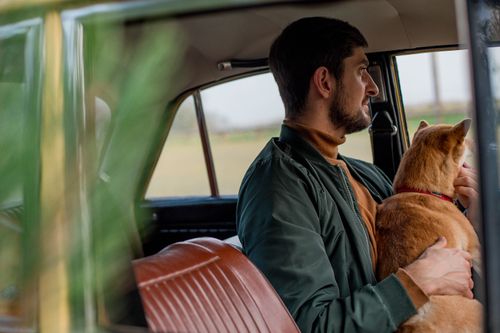
The suitcase is standing in the hallway, and your dog is already lying in front of it, as if to say: you're taking me with you, right? For most of us the answer is clear anyway. The dog is part of the family, and a holiday without him just doesn't feel right. The good news: with a little preparation he'll travel almost anywhere in a relaxed way — in the car, on the train and across the border. There isn't really any bad news, as long as you sort out a few things early rather than the evening before you leave.
The paperwork takes the most time, especially if you're heading abroad for the first time. So that's exactly where we'll start — and then we'll work our way through the car, the train, the accommodation and the packing list, so nothing is missing on the day of departure.
Before you set off: the paperwork
Anyone who wants to take their dog across the border — into the EU and back again — needs three things: a microchip, a valid rabies vaccination and a pet passport. These three are connected, and the order matters.
The microchip comes first. It's mandatory, and today it's the only recognised way to identify your dog unambiguously. A tattoo is no longer enough. The chip is a tiny transponder under the skin that the vet inserts in seconds and that lasts a dog's whole life.
Only once the chip is in place does the rabies vaccination make sense — because the passport has to show clearly that it was this very chipped dog that was vaccinated. The pet passport is issued by the same vet who vaccinates; she records the chip number, the vaccination and everything else in it. Switzerland takes part in the EU pet system, which is why the Swiss pet passport works perfectly normally for travel between Switzerland and the EU.
Rabies: the 21-day rule
With the rabies vaccination there is one point where many people have already come unstuck: the timing. For the first trip the vaccination is only valid from 21 days after the primary immunisation is complete. So if you have your dog vaccinated on Friday and want to leave the following weekend, you're out of luck. Allow for those three weeks generously — it's best to plan the vaccination a month or more before departure.
And after that it gets more relaxed: once the dog has had its primary immunisation, the protection lasts for up to three years. You just have to remember to give the boosters in good time and not let a gap appear — otherwise the 21-day waiting period may start all over again. A quick look at the passport a few weeks before the holidays is always worth it.
Tapeworm and young dogs
Some countries additionally require a tapeworm treatment against the fox tapeworm (Echinococcus), which a vet has to carry out shortly before entry and record in the passport. This applies, for example, to Ireland, Malta and Great Britain. But the rules differ from country to country and keep changing. So find out in good time what your specific destination requires, rather than relying on a general rule of thumb.
Anyone travelling with a puppy has to look even more closely. The rabies vaccination is usually given from about twelve weeks, and with the 21-day waiting period a puppy can realistically travel into the EU from around 15 weeks. Some countries won't let unvaccinated young animals in at all — that too is one of the things you check beforehand.
And if you are thinking of bringing a dog in from abroad, for instance adopting a rescue dog: from the EU that's straightforward. From countries with a high rabies risk the rules are considerably stricter, and then things like blood tests come into play. Before adopting from outside the EU, be sure to check with the official Swiss authorities (the FSVO) so that the dog is actually allowed to enter in the end.
On the road by car
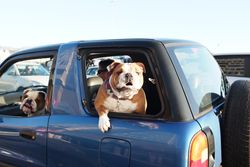
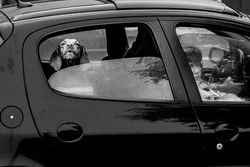
Most of us travel by car, and there one simple basic rule applies: the dog must be secured. That's not just a regulation, it protects everyone in the vehicle in an emergency stop — the dog just as much as the people. An unsecured dog becomes a projectile in a crash.
Three solutions have proven their worth:
- A transport crate, in the boot or the footwell — for many dogs the safest and calmest option.
- A safety harness with a seatbelt clip that buckles the dog onto the back seat using the seatbelt.
- A dog guard between the back seat and the boot.
What fits best depends on the dog and the car. The important thing is that your dog already knows the solution before the big trip. A few short practice drives take away his uncertainty, and for dogs prone to travel sickness an empty stomach often helps — so don't give the dog a big meal shortly beforehand.
The biggest danger: the hot car
One point is so important that it deserves its own heading: never leave your dog behind in a parked car in warm weather. A car heats up to life-threatening temperatures within minutes — even on a fairly mild day, even in the shade. Leaving a window open a crack doesn't help. It's a matter of minutes, not hours.
So take the dog with you when you stop somewhere, or plan things so that he doesn't have to wait alone in the car in the first place. And on longer drives, build in regular breaks: offer water, a short stretch of the legs, a chance to relieve himself. Always keep water and a bowl within reach — in a traffic jam or in the heat that is worth its weight in gold.
By train: the SBB rules
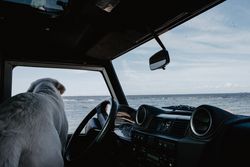
The train is a relaxed way to travel, and SBB makes it easy for dog owners. How much it costs depends on the size of your dog:
- Small dogs up to about 30 cm at the shoulder travel free in a bag or basket — as hand luggage.
- Larger dogs need a ticket. You have the choice: half the price of a 2nd-class ticket, a dog day pass for CHF 25, or a dog travelcard for CHF 60 per month or CHF 350 per year.
For anyone often out and about with their dog on the train, the travelcard quickly pays off. On the train the rule is: the dog is on a lead or in the carrier bag, and it may not go into the dining car — assistance dogs excepted. A tip from experience: find your dog a quiet spot in a corner where people aren't constantly walking past, and put down his familiar blanket. Then he'll usually just doze the journey away.
Arriving: accommodation and packing list
In Switzerland many hotels, restaurants and excursion destinations welcome dogs — it's worth asking briefly before booking whether the dog may come along and on what terms. A phone call saves nasty surprises at reception.
So that nothing is missing on the day of travel, here is a packing list for the dog:
- The pet passport and the papers from the vet
- Enough of the usual food — a holiday is the wrong moment to switch food
- Water and a bowl for the journey
- The familiar blanket or basket, so the unfamiliar accommodation smells like home more quickly
- Tick and parasite protection, adapted to your destination
- Poo bags and a towel for dirty paws
Two more things before you set off: check where the nearest vet practice is at your destination — in an emergency you don't want to have to start searching first. And find out about the local lead rules, which differ from place to place, especially in nature reserves and during the wildlife breeding and nesting season.
Arriving relaxed
Travelling with a dog is no big deal — above all it's a matter of preparation. Sort out the paperwork in good time, secure the dog in the car, avoid the hot car, buy the right train ticket and pack the bag completely. Once that's done, you can concentrate on the nice part: your time together on the road.
Next up are the loveliest places for a day out with your dog and the matching vets and services near you. And once you have arrived at your destination, our tips for hiking with your dog and for swimming with your dog are waiting for you. Have a good trip — and come home safe and sound.