Dogs in Summer: Heat, Hot Asphalt and the Car
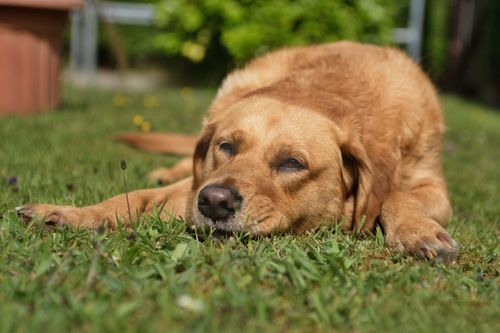
Summers are getting noticeably hotter here too, and hot days are piling up. For us that means: a cool drink, a spot in the shade, and somehow you get through. For our dogs it is a completely different story. They cannot simply take off a layer, they barely sweat, and they do not tell us when it gets too much for them – at least not in words. In the heat a dog can end up in mortal danger in a frighteningly short time, and almost always it would have been avoidable. So that summer brings you and your dog joy instead of worry, here we go through what really matters: the car, hot asphalt, heatstroke – and the small everyday things that make the difference.
Why dogs overheat so quickly
We humans have a built-in cooling mechanism that works rather well: we sweat over the whole body, and the evaporating moisture cools us. A dog does not have this. It cools itself almost exclusively through panting – it breathes quickly and shallowly, and releases heat via the moist tongue and the airways. At most it can sweat a little through the pads of its paws, and in real heat that achieves next to nothing.
That explains two things. First, a dog overheats much faster than you – when you feel warm, it is often already really hot. Second, panting reaches its limit as soon as the air itself is hot and humid: what is the tongue still supposed to give off when the surroundings are just as warm as the dog? That is exactly when, on a muggy midsummer day, it becomes critical. A dog that is only panting and still not cooling down has a serious problem – and you should recognise it before it comes to that.
The car – the deadliest and most avoidable trap
If you remember a single thing from this article, let it be this: Never leave your dog alone in a parked car in summer. Not "just briefly", not "I'll be right back", not in the shade. In warm weather a parked car heats up to life-threatening levels within minutes – even on a day that seems mild to you. The interior acts like a greenhouse: the sun heats it up, the heat cannot escape, and the temperature climbs higher and higher.
The biggest misconception is the cracked-open window. A gap does virtually nothing – it does not stop the car heating up. And the shade you park in moves; what is cool now will soon be in full sun. For a dog sitting inside, panting and unable to get out, that quickly becomes a death trap.
And if you yourself spot a dog sitting alone in a car in the heat and obviously suffering – panting, whining, seeming apathetic? Then act:
- See whether the owner is nearby – in the restaurant, in the shop, and if need be have them paged over the loudspeaker.
- Note down the number plate and the time.
- If no one responds and the dog is in distress, call the police or the emergency number. Do not hesitate – here every minute counts.
Better to step in once too often than to let a dog die. The vast majority of people are grateful if you save their dog, and the few who are not should never have shut it in there in the first place.
Hot asphalt and the hand test
There is a danger many underestimate simply because they do not see it: the ground. Asphalt, dark stone slabs and metal heat up extremely in the sun and can burn the sensitive paw pads. No issue for us, we wear shoes – the dog goes barefoot.
Fortunately there is a simple test, the hand test: place the back of your hand on the asphalt and leave it there for a few seconds. If you cannot hold it there comfortably, it is too hot for your dog's paws – then you do not walk on that surface. It is that simple. What else you can do:
- Move your walks to the early morning hours and the late evening, when the ground has cooled down. Around midday on a hot day you are better off staying indoors.
- Stay in the shade and on natural ground – grass, forest floor, soil instead of asphalt and paving stones.
- Think also of stairs, manhole covers and the load surface in the boot – metal gets particularly hot.
Burnt pads are painful, heal slowly and are entirely unnecessary. A quick hand test on the doorstep costs you a few seconds.
Recognising heatstroke and acting correctly
Heatstroke is the emergency that everything leads up to, and it is a medical emergency. The earlier you recognise it, the better the chances. Watch for these warning signs:
- violent, loud panting that will not stop
- a bright red tongue and bright red gums
- thick, stringy saliva, heavy drooling
- staggering, an unsteady gait, disorientation
- vomiting
- collapse, apathy
If you see such signs, act immediately:
- Get out of the heat: Bring the dog into the shade or into a cool room.
- Cool it down slowly: with cool – not ice-cold – water, especially on the belly, the inner thighs and the paws. Ice-cold water or a plunge into a cold lake can put extra strain on the circulation; the aim is gentle, steady cooling.
- Offer water: fresh, cool water, if the dog can swallow on its own. Never force it down.
- To the vet immediately: ideally call ahead while you are on the way. Heatstroke can end fatally and cause internal damage that is not visible from the outside – which is why every dog belongs in professional hands afterwards, even if it appears to have recovered.
The principle: cool first, then drive – but do not lose any time doing so.
Who is particularly at risk
Heat does not affect all dogs equally. Some get through the summer well with a few adjustments, others you have to keep a particularly close eye on. The risk group includes:
- Short-nosed breeds (brachycephalic dogs) such as the French Bulldog and the Pug. Their short airways make panting far less effective – they cool themselves less well and get into distress more quickly.
- Overweight dogs: The extra weight and the layer of fat make cooling harder.
- Very young and very old dogs: Puppies and seniors regulate their temperature less well.
- Dogs with dense or dark coats: A dark coat heats up more strongly in the sun.
If your dog is one of them, that does not mean you have to spend the summer indoors – but you plan the days more deliberately: shorter walks, more shade, more breaks, and rather rest around midday. With the short-nosed breeds particular caution is called for, because their distress is often only noticeable late.
The shaving myth: taking the coat off achieves nothing
It sounds logical: when it is hot, the thick coat has to go. But with double-coated breeds – that is, those with a dense undercoat, from the Border Collie to the Golden Retriever – this is a fallacy. Do not shave such a dog down to the skin.
The coat is not a winter jacket that is merely a nuisance in summer. It acts as an insulating layer in both directions: in winter it keeps the warmth in, in summer it keeps the heat out and protects the skin from sunburn. If you shave it off, you take exactly that protection away from the dog – and the exposed skin is at risk of sunburn and overheating. What really helps is something else: thoroughly brushing out the loose undercoat. A well-combed dog has far less heat build-up than one with a matted, dead undercoat. Light trimming or shortening is fine, radical shaving is not.
Everyday summer life: shade, water, timing
Most of the time, fortunately, it is not about emergencies but about completely ordinary everyday life – and with a few habits that can easily be made heat-proof. What works well:
- Always shade and fresh water: Wherever your dog is outdoors, it must be able to lie in the shade and drink at any time. Set up several water-bowl stations and take a water bottle along on outings.
- Timing: Put exertion into the cool edges of the day, morning and evening. Wind down around midday.
- Do not wear it out in the heat: no throwing the ball until it drops, no cycling alongside the dog, no long tours in the blazing sun. In the excitement of play a dog often will not stop on its own – there you have to think for it.
- Offer cooling: A cooling mat, a wet towel to lie on or a paddling pool in the garden do many dogs good. Some also like it when you moisten their paws and belly with lukewarm water.
- In the car – if you have to drive: sun shades on the windows, good ventilation or air conditioning and regular breaks. And – it cannot be said often enough – never leave the dog alone in the vehicle, even for the shortest stop.
One more word about water, since summer invites a swim: in high summer, warm, standing water can contain toxic blue-green algae, which are dangerous for dogs. How to recognise them and what else to watch out for when swimming, we have compiled separately.
Through the summer calmly and serenely
That may sound like a lot now – but it is not. At its core it all comes down to a few simple principles: never leave it in the car, test the ground with the back of your hand, go out early and late on hot days, always offer shade and water, and know the warning signs of heatstroke. Anyone who takes that to heart will no longer be daunted even by a heatwave.
Watch your dog and trust your instinct. You know it best and will notice when it slows down, seeks more shade or simply does not feel like the big walk. Then give it the rest it needs – a lazy, sleepy hot afternoon in the cool is exactly right. Summer should be the lovely season for both of you, with trips to the lake, long evening walks and an ice cream for you on the terrace while your dog dozes in the shade.
If you are unsure or your dog shows signs of heatstroke, the vet is the right place to turn – you will find practices and other points of contact near you in our overview of services. For cool adventures by the water, read our guide to swimming with your dog, which also has more on blue-green algae; and if you would rather spend the hot season in the mountains, our guide to hiking with your dog has the right tips.
Note: this guide offers general orientation and does not replace a veterinary examination or advice. If your dog has a health problem or in an emergency, please consult your vet.