Swimming with your dog: the loveliest dog beaches and the most important rules
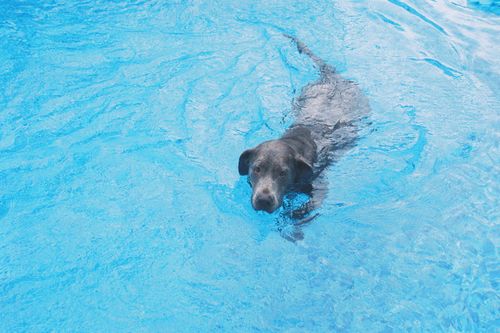
A hot July day, the thermometer climbs above 30 degrees, and your dog is already panting after the first short walk. Nothing is more tempting than a jump into the cool water — for many dogs, swimming is the highlight of the whole summer. It's just, unfortunately, not quite as simple as it is for us humans. Where is your dog even allowed in the water? What about blue-green algae, the current, the strict rules at the public pool? Here you get the overview, so the swimming day stays relaxed for the two of you.
Public pools: why dogs mostly stay out in summer
During the swimming season — roughly from May to September — dogs are banned from the vast majority of public pools and lidos. That has to do with hygiene and with the many guests, and you won't change much about it. The good news: outside the season, so roughly from October to April, many pools turn a blind eye and tolerate dogs at the water. Some facilities even hold a proper dog swim on the last opening day, before the pool is emptied for the winter — for water-crazy dogs a little celebration. Designated dog beaches, on the other hand, are a real rarity in Switzerland. That's exactly why a map on which the permitted spots are gathered pays off, instead of standing cluelessly at a closed-off shore.
Where your dog is really allowed in the water
Fortunately they do exist, the places where dogs are expressly welcome — spread across the whole of Switzerland. A few of the most popular, sorted by region:
Lake Constance
The classic in the east is Altnau in Thurgau, probably the best-known dog beach on the whole of Lake Constance. Around Kreuzlingen, Rorschach and Arbon you'll find further stretches with dog areas. In high summer the lake gets pleasantly warm — ideal for dogs that prefer to wade comfortably rather than dive headfirst.
Around Zürich
In the city of Zürich lies the Werdinsel on the Limmat, a popular meeting point where dogs are allowed in the water. Things are a bit quieter at the Katzensee on the edge of the city, and in the Zürich Oberland the Greifensee near Uster offers a dog area. All three are easily reachable by public transport — handy if you don't have a car.
Tessin
For anyone who loves the south: the Lido Ascona has had its own dog beach since 2026 — a lovely new addition on Lago Maggiore. Add to that further shore spots on Lago Maggiore and on Lake Lugano, for instance near Caslano. Warm water, a southern mood, palm trees — here the swimming day almost feels like a holiday.
Lake Geneva and Lake Neuchâtel
On Lake Geneva dogs may swim at several beaches: at the Plage d'Allaman, at the Plage de la Falaise near Gland and in Préverenges. On Lake Neuchâtel there are designated dog areas in Cheyres and in Yvonand — often with shallow shore zones where even unsure swimmers keep the ground under their paws.
And elsewhere?
In Basel the St. Alban-Rheinweg is a well-known entry into the Rhine. And in Graubünden the small, clear Canovasee near Rhäzüns beckons. That's by no means all — on the map you'll find further spots near you all the time.
Blue-green algae: the one danger you must take seriously
If you remember only one thing from this text, then this: blue-green algae. Behind it are actually cyanobacteria, which can multiply en masse in warm, standing and nutrient-rich water — typically in high and late summer. For dogs this can become life-threatening, because poisoning with cyanobacteria often runs frighteningly fast. And dogs are especially at risk: while swimming they swallow water and afterwards lick it off their coat.
Don't even let your dog into the water if you notice one of these signs:
- the water looks cloudy and greenish, almost like diluted paint
- a bluish film or a kind of oily sheen lies on the surface
- a green carpet or green streaks have formed at the shore
- the municipality or the canton has put up a warning
In case of doubt: better leave it. Another swimming spot or another day is always the better choice than an emergency at the animal clinic.
Rivers: cold, beautiful — and often underestimated
The Aare, Rhine, Reuss and Limmat are wonderful summer rivers, but they've got it in them. The water is cold even in high summer, and the current is stronger than it seems from the shore. Only let really safe swimmers into flowing water, and look carefully beforehand at where your dog gets out again — precisely at built-up or steep banks the exit is often much further away than you think. Never underestimate the current: what for you is a comfortable drift can simply carry a smaller dog away. Stay near the shore, keep your dog in sight and call him back one time too early rather than one time too late.
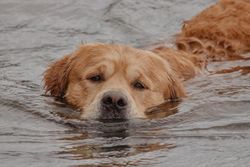
After swimming: ears, rinsing, breaks
After the splashing comes the brief care, and it's quickly done. Here's what a good routine looks like:
- Rinse off: hose the dog down with clean water, especially after a lake or river — this gets algae and bacteria out of the coat and prevents skin irritation.
- Dry the ears: in floppy ears especially, moisture builds up quickly, and that easily turns into a painful ear infection.
- Offer fresh water: so your dog doesn't quench his thirst from the lake.
- Build in breaks: dogs that keep snapping at the ball or the water jet swallow a surprising amount of water. That can throw the salt balance dangerously out of kilter — this so-called water intoxication is rare, but serious.
And because leptospirosis can lurk in standing water, it's best to keep your dog's vaccination protection up to date. In case of doubt, ask your vet what makes sense for your dog and your swimming habits.
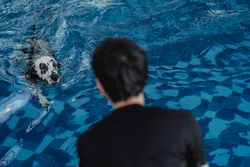
Consideration: reeds, nature protection and other bathers
A lake doesn't belong only to us and our dogs. Reed belts and designated nature or bird protection zones are off-limits — birds breed there, and a rummaging dog does great damage in a few minutes. Keep your dog on the lead on busy beaches and on the way through the pool grounds, however well-behaved he is; not every guest likes dogs, and not every dog likes crowds. And the most self-evident thing to finish: poop bags with you, droppings gone — at the water just as everywhere else.
Not every dog is a water rat
To finish, the most important thing about your own dog: not everyone loves the water. Some dogs are born swimmers, others go in up to the belly at most — and that's completely fine. Never throw a dog into the water and don't force him to do anything. Let him approach at his own pace, tempt him with a toy or simply go ahead in the shallows so he can follow you. If in the end he'd rather dig at the shore than swim, he's still had a wonderful day. Force only creates fear of the water, and that then sits deep for a long time.
You'll find the loveliest swimming spots gathered on our overview of dog beaches, and all the excursion destinations with a dog are on the places map. If you'd rather spend the summer in the mountains, also take a look at our guide to hiking with your dog.
Note: this guide offers general orientation and does not replace a veterinary examination or advice. If your dog has a health problem or in an emergency, please consult your vet.