Dog Nutrition: Dry Food, Wet Food and BARF at a Glance
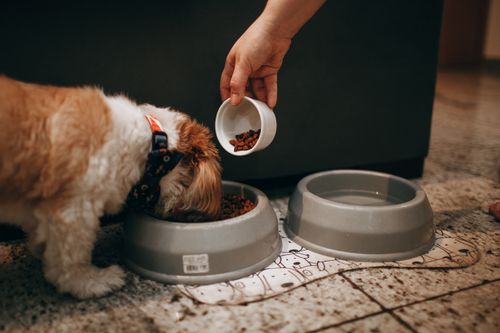
Standing in front of the dog-food shelf can make your head spin. Dozens of brands, three big feeding methods, each with a promise on the packet, plus friends who swear that only their method is the right one. Anyone who has just got a dog or wants to switch food is quickly at a loss. Yet at its core the matter is simpler than the shelf suggests.
There is no single best food. There is food that suits your dog – his age, his size, his temperament and his daily life. A puppy needs something different from the calm senior, a sporting dog something different from the easy-going couch dog. Once you put on these glasses, the choice suddenly becomes manageable. Let's look at what matters, one thing at a time.
Dry food, wet food or BARF?
Three roads lead to a well-fed dog, and all three can work. Each has its strengths and its snags – here is the honest overview, without camps and without dogma.
Dry food
Dry food is the classic, and for good reasons. It's practical, keeps for a long time, is easy to portion and is usually cheaper per meal than the alternatives. The bag sits in the cupboard, the amount is quickly measured out with a scoop, and on holiday or on the go you have it with you without any fuss. The most important point with dry food: make sure your dog drinks enough. Because the food lacks water, the dog has to make up for it from the bowl. Fresh water should therefore always be available and within easy reach.
Wet food
Wet food scores with a high water content and tastes extremely good to most dogs – fussy eaters or older dogs in particular can often be won over more easily with it. All that moisture also helps to get enough fluid into the dog. The downside: wet food is more expensive per meal, and an opened tin or a started pouch spoils quickly. Whatever the dog doesn't eat straight away belongs in the fridge and should be used up promptly. Many people, by the way, combine the two – dry in the morning, a little wet in the evening – and that's perfectly fine, as long as the total amount is right.
BARF and raw feeding
With BARF, or raw feeding, the dog gets raw meat, offal, bones and a little vegetable. Many owners value knowing exactly what's in the bowl. But let's be honest: BARF can work well, though only if the ration is genuinely balanced. Fed by gut feeling, you risk nutrient gaps or too much on the other side, and on top of that there are hygiene questions when handling raw meat and risks from bones. If you want to feed BARF, get a ration plan from a vet or a qualified nutrition adviser. That's not a vote of no confidence in the method, but simply the difference between feeding raw and feeding raw properly.
What really counts: a good complete food
Whether wet, dry or raw – in the end what counts is not the label on the front, but whether your dog gets everything he needs. The magic word is complete food. A complete food is put together so that it supplies the dog fully and in a balanced way; apart from water he needs nothing else with it. To be distinguished from this is a complementary food, which is only part of the ration and is not enough on its own. A glance at the packaging tells you what you're holding.
Just as important is that the food suits the dog. A growing puppy has different needs from a fully grown dog, a senior different needs from a young whirlwind, and a sporting dog that clocks up kilometres every day different needs from the easy-going companion who likes nothing better than lying on the sofa. Size comes into it too. A good food therefore names the life stage, and often the size class, it's intended for. Quality and suitability for your dog – that's what matters, not the prettiest picture on the bag.
A quick look at the packet already helps:
- Does it say complete food (supplies fully) or complementary food (only part of the ration)?
- Which life stage is it meant for – puppy, adult or senior?
- Does it suit the size and the activity level of your dog?
- Are the ingredients listed clearly and understandably?
The right portion – and the tiresome subject of weight
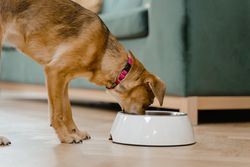
Hardly any topic is as underestimated as the amount. Being overweight is one of the most common and at the same time most harmful health problems in dogs – it strains the joints, heart and organs and ultimately shortens life. And it creeps in quietly: a few too many treats, a slightly too big scoop, a leftover from the plate, and over the months the slim dog turns into a rounder one.
For the best check you need neither scales nor a table, but your hands. Run them over your dog's ribcage: you should be able to feel the ribs easily under a thin layer, without having to press hard – but they shouldn't stick out either. Seen from above, there should be a visible waist behind the ribcage. The feeding recommendation on the packet is a starting value, no more. It's generously calculated and doesn't fit every dog. Watch your dog over a few weeks and adjust the amount according to what you feel – not rigidly by the number on the bag.
Treats, water and the slow switch
Three small things make a big difference in everyday life.
- Treats are calories. Even the little reward morsel counts towards the total. As a rule of thumb, treats should make up no more than about ten per cent of the daily ration, so the diet stays balanced. Anyone who trains a lot and rewards a lot is best off subtracting the amount from the main food, or simply using a piece of the normal ration as a reward.
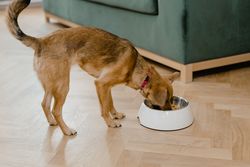
- Water always belongs with it. Fresh water has to be reachable around the clock, all the more so with dry food. Wash the bowl out regularly and top it up generously in the heat or after a walk.
- You switch food slowly. If you're changing to a new food, give yourself about a week for it. Mix a little more of the new in with the old each day, until the bowl is fully switched over. That way the stomach gets used to it, and you spare your dog diarrhoea and a tummy ache.
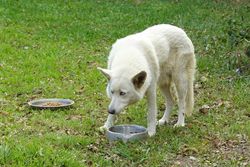
Puppy, senior, sporting dog: special life stages
Some dogs have needs that go beyond the standard food. A puppy is growing and needs a food tuned to that growth – and usually several smaller meals spread over the day rather than one single big one. Older dogs often move less and put on weight more easily; here it's worth a checking glance at the amount, and sometimes a food for seniors. Pregnant and nursing bitches have a considerably increased need, and dogs with an illness – of the kidneys, say, or the pancreas, or with a food intolerance – may need a special food.
In all these cases the same applies: plan the diet with your vet. She knows your dog, can assess his condition and tell you what matters in his situation. Don't guess around yourself when health is involved – that's the moment when expert advice saves a lot of worry and, in the end, money too.
What does not belong in the bowl
As tempting as table scraps seem – some quite everyday foods are poisonous to dogs. Chocolate, grapes and raisins, the sweetener xylitol, onions and garlic: the list is longer, and some of it does damage even in small amounts. As a basic rule: no table scraps, no human sweets, and tricky foods kept consistently out of reach. Which foods are dangerous in detail, and what to do in an emergency, we've put together in a separate article.
No dogma, just the right bowl
There's a lot of arguing around dog food, and almost every method has its convinced followers. Don't let it drive you mad. There isn't one right food for all dogs, there's the right food for your dog. A good complete food that suits age, size and activity, a portion that keeps him slim, always water in the bowl and a bit of observation – with that you're doing almost everything right. Whether dry, wet or raw ends up in the bowl is secondary.
If you want to find a nutrition adviser or a vet near you, our overview of vets and services will help. How much a dog costs per year, food included, you can read in our article on the cost of a dog, and which foods can become dangerous for your dog is shown in our guide to toxic foods.