Chihuahua: Temperament, Care and Health in Portrait
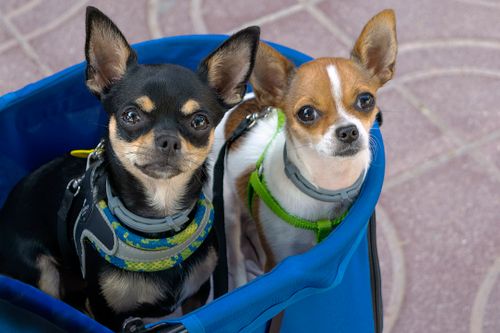
The Chihuahua is the world's smallest dog, but often a big one in its head. Self-confident, lively and closely bonded to its person, it has little in common with a pampered lap animal. Anyone who sees it only as a cute accessory does not do it justice and risks behaviour problems.
This portrait shows where the Chihuahua comes from, what defines it, who it suits and why this tiny one in particular needs real training. It also covers the typical health topics. The compact breed data is also in the Rassen-Wiki entry on the Chihuahua.
Origin and history
The Chihuahua comes from Mexico and is named after the state of the same name. Its ancestors, small dogs of the ancient Mexican cultures, were kept centuries ago and sometimes had ritual significance. In the 19th century travellers discovered the little dogs and spread them around the world.
From these roots the modern Chihuahua emerged, bred as a companion dog. Despite its tiny size, it is a real dog with instincts, courage and a need for leadership, which is often underestimated in keeping it.

Appearance: size, weight and coat
The Chihuahua is, with a shoulder height of about 16 to 21 centimetres and a weight of only around 1.5 to 3 kilograms, the smallest dog in the world. Typical are the apple-shaped head, the large ears and the large, alert eyes. The body is delicate but well-proportioned.
It comes in two coat variants, short-haired and long-haired, in many colours. Both are easy-care and need only occasional brushing, the long coat a bit more. Because of its small size, the Chihuahua gets cold quickly and often needs a coat in cold weather.
Temperament and character
The Chihuahua is brave, lively, intelligent and very people-oriented. It often bonds especially closely with one reference person. It is attentive and reliably alerts, which makes it a watchful little companion, at times also a little barker if allowed.
Treated consistently like a real dog, the Chihuahua is a great, affectionate partner. If, by contrast, it is only carried, spoiled and never trained, insecurity, fear or snapping can develop. Good socialisation is therefore decisive.

Who is the Chihuahua right for?
The Chihuahua suits people in flats, seniors and anyone looking for a small, portable companion that likes closeness. Its exercise needs are modest, but mental work and small training sessions do it good too. As a small dog it often travels free on public transport, see dogs on public transport.
It suits less well households with very young children, as the delicate dog can easily be injured and feel crowded. Anyone looking for a dog they do not want to train is also wrong: even the smallest dog needs clear, friendly rules.

Training: small, but meant seriously
The most common mistake in keeping a Chihuahua is not taking it seriously because of its size. Because it is so small, undesirable behaviours are often tolerated or even found cute that would never be allowed in a large dog. That is precisely what creates problems.
Treat the Chihuahua as a full dog: with rules, training, social contact and independence. It should also walk on the ground and master challenges on its own. The basics are in the guides on dog training and loose-lead walking.

Care and dental health
Coat care is uncomplicated, but one topic deserves special attention: the teeth. Small breeds like the Chihuahua tend strongly towards tartar and dental problems, because many teeth stand close together in the small jaw. Regular dental care and checks are therefore important.
What you can do about tartar is in the guide on tartar. Also think of nails and, precisely in this sensitive little dog, protection from cold and wet. Paws and ears are also part of the care routine.
Health and typical illnesses
The Chihuahua can live very long, often twelve to eighteen years. Typical of the breed, however, are patellar luxation, dental problems and sometimes an open skull bone, the so-called molera. A tracheal collapse can also occur.
Very small Chihuahuas or those marketed as teacup are especially fragile and sensitive, such extreme breeding should be avoided. Look for a serious breeder with healthy, not overly tiny parent animals. For all health questions, the vet is the right place.
Getting one in Switzerland
A Chihuahua puppy from a serious breeder costs in Switzerland about 1500 to 2500 francs. Be sure to avoid offers of especially tiny teacup dogs and dubious imports, which are often sick and poorly socialised. Choose a breeding operation that pays attention to health and character.
Even the smallest dog must be registered in the dog database, see the guide on AMICUS. What a puppy needs at the start is summarised in the puppy starter kit, for the Chihuahua additionally a warm spot and suitable accessories.
Conclusion: is the Chihuahua right for you?
The Chihuahua is a self-confident, affectionate little dog, ideal in flats and for people who value closeness and have little space. Anyone who treats it as a full dog, trains and socialises it has a loyal, long-lived companion.
Anyone who instead sees it only as an accessory does not do it justice and risks behaviour problems. For the smallest dog too it holds: it is a dog and wants to be taken seriously as one.
Frequently asked questions
Is the Chihuahua a good first dog? It can be, if you take it seriously and train and socialise it like a real dog. The size easily tempts owners to neglect training, which creates problems.
Does the Chihuahua bark a lot? It is watchful and alerts readily. Whether this becomes constant barking depends heavily on training and occupation, not on the breed alone.
Why does my Chihuahua have dental problems? Small breeds tend towards tartar and closely spaced teeth. Regular dental care and veterinary checks are important.
What is a teacup Chihuahua? A marketing term for extremely small animals. Such extreme breeding is often especially fragile and sensitive and should be avoided.
Note: this guide offers general orientation and does not replace a veterinary examination or advice. If your dog has a health problem or in an emergency, please consult your vet.