Dogs on Public Transport in Switzerland: Tickets, Rules and Costs
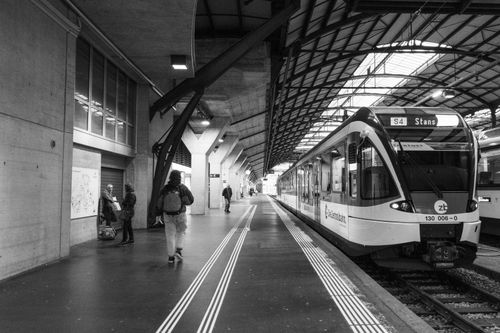
Public transport in Switzerland is dense, reliable and dog-friendly, but anyone travelling by train, bus or tram with a dog for the first time is often unsure: does my dog need a ticket? What does it cost? And what rules apply along the way? With the right ticket you travel stress-free and save money in daily life.
This guide gives an overview of the main rules and prices for taking a dog on public transport, as of September 2026. Please note: fares and provisions can change; only the current information from the transport companies is binding. When in doubt, check the official information before travelling. Good to know: in many cities and regions the rules of the local fare networks apply alongside the national tariffs, but they generally follow the same basic logic.
The basic rule: small free, large pays
The rule of thumb is simple: small dogs up to 30 centimetres at the withers may travel free in a transport box, basket or suitable bag, like hand luggage. Larger dogs need their own ticket and then travel on the lead.
The withers is the highest point at the transition from neck to back, where size is measured. So if your dog no longer fits in a container or is taller than 30 centimetres, it counts as a large dog for fare purposes and needs a ticket.

Small dogs in a box or bag
If your small dog travels in a closed, animal-appropriate container, it travels free. The key is that the container is well ventilated and the dog can lie in it comfortably. That way it counts as luggage and does not occupy a seat.
This rule is ideal for small breeds and puppies. Make sure the dog feels safe and calm in the bag. Getting the dog used to the transport container pays off here and makes travelling more pleasant for everyone.

Large dogs: the ticket
For large dogs you buy a ticket at half the second-class fare for the route in question, but at least the applicable minimum fare. The dog then travels on a short lead and lies as far as possible under or in front of the seat, without obstructing other passengers.
For frequent travellers, the single ticket often does not pay off. Anyone travelling regularly with a dog travels much cheaper with a day pass or a season ticket. Work out once how often per year you use public transport with your dog. Count not only the big outings but also the many small trips to the vet, to dog school or into the countryside, which add up over the year.
The dog day pass
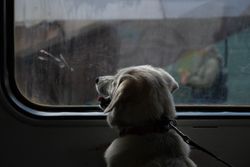
The dog day pass currently costs 25 francs and is valid for a whole day on the network of many railways, buses and boats. It pays off as soon as the one-way route would cost more than the half fare for the round trip or if you plan several trips in a day.
For a day trip with the dog, the day pass is usually the simplest and cheapest solution. You save yourself buying a ticket on each section and can change flexibly and combine outings.
The dog pass for frequent travellers
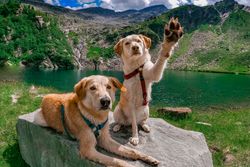
Anyone who travels often with a dog travels most cheaply with the dog pass. It currently costs around 60 francs per month or 350 francs per year and is stored on the SwissPass. Your dog then travels as often as you like across the entire area of validity.
Whether the annual pass pays off depends on your use. As a rough guide: from about fourteen day passes per year, the annual pass is cheaper. For commuters with a dog or active day-trippers it is usually the most economical choice.
Rules on board
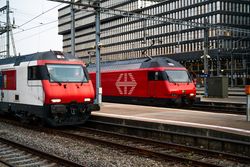
Large dogs travel on the lead and should stay calmly under or beside the seat, without blocking aisles or seats. In some dining cars and individual vehicles special rules apply. A well-trained dog used to bustle makes travelling pleasant for everyone.
There is no general muzzle requirement on public transport, but staff can require one if the situation calls for it. When in doubt, carry a light muzzle your dog is used to. That way you stay flexible and avoid awkward situations.
Guide and assistance dogs
Recognised guide and assistance dogs are exempt from the usual restrictions and travel free with their handler. They may also go where other dogs are not admitted, because they perform an important task.
If you depend on such a dog, carry the corresponding proof when needed. For questions about cards and recognition, the transport companies and the responsible organisations provide information.
Tips for relaxed travel
A dog that knows crowds, noises and tight spaces travels more relaxed. You lay the foundations for this with good socialisation and training loose-lead walking, covered in our lead guide. Practise short routes at quiet times first.
For longer trips, take water, a blanket for the floor and something to chew. Plan a toilet round before the trip and avoid the busiest rush hour if possible. That way the trip becomes pleasant for dog and owner.
Frequently asked questions
Does my small dog really travel free? Yes, provided it measures up to 30 centimetres at the withers and is carried in a suitable container like hand luggage. Otherwise it counts as a large dog and needs a ticket.
What does a ticket for a large dog cost? As a rule, half the second-class fare for the route, at least the applicable minimum fare. For several trips, the dog day pass at currently 25 francs is often cheaper.
Does my dog need a muzzle on the train? Not in general. Staff can require a muzzle in certain situations, which is why it makes sense to carry one your dog is used to.
Are the prices given binding? No. The details correspond to the situation in September 2026. Fares can change; the current information from the transport companies is always binding.