Puppy Socialisation: Making the Most of the Key Weeks
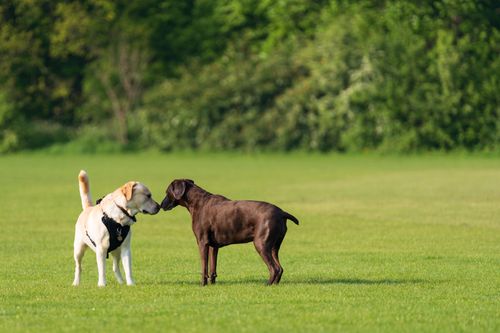
Whether a dog later moves through life with confidence or reacts fearfully to every novelty is decided largely in the first months of life. During this time the young dog learns what belongs to its world and counts as normal. What it gets to know positively now will be familiar to it for life.
Socialisation is therefore one of the most important tasks of the puppy period, and at the same time one where you can do a lot right, but also get some things wrong. This guide explains what socialisation really means, which phase is decisive and how to get your puppy used to its environment gently and without overwhelming it.
What socialisation really means
Socialisation means far more than contact with other dogs. It is about showing the puppy as many stimuli of its future environment as possible in a positive, calm way: people of all ages, other animals, noises, surfaces, vehicles and everyday situations. The goal is for the dog to store all of this as normal and harmless.
The difference between socialisation and training is important. Training conveys rules and signals, socialisation shapes the emotional basic attitude towards the world. A well-socialised dog stays calm in new situations because it has learned that novelty is usually harmless.
The sensitive phase
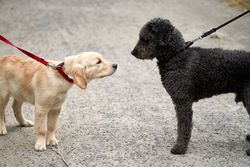
The decisive imprinting phase lies roughly between the third and the twelfth to sixteenth week of life. In this window the brain is especially receptive and the puppy approaches novelty with openness rather than caution. Experiences from this time have a particularly lasting effect, for good and for bad.
Since the puppy spends its first weeks with the breeder, good socialisation begins there already. After the move you still have a few weeks of this valuable window. Use them consciously, but without haste: it is the quality of encounters that counts, not how many in one day.
Stimuli step by step
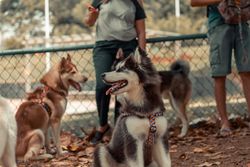
Get the puppy used gradually to different surfaces such as grating, wood, gravel and smooth floors, to stairs, to car rides and to typical city or village noises. Start at low intensity and from a safe distance, and only move closer when the puppy stays relaxed.
The measure is always your dog's body language. If it stays curious and loose, all is well. If it withdraws, pants, yawns or freezes, the situation is too much. Then increase the distance and make it smaller, instead of forcing it into the situation.

Encounters with other dogs
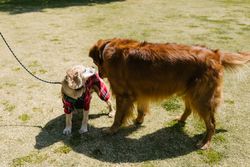
Contact with other dogs is important, but the choice is decisive. Look for calm, well-socialised adult dogs and other puppies that communicate in a friendly way. A good puppy group or play session under expert guidance is worth its weight in gold, because there they watch for suitable pairings and breaks.
Avoid uncontrolled encounters with unfamiliar, pushy or rough dogs. A single bad experience can leave a mark during this phase. Not every dog has to play with every other: calmly and politely walking past is also a valuable lesson that helps later on walks.
People and children
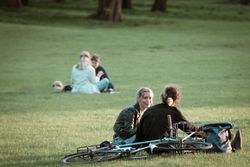
Your puppy should get to know people in all their variety: children, older people, people with hats, backpacks, umbrellas, walking aids or bicycles. Make sure the encounters are friendly and voluntary and the dog is never crowded. It must be able to retreat at any time.
With children, special care is needed. Teach children not to chase, lift or crowd the puppy, and never leave small children and the dog unsupervised. That way both sides learn a respectful, relaxed way of interacting from the start.
Noises and everyday life
Vacuum cleaner, traffic, fireworks, thunderstorms and household appliances are part of life and should not send the dog into a panic. Introduce loud or sudden noises quietly and at a distance at first and pair them with something pleasant such as food or play. That creates a positive association rather than fear.
Ordinary everyday life is socialisation too: short visits to town, waiting outside the shop, rides on public transport. Keep the sessions short and positive. After a lot of input a puppy needs enough sleep to process what it has experienced.
Quality before quantity
A common mistake is to flood the puppy with as many stimuli as possible. Too much at once causes stress and can have the opposite effect. Short, positive experiences with enough breaks and plenty of sleep in between are better. An overstimulated puppy does not learn, it comes under pressure.
Watch the ratio of tension to relaxation. A well-built day has few new impressions, but of good quality, and long calm phases. That way what is learned consolidates, and the puppy stays receptive and balanced.
Re-socialising an adult dog
Even if the sensitive phase is over, not all is lost. An adult, insecure dog or one from difficult conditions can, through patient, positive training, gather new good experiences. The process takes longer and demands more sensitivity, but it is possible.
Work here in very small steps and always below the threshold at which fear arises. With pronounced fear or aggression, get competent support. The basics for building signals and trust are in the guide to dog training.
Common mistakes
Typical mistakes include overwhelming with too many stimuli, forcing contact against the dog's will and comforting in a way that unintentionally reinforces fearful behaviour. It is equally harmful to allow encounters with rough dogs or, out of misplaced caution, not to introduce the puppy to the world at all.
The middle path is the goal: neither stimulus overload nor overprotection. Introduce new things in measured, positive form and at your pace. Staying calm yourself remains the most important reference point for the puppy. Training loose-lead walking and recall also benefits from good socialisation.
Frequently asked questions
By when must my puppy be socialised? The most important stretch ends around the twelfth to sixteenth week, but socialisation is an ongoing process that continues afterwards too.
May my puppy go out before the last vaccination? Careful contact with the environment is important to use the imprinting phase. Discuss with the vet which places and contacts make sense depending on vaccination status.
My puppy is afraid of a noise, what should I do? Increase the distance, stay calm and pair the noise quietly with something positive. Never force it close to the source of fear.
Is it too late for my fearful adult dog? No. With patience and suitable training, clear progress remains possible later too, often with competent guidance.