Training Recall: Getting Your Dog to Come Reliably
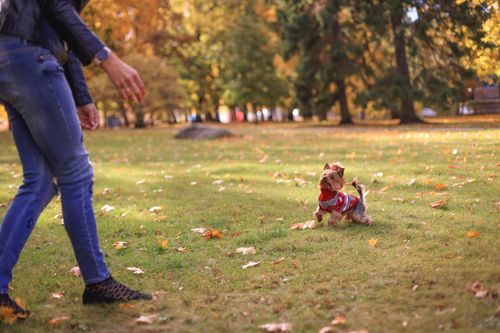
If there is one exercise every dog should master, it is recall. A dog that reliably returns to a signal may enjoy more freedom, is safer out and about and can be called out of the worst in dangerous situations. Recall is therefore far more than a trick – it is a piece of life insurance.
The key to a good recall lies in one simple idea: coming to you must always pay for the dog – and more than anything else in that moment. Those who internalise this and apply it consistently get a dog that comes running joyfully instead of hesitating.
Choosing the right cue
Choose a clear, unambiguous recall cue – a word or a whistle – that you only use for recall. Many use a whistle because it always sounds the same, carries far and is not coloured by mood. Avoid your dog’s name as the recall, because you use it constantly in daily life and it wears out.
Very important: the new cue starts with a clean slate. If you have often called in vain before, the old word has learned that ignoring it has no consequences. A fresh cue, linked from the start only to good things, works much better.
Building it step by step
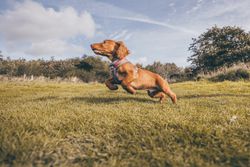
Start indoors without distraction. Say the cue, and when your dog comes, give an especially good treat right away and plenty of joy. Repeat in short, cheerful sessions. At this stage only call when you are sure it will come – so the cue links only to success.
Then increase slowly: first in the garden, then in quiet places, finally with a long line in more exciting spots. The long line provides safety without you holding a short leash. Only raise distraction and distance as far as your dog can still succeed. Further basics are in the guide Dog training.
The golden rules
Never punish a dog that comes back to you – not even if it ignored you for ten minutes first. Scolding on return punishes exactly the behaviour you want. The dog remembers: coming back is unpleasant. Instead, always welcome it warmly.
Do not call your dog for things it dislikes – the end of the walk, a bath or the vet visit. Otherwise it learns that recall announces something bad. And never call into the void: if you cannot make it come, better not to call and go and get it.
Reward is everything
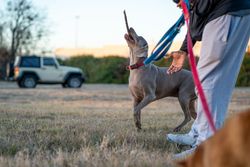
Recall lives on its value. Reward very generously – with the best food you have, the favourite toy or a short, wild game. Especially when your dog has torn itself away from something exciting, the reward may be huge.
A nice trick is the surprise jackpot: sometimes not one treat but a whole handful one after another. This keeps recall unpredictably good for the dog – and it comes all the more willingly. Weave recall into daily life playfully, not only in emergencies.
The emergency recall for critical moments
Alongside the normal recall, a second, extra-strong signal is worth it – the emergency recall. You use it only in genuine exceptional situations: when your dog runs toward a road, chases wildlife or heads for an incompatible dog. Because it comes rarely and is always rewarded with the biggest jackpot, it keeps its power.
Build it separately from the everyday cue: its own word or a double whistle that you condition deliberately. Every time you practise it, a true flood of rewards follows – the best sausage, a whole handful of treats, exuberant praise. This charges the signal emotionally until the dog turns to you almost by reflex.
The key principle: do not burn the emergency recall in daily life. Using it out of convenience for every little thing strips it of exactly the reliability that matters in an emergency.

Recall games for everyday practice
Recall does not have to feel like a lesson – your dog learns it best through play. A classic is the run-away game: call your dog and at the same moment run a little in the opposite direction. The movement stimulus makes coming back irresistible, and you reward exuberantly as soon as it reaches you.
Just as popular is recall between two people: stand some distance apart and call the dog in turn, each with a treat and praise. This collects many joyful repetitions in a short time. Simply weave such mini-games into the normal walk – a few surprise recalls along the way keep the cue fresh and rewarding.
Frequently asked questions
Why does my dog come indoors but not outside? Outdoors the distraction is far greater. Recall has to be rebuilt under increasing distraction – with a long line and high-value reward, step by step.
My dog comes slowly and hesitantly – what to do? Usually the return was rewarded too little or punished in the past. Make yourself interesting: crouch down, walk a few steps away, celebrate every return big.
From what age can I start recall? Right away. Puppies naturally like to stay close – use this phase to anchor recall early and positively.
Am I even allowed to let my dog off the leash? Off-leash is permitted where no leash requirement applies and your dog endangers no one – and only if recall is reliable. During the breeding and nesting season and in wildlife protection areas special leash rules often apply; check the rules of your canton and municipality.
Keep it up and stay safe
A recall is never “finished”. Even a well-trained dog needs regular refreshing and repeated reward so the cue stays strong. See every walk as a chance for a few joyful recalls in passing.
As long as recall is not solid under distraction, your dog belongs on a long line – especially near roads, wildlife or other dogs. Combined with good loose-leash walking, this creates a relaxed, safe daily life for you both.