Beagle: Temperament, Care and Health in Portrait
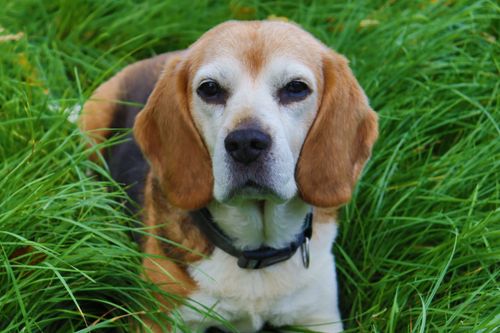
The Beagle is a cheerful, friendly pack hound with one of the best noses in the dog world. With its gentle gaze and wagging tail, it looks like the perfect family dog, and often is. At the same time, its origin as a hunting dog brings a pronounced nose and prey drive that must be known and taken seriously.
This portrait shows where the Beagle comes from, what defines it, who it suits and what to watch for in terms of exercise, nutrition and health. The compact breed data is also in the Rassen-Wiki entry on the Beagle.
Origin and history
The Beagle comes from Great Britain and was bred for centuries as a pack hound for hunting hare and rabbit. In large packs it followed the scent, led by hunters on foot. This work in the pack shapes its social, sociable nature to this day.
As a classic scent hound, the Beagle works above all with its nose and with great stamina. That is where its tireless sense of smell comes from, and its tendency to simply follow an interesting trail, for hours if need be and regardless of calls.

Appearance: size, weight and coat
The Beagle is a compact, sturdy dog of medium to small size with a shoulder height of about 33 to 40 centimetres and a weight of around 10 to 18 kilograms. Typical are the long drop ears, the friendly expression and the often white-tipped tail.
The coat is short, dense and easy-care, mostly tricolour in white, brown and black. Despite the short coat, the Beagle sheds noticeably. Regular brushing suffices, see the guide to coat care. The drop ears should be checked regularly.

Temperament and character
The Beagle is friendly, open, playful and very social. Through its pack past, it usually gets on well with other dogs and people and is rarely aggressive. This makes it a popular, sociable family dog.
At the same time, the Beagle is headstrong and resolutely follows its nose. Once on a trail, it is hard to reach, which makes training demanding. It is also very greedy. With patience, humour and good socialisation it becomes a great companion.
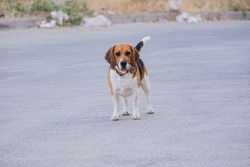
Who is the Beagle right for?
The Beagle suits active, patient people and families who enjoy a cheerful, social dog and are willing to handle its hunting and nose drive. It loves company and should not be alone too much, otherwise it barks or gets up to mischief.
It suits less well people who expect total off-lead freedom and perfect obedience, or who have little time for exercise and occupation. Anyone looking for a calm guard dog is also wrong: the Beagle is friendly to almost everyone.
Exercise and training
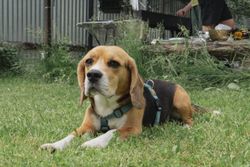
The Beagle needs a lot of movement and, in keeping with its nature, above all nose work. Trailing games, search games and mantrailing work it appropriately and genuinely tire it. Just walking without mental work is not enough for the enduring scent hound.
Because of the strong prey drive, a reliable recall and often a long line are important. How to handle this, see the guides on prey drive and recall. Reward generously, because via its stomach the greedy Beagle is easy to motivate.
Nutrition and weight
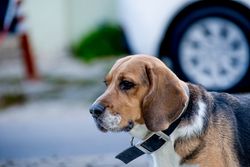
Few dogs are as greedy as the Beagle. It eats almost anything and begs convincingly, which makes it strongly prone to overweight. Overweight in turn burdens joints and health. Fixed portions, healthy treats and consistent monitoring are therefore especially important.
Secure bins and food well, because the Beagle is an inventive food thief. How to determine the right amount, see the guide on food amount, and what helps against overweight, the guide on overweight.
Health and typical illnesses
The Beagle is considered a robust, long-lived breed and often reaches twelve to fifteen years. Typical of the breed, however, can be ear infections due to the drop ears, eye conditions, epilepsy as well as a tendency to overweight and the joint problems it encourages.
Look for a serious breeder with health-examined parent animals and check the ears regularly. Keep the weight lean to prevent secondary conditions. For all health questions, the vet is the right place.
Getting one in Switzerland
A Beagle puppy from a serious breeder costs in Switzerland, depending on the line, usually about 1500 to 2200 francs. Choose a breeding operation with healthy, well-socialised parent animals and honest advice that also points out the hunting and food drive.
Registration in the dog database is mandatory, see the guide on AMICUS. What a puppy needs at the start is summarised in the puppy starter kit. With this dog, think especially of secure food storage.
Conclusion: is the Beagle right for you?
The Beagle is a cheerful, social and good-natured family dog that wins many hearts with its character. For active people who encourage its nose work, can handle the prey drive and keep the food under control, it is a wonderful companion.
Anyone who instead expects perfect off-lead obedience or has little time for exercise and mental work should think the decision over. The Beagle always remains a nose on legs with a mind of its own, and that is exactly what defines it.
Frequently asked questions
Is the Beagle a good family dog? Yes, thanks to its friendly, social nature usually very much so. Important are enough exercise, nose work and handling its hunting and food drive.
Can you let a Beagle run free? Only with a very reliable recall and depending on the environment. Its strong prey drive often makes a long line necessary, especially in game-rich terrain.
Why is my Beagle always hungry? The appetite is strongly pronounced in the breed. Fixed portions, healthy treats, secure food storage and weight control are therefore especially important.
Does the Beagle bark or howl a lot? As a pack hound it can be loud and howl, especially if it is alone too much or bored. Exercise and company help.
Note: this guide offers general orientation and does not replace a veterinary examination or advice. If your dog has a health problem or in an emergency, please consult your vet.