Dog Coat Care: Brushing, Bathing and Healthy Skin
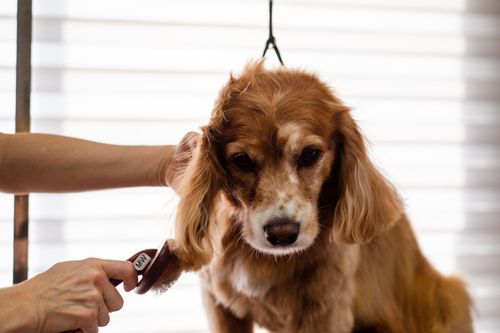
A glossy, clean coat is more than a matter of looks: it is a mirror of health. Brushing your dog regularly removes loose hair and dirt, spreads the skin's natural oils and, along the way, reveals anything unusual on the skin, ticks or small wounds. Coat care is therefore grooming and prevention at once.
How often and with what you brush, bathe and clip depends heavily on the coat type. A short-haired dog needs something different from a long-haired one or a dog with dense undercoat. This guide sorts out the main coat types and shows a routine that suits your dog.
Why regular coat care counts
Brushing removes dead hair and skin flakes before they mat or irritate the skin. At the same time it stimulates circulation and spreads the natural skin film that protects the coat and gives it shine. A neglected coat mats, pulls on the skin and offers a hideout for parasites and moisture.
The side effect of checking is just as important. Running your hands and the brush through the coat regularly lets you feel knots, ticks, skin changes and sore spots early. On dense coats especially, such things otherwise go unnoticed for a long time.
Coat types and the right brush
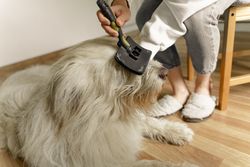
Short-haired dogs manage well with a rubber curry or soft brush and a weekly going-over. Long-haired dogs need more frequent brushing with a pin brush or comb so nothing mats. Breeds with dense undercoat benefit, during the moult, from an undercoat brush that pulls out the loose underhair.
Wire-haired dogs are, depending on the breed, hand-stripped rather than clipped, to preserve the typical coat texture. The key is always to work in the direction of growth and without force. Good tools make the difference: a suitable brush is more pleasant for the dog and more effective than constant tugging with the wrong device.
Mastering the moult
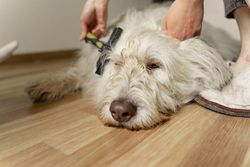
Twice a year, in spring and autumn, many dogs change their coat and shed a lot of undercoat in the process. During this time, daily or near-daily brushing helps keep the home cleaner and prevents matting. An undercoat brush pulls out astonishing amounts of loose hair in a few minutes.
If shedding stays heavy outside the usual times, if hair falls out in tufts or bald patches appear, there is often more behind it, such as a skin disease, parasites or a nutrient deficiency. Then a trip to the vet is worthwhile rather than just brushing more.

Bathing properly, but not too often
Dogs need bathing far less often than many think. Bathing too often with the wrong products disrupts the skin's natural protective film and encourages dryness and itching. In most cases a bath is only needed if the dog is really very dirty or needs a medicated shampoo for health reasons.
Always use a mild dog shampoo, never products for humans whose skin has a different pH. Brush the dog before the bath, rinse thoroughly and dry it well, especially in skin folds and dense coat. A soaked dog that gets cold is unpleasant and unhealthy.
Loosening and avoiding mats
Mats form preferentially at friction points: behind the ears, in the armpits, on the inside of the legs and around the rear. Small knots can be teased apart gently with your fingers or a dematting comb, ideally in small portions and without pulling on the skin. Large, hardened felt plates should be cut out properly or left to the groomer.
Preventing is easier than undoing: regular brushing, drying the coat well after a bath or rain and keeping an eye on friction points. On spots that are permanently prone to matting, a slightly shorter clip can noticeably ease grooming.
Skin, ticks and parasites in view
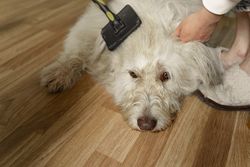
Coat care is the best moment to check the skin. Watch for redness, flakes, bald patches, pustules and an unusual smell. Run your fingers against the grain to feel for ticks, fleas or flea dirt. After walks in the woods and meadows especially, a close look pays off.
Strong itching, frequent scratching and recurring skin problems can point to an allergy or parasites and should be checked. You can read more in the guide to food allergy when skin and digestion are affected at the same time.
Ears, eyes and the anal region
Complete care also includes the areas often forgotten during brushing. Check the ears for dirt, smell and redness and clean only the visible part with a suitable product, never with a cotton swab deep in the ear canal. Wipe crusted eye corners with a damp cloth from outside to inside.
Around the anus the coat should be clean and, in long-haired dogs, slightly trimmed so nothing gets caught. If the dog smells noticeably there or often scoots on its rear, the anal glands may be involved, which should be assessed by the vet.
Getting the dog used to grooming
Coat care should be positive for the dog, not turn into a fight. Start early in puppies with short, calm sessions and plenty of praise, so brushing and handling of paws and ears become a matter of course. Older dogs, too, get used to new routines with patience and treats.
Better often and short than rarely and long. Two calm minutes a day are more pleasant and more effective than half an hour of force every few weeks. How to care for the paws properly along the way, see the guide to paw care.
Frequently asked questions
How often should I brush my dog? Short-haired once a week, long-haired and dogs with undercoat several times a week, daily during the moult. More important than a fixed plan is that the coat stays free of knots and dirt.
How often may I bathe? Only when needed, often just a few times a year. Bathing too often dries out the skin. Always use a mild dog shampoo.
May I clip my dog in summer? In dogs with undercoat, clipping usually makes no sense, because the coat also protects from heat and sun. Thoroughly brushing out the undercoat is better.
What to do with heavy shedding? If it is seasonal, it is normal. With bald patches, shedding in tufts or itching, have the cause checked by the vet.