Pregnancy and Birth in the Female Dog: How It Unfolds
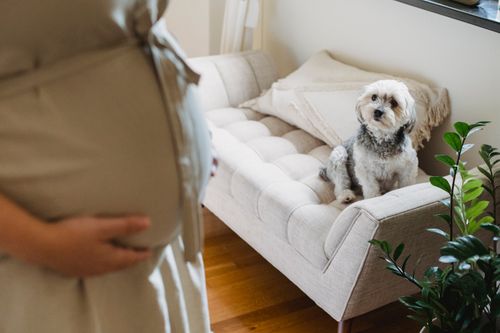
Just about nine weeks – that is how short the time is in which a mated female dog becomes a mother with a litter of puppies. Few phases in a dog's life are as intense, as beautiful and at the same time as full of responsibility as pregnancy and birth. Much of it runs remarkably smoothly, because nature has prepared the female dog well. And yet a great deal can go wrong within a few hours if no one knows what to watch for. Anyone accompanying a pregnancy – whether planned or unplanned – should therefore know the broad course it takes and, above all, when a natural process turns into an emergency.
This guide walks step by step through the most important stages: from the fundamental question of whether a mating is responsible at all, through confirming the pregnancy and caring for the dog over the nine weeks, to the birth itself, the warning signs of an emergency and the time afterwards. The heat and the reproductive cycle that precede every pregnancy are described in detail in our article on heat in the female dog. And one thing up front, in all clarity: the following text offers general orientation, but it does not replace veterinary care. Every pregnancy is different, and your vet belongs on board from the very start.
Before You Think About Offspring: Responsible Breeding
Before any mating takes place, there is an honest question to ask: should this female dog really have puppies? Raising a litter is a big responsibility, not a weekend project – and it can quickly go wrong, for the mother as well as for the puppies. Experienced breeders plan every mating long in advance and work closely with a vet as they do; anyone accompanying a litter for the first time should do so all the more. The often-heard wish for 'a litter so the children can experience it once' or 'so the dog gets to be a mother once' is not a good reason – it rarely comes with the necessary preparation.
Then there is the legal framework. In Switzerland, dog breeding counts as commercial as soon as someone raises more than three litters a year or rehomes more than 20 dogs; at that point a cantonal permit and a recognised specialist qualification (FBA) are required. But even below this threshold, for a single 'private' litter, all animal-welfare regulations apply – for example on housing, socialisation and the age at which puppies may be rehomed. You will find an overview of the legal obligations surrounding dog ownership in our article on law & taxes.
One more thought belongs in any honest reflection on breeding: in Switzerland, many dogs are already waiting for a home. Anyone who wants a dog does not necessarily have to breed one themselves – our guide to buying a dog in Switzerland shows what a responsible acquisition looks like. And for anyone who is certain they do not want offspring, spaying the female dog is the reliable alternative that rules out unwanted pregnancies from the outset.

Is My Dog Pregnant?
In the first few weeks you usually cannot tell anything from looking at a pregnant dog – outward signs are largely absent, and weight gain or a rounder belly only appear late. Certainty therefore comes not from observing at home but from the vet. The most informative method is ultrasound, which can make a pregnancy visible from about day 21 to 25 after mating; the puppies' heartbeats can be shown from around day 28. A blood test for the pregnancy hormone relaxin is also available, and experienced vets can carefully palpate the belly at roughly between day 20 and 30. How many puppies to expect is most reliably determined by X-ray from about day 42 to 45, once the puppies' skeletons become visible – the count is then usually accurate to within one pup. This information is worth its weight in gold: at the birth you know whether all the puppies have really been born. You will find a suitable practice near you in our directory of vets.
The Roughly Nine Weeks: Pregnancy and Care
Pregnancy lasts on average around 63 days, counted from mating – realistically it is about 63 days plus or minus a week, so roughly between 56 and 70 days. In the first half little changes outwardly, and that is precisely what is important to know: during this time the dog needs neither special rest nor a different diet. Only in the second half of pregnancy does the need for nutrients rise noticeably. As a rough guide, the amount of food is increased from about the fifth week to around 125 percent and from about the eighth week to around 150 percent of the normal ration – ideally spread over several small meals, because the growing uterus presses increasingly on the stomach and leaves no room for large portions. It is best to talk to your vet about the right food and the exact amount for your dog.
Two things are especially important here. First: no calcium supplements during pregnancy. What is well intentioned can backfire – giving extra calcium during this time disrupts the body's own calcium regulation and can contribute to a dangerous calcium deficiency around the birth. Supplements of any kind therefore belong in the bowl only after consulting the vet. Second: moderate, normal exercise. A pregnant dog may and should keep moving; calm walks at her usual pace do her good. Wild jumping, hard exertion and exhaustion, on the other hand, are to be avoided towards the end. Vaccinations and worming are best planned with the vet – some of it makes sense precisely during pregnancy, other things are postponed – and unnecessary medication is consistently avoided.

Preparing for the Birth
The closer the due date comes, the more closely it pays to watch the dog. A reliable sign is body temperature: about 10 to 24 hours before the birth it drops noticeably, usually below around 37 °C. Anyone accompanying a litter therefore often takes the temperature rectally twice a day towards the end of the pregnancy, so as not to miss this drop. On top of this come restlessness, panting, the typical nesting – the dog scratches and arranges a spot for herself – and often a loss of appetite. Prepare a whelping box in good time in a quiet, warm and sheltered place, and get the dog used to it a few days beforehand so that she accepts it as a safe retreat.
Just as important as the whelping box is another point of preparation: clarify before the calculated due date who will help in an emergency. Note down your vet's number and find out which practice can be reached at night and at weekends – because births do not keep to opening hours. Anyone who only starts looking for this information once things get critical loses valuable time.

The Birth Itself
The birth proceeds in three phases that merge into one another. The dilation phase lasts about 6 to 24 hours: the dog is restless, pants, may seem clingy or may withdraw, while inside her the cervix opens. There is no visible straining yet in this phase – it is the quiet, often long preparation for the actual birth. Stay calm and watch attentively, but do not push the dog into anything.
The actual birth begins with the expulsion phase. Once strong, visible straining sets in, the first puppy should be born within about an hour. After that the remaining puppies usually follow at intervals of up to roughly an hour; longer quiet pauses in between are also possible, but should be watched attentively. Each puppy is born in its amniotic sac; normally the mother opens this immediately, licks the pup dry and bites through the umbilical cord. This licking is no accident – it stimulates the puppy's breathing and circulation. Only if the mother is inexperienced and does not attend to it does one have to intervene carefully; when in doubt, this too should be discussed with the vet.
The third phase is the afterbirth: each puppy is followed by a placenta, usually within around 15 minutes. It is worth counting whether an afterbirth is passed for every puppy – if one is retained, that is a point you should be sure to mention at the veterinary check-up. Between individual puppies the dog may rest, lick her young and nurse them; this alternation of effort and rest is entirely normal.

When the Vet Must Step In
As naturally as a birth usually proceeds – there are situations in which every minute counts and a caesarean section may become necessary. In the following cases, call the practice or the emergency clinic immediately, without waiting:
- Strong, hard contractions for over 45 to 60 minutes without a puppy appearing.
- No first puppy arrives within roughly two hours of labour contractions starting.
- A pause of more than about four hours even though further puppies are still expected.
- Green, dark or bloody discharge without a puppy following.
- A puppy is visibly stuck, or the dog shows pain, severe exhaustion or a collapse.
- No contractions set in 24 to 36 hours after the temperature drop.
It is important to be prepared for exactly such moments. Save your vet's number and that of the nearest emergency vets before the due date – in the evening, at night and at weekends, being able to reach someone quickly often decides the outcome. Better to call once too early than once too late.
After the Birth
Once the last puppy has arrived and the dog is calm, a new and equally important phase begins. Have the mother and puppies examined by a vet shortly after the birth – this ensures that all the afterbirths have been passed, that no puppies remain in the uterus and that everything is fine with the young. In the days that follow, keep a close eye on the mother. She should see the vet if, among other things, she has a fever, a foul-smelling discharge, hard, hot or painful mammary ridges (a sign of mastitis), or any sign of calcium deficiency.
This calcium deficiency – known as eclampsia – is particularly treacherous and occurs above all in the first weeks of nursing, when milk production binds a great deal of calcium. Warning signs are trembling, stiffness, restlessness and panting; left untreated, eclampsia is life-threatening and thus a clear emergency. Here too the rule holds: when in doubt, act at once.
And then the finest work begins – raising the litter. How the puppies develop in the first weeks, when socialisation starts and what matters when they are rehomed, you can read in our puppy checklist. For all the joy they bring, pregnancy and birth are a demanding path that calls for knowledge, calm and good veterinary support. This guide gives you general orientation – but the reliable assessment of your dog always remains a matter for your vet.
Note: this guide offers general orientation and does not replace a veterinary examination or advice. If your dog has a health problem or in an emergency, please consult your vet.