Vaccinations for Dogs: Vaccination Schedule, Costs & Rabies

The puppy has barely moved in and the first big appointment is already due: the primary vaccination course at the vet. Vaccinations are among the most effective and, at the same time, cheapest measures for protecting a dog against serious, sometimes fatal diseases. And yet the subject leaves many owners uncertain. How often does my dog really need a jab? Which vaccinations does he need, and which not? And what about rabies, which you mostly hear about in connection with travel?
This guide puts the subject in context for Switzerland – based on the vaccination recommendations of the Swiss Association for Small Animal Medicine (SVK). You will learn which vaccinations are considered indispensable, what the vaccination schedule looks like from puppyhood into adult life, why the rabies vaccination plays a special role for travel – and roughly what the whole thing costs. The plan that suits your dog – depending on age, lifestyle, travel habits and pre-existing conditions – is always something you settle in the end together with your vet.
Core and Non-Core Vaccinations: The Difference
The SVK distinguishes two groups of vaccinations. The core vaccinations are recommended for every dog, regardless of where it lives, its breed or its lifestyle – they protect against diseases that run a severe course, are widespread or can be transmitted to humans. The non-core vaccinations, by contrast, depend on the individual risk: they only make sense if your dog can actually come into contact with the pathogen in question. This distinction is the common thread behind every sensible vaccination plan.
The core vaccinations cover three viral diseases: distemper (canine distemper virus, CDV), infectious hepatitis or hepatitis contagiosa canis (caused by canine adenovirus, CAV) and parvovirosis (canine parvovirus, CPV). All three are feared because, especially in puppies and unprotected dogs, they often end fatally. That is exactly why this trio stands at the start of every vaccination history – it is the foundation on which everything else is built.

The Vaccination Schedule for Puppies
A newborn puppy is protected for a while against many pathogens through its mother's milk. This so-called maternal protection gradually fades, however – and it is precisely in this transition phase that the puppy is especially vulnerable, because the maternal antibodies on the one hand no longer protect reliably, while on the other hand they can still weaken a vaccine given too early. For this reason vaccination is done not just once, but in several steps.
The primary immunisation against the core diseases typically looks like this:
- first vaccination at around 8 weeks
- second vaccination at around 12 weeks
- third vaccination at around 16 weeks
- a first booster at 6 to 12 months, that is roughly around the first birthday
The staggered appointments are not a rigid scheme but have a good reason: they ensure that protection kicks in exactly when the maternal protection finally disappears. Because a young puppy is not yet fully protected during this phase, it pays to handle contact with unknown or unvaccinated dogs and with high-risk places sensibly – without sealing the puppy off from the world because of it, since early socialisation is at least as important for a healthy dog's life. Our puppy checklist sums up which other appointments and purchases belong in the first weeks.

Boosters for the Adult Dog
Once the primary immunisation is complete, things get more relaxed. The three core vaccinations – distemper, hepatitis and parvovirosis – only need to be boosted every three years in the adult dog. The days when a dog was vaccinated "against everything" across the board every year are thus over; modern vaccination recommendations deliberately rely on longer intervals where protection is proven to last a long time.
For precisely these three core vaccinations there is also an alternative to the rigid calendar: an antibody titre, a simple blood test, can check whether there is still enough protection at all. If the titre is high enough, the booster can, in some circumstances, be postponed. Whether this route makes sense for your dog is best discussed with your vet.

Leptospirosis and Kennel Cough
Alongside the three classic core vaccinations, two further vaccinations are widely recommended in Switzerland. The first is leptospirosis. It is caused by bacteria, is widespread in this country and can also be transmitted to humans – all the more reason to take it seriously. Puppies are vaccinated against it at around 8, 12 and 16 weeks (if you start later, two doses are given three to four weeks apart). Unlike the core vaccinations, the leptospirosis vaccination has to be boosted annually, because protection doesn't last as long.
The second is kennel cough, a contagious respiratory disease involving, among others, the parainfluenza virus and in part the bacterium Bordetella. It makes sense above all where your dog has a lot of contact with others of its kind – at dog school, in a boarding kennel or at shows. This vaccination, too, is boosted annually.
Rabies: Important for Travel and Import
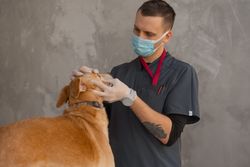
Rabies holds a special position. The disease is practically always fatal and can be transmitted to humans – Switzerland, however, has been considered rabies-free for years. For a dog that spends its entire life exclusively in Switzerland, the rabies vaccination is therefore not generally mandatory. The first vaccination is possible from 12 weeks at the earliest, with boosters up to every three years depending on the vaccine used.
Things look quite different as soon as national borders come into play: for trips abroad as well as for entry and re-entry into Switzerland, the rabies vaccination is compulsory. Timing is important here – the vaccination only becomes valid 21 days after the appointment, and the exact requirements depend on the destination country. So anyone wanting to travel with their dog is better off planning early and finding out about the EU pet passport and the requirements of the Federal Food Safety and Veterinary Office (BLV). You can read what else belongs in the travel luggage in our article on travelling with a dog. And anyone bringing a dog to Switzerland from abroad will find the import and rabies rules in our guide to buying and importing a dog.
Non-Core Vaccinations and Possible Side Effects
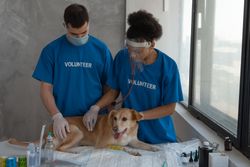
Beyond the vaccinations mentioned, there are further non-core vaccinations that only come into play after individual consideration with the vet. These include Lyme disease (borreliosis), which is transmitted by ticks – our article on ticks in dogs shows how to protect your dog against ticks in general. Also in this group are leishmaniosis (relevant above all when travelling to the Mediterranean region), babesiosis and dermatophytosis, a fungal disease of the skin. Whether any of these is worth considering for your dog depends entirely on his lifestyle.
And what about side effects? The vast majority of dogs shrug off a vaccination without any problem. If there is any reaction at all, it tends to be mild: some dogs are a little tired and listless for a day, and occasionally the injection site swells slightly. Severe reactions are rare. If your dog shows unusual symptoms after a vaccination, you should nevertheless not hesitate to contact the vet practice.
What Does Vaccinating Cost?
When it comes to cost, honesty is called for: there is no universally valid figure. What a vaccination costs depends on the practice, the region and the scope of the vaccination and consultation. It is sensible to ask the vet practice for a cost estimate in advance – that way there are no surprises. You will find an overview of the offerings and practices in your canton in our services directory.
The amount is easy to put in perspective, though: the usually annual vaccination and booster consultation is one of the smaller but regular ongoing costs of a dog – and it is money well spent. Because the appointment is always a health check too: once a year the vet examines the dog thoroughly, listens to the heart, palpates him and often notices changes earlier than you do. Our article What does a dog cost? shows how vaccination costs fit into a dog's overall budget.
The bottom line: vaccinating is not a bureaucratic act but preventive care in practice. A well-thought-out, individual vaccination plan, a neatly kept vaccination record or pet passport that you bring to every appointment, and a vet you trust – that is all it takes for your dog to go through life well protected from an early age.
Note: this guide offers general orientation and does not replace a veterinary examination or advice. If your dog has a health problem or in an emergency, please consult your vet.