Border Collie: Temperament, Exercise and Health
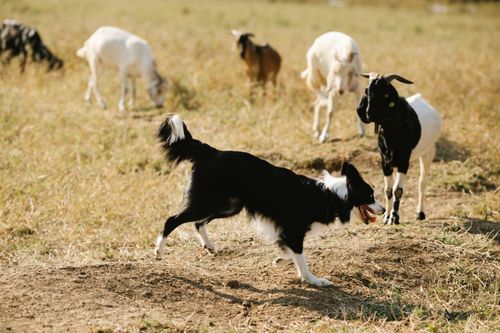
The Border Collie is regarded as the world's smartest dog, and that is exactly what makes it so fascinating and at the same time so demanding. No other dog works with such concentration, eye control and stamina. But the very qualities that make it an unbeatable herding dog completely overwhelm many families.
This portrait shows honestly what the Border Collie needs, who it suits and who exactly it does not, as well as what to watch for in terms of exercise and health. The compact breed data is also in the Rassen-Wiki entry on the Border Collie.
Origin and history
The Border Collie comes from the border region between England and Scotland, which its name also refers to. For centuries it was bred uncompromisingly for work performance: gathering and controlling flocks of sheep over vast, rough terrain, guided by the finest signals of the shepherd.
Appearance never counted, only the ability to work independently and with great concentration. This heritage is in every Border Collie to this day and explains its enormous drive, its sensitivity and its need to constantly have a task.
Appearance: size, weight and coat
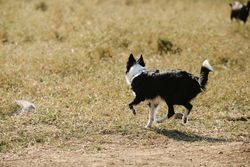
The Border Collie is a medium-sized, athletic dog with a shoulder height of about 48 to 56 centimetres and a weight of around 14 to 22 kilograms. Its build is geared to endurance and agility, not to mass. The expression is alert and attentive.
The coat comes in two variants, medium-length with feathering or short and smooth, in many colours, classically black and white. Both have undercoat and shed during the moult. Regular brushing usually suffices, see the guide to coat care.
Temperament and character
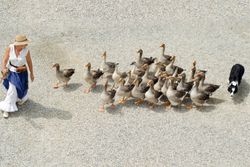
The Border Collie is highly intelligent, extremely capable of learning and willing to work to the point of obsession. It is sensitive, reacts to the finest signals and bonds closely with its person. This cleverness is a blessing and a curse: a Border learns desired and undesired behaviour lightning-fast.
Typical is the pronounced herding instinct. Border Collies tend to control movement and can, without guidance, start wanting to herd joggers, bikes, cars or even children. Without sensible occupation they easily develop stress, compulsive behaviour and nervousness.
Who is the Border Collie right for?
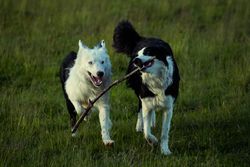
The Border Collie suits active, experienced people who offer it a real physical and above all mental task, for example in dog sport such as agility or obedience, in herding training or in intensive nose and trick work. It wants to think, work and cooperate with its person.
As a mere family or beginner dog without occupation, by contrast, it is the wrong choice. Many Borders end up in rescue because their owners underestimated the effort. Anyone looking for a calm companion for leisurely walks should consciously decide against this breed.
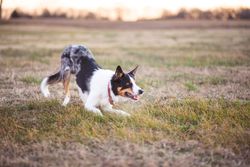
Exercise: physical and mental
Movement alone is not enough for the Border Collie, on the contrary: anyone who just lets it run for hours breeds a tireless endurance athlete. Decisive is the combination of physical movement, mental work and, very importantly, real rest phases, which many Borders first have to learn.
Channel the herding instinct into permitted paths and train impulse control and a reliable recall. The guides on chase and control behaviour and on dog training help here. Rest and structure laid down early are worth gold.
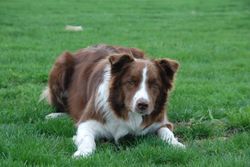
Training and socialisation
The Border Collie learns so fast that training mistakes take hold just as fast. All the more important are clarity, positive reinforcement and a well-thought-out training structure. Overstimulation should be avoided, because the sensitive dog otherwise tends towards over-arousal.
Good socialisation and targeted habituation to everyday stimuli help keep the control impulse in check. The goal is a dog that can work but is also allowed to switch off. It is precisely this balance that makes working with a Border as demanding as it is rewarding.
Health and typical illnesses
The Border Collie is comparatively robust and often lives quite long. Typical of the breed, however, are Collie Eye Anomaly, hip dysplasia and, in some lines, epilepsy. Especially important is the MDR1 gene defect, which can lead to a dangerous hypersensitivity to certain medications.
Serious breeding tests the parent animals for these points, including MDR1, and selects accordingly. Consistently ask for the results when buying. Also inform your vet of the possible MDR1 status before medications are given.
Getting one in Switzerland
A Border Collie puppy from a serious breeder costs in Switzerland about 1200 to 2000 francs. More important than the price is the origin: choose a breeding operation with the health tests mentioned, good rearing and honest advice that also asks whether you suit the breed.
Honestly consider before buying whether your everyday life does this dog justice. Registration in the dog database is mandatory, see the guide on AMICUS. The basic equipment for the start is in the puppy starter kit.
Conclusion: is the Border Collie right for you?
The Border Collie is an exceptional dog for exceptionally committed people. Anyone who does it justice physically and mentally gets an incredibly eager-to-learn, sensitive and performance-ready partner that surpasses itself in cooperation.
Anyone who instead is looking for an uncomplicated companion dog on the side does not do this breed justice and makes both themselves and the dog unhappy. For few breeds is honest self-assessment as important as for the Border Collie.
Frequently asked questions
Is the Border Collie a beginner's dog? No. Its intelligence, sensitivity and work drive easily overwhelm beginners. It needs experienced owners with time for real exercise.
How much occupation does it need? A lot, but well dosed: a mix of movement, mental work and conscious rest. Just running turns it into a restless perpetual runner.
What is the MDR1 defect? A gene defect that can lead to hypersensitivity to certain medications. A test provides clarity, always inform your vet.
Can a Border Collie live in a flat? In principle yes, if it is sufficiently exercised and has learned to rest. The type of housing is less decisive than the daily mental work.
Note: this guide offers general orientation and does not replace a veterinary examination or advice. If your dog has a health problem or in an emergency, please consult your vet.