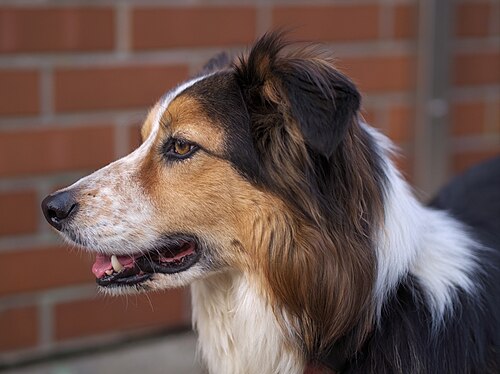
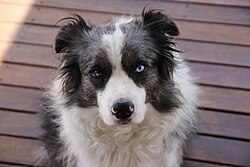
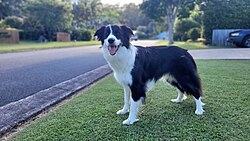
Border Collie
🧠 Temperament & character
The Border Collie is highly intelligent, extremely eager to learn and work, and very sensitive. It wants to be kept busy constantly and often learns commands in record time. Without sufficient physical AND mental stimulation, however, it quickly develops behavioural problems such as nervousness or compulsive behaviour. It bonds closely with its person and works with great devotion – but it is not a dog for the side.
📜 Origin & history
The Border Collie comes from the border region between England and Scotland, which gave it its name. Over generations it was selected exclusively for herding ability, not for looks. The dog 'Old Hemp', born in 1893, is regarded as the founding sire of the breed and shaped the typical, quiet herding style with a fixating stare. To this day, the Border Collie is the epitome of the working herding dog.
✂️ Grooming, care & training
The Border Collie's medium-length or short coat is relatively easy to care for and needs only regular brushing. The real challenge is keeping it occupied: this dog requires a great deal of daily exercise combined with intensive mental work. Herding, agility, obedience, trick training or tracking are ideal for challenging it mentally. It is important not to drive it into pure frantic activity, but also to practise calmness and impulse control.
🩺 Health
The Border Collie has a life expectancy of around 12 to 15 years and is generally robust. Breed-typical conditions include hip dysplasia, Collie Eye Anomaly (CEA), epilepsy and, in some lines, the MDR1 gene defect (medication intolerance). Reputable breeders use the available DNA and eye examinations and x-ray the hips. Responsible breeding also pays attention to a balanced, steady temperament.
🏡 Who is this breed right for?
The Border Collie belongs in active, experienced hands that can offer it meaningful tasks and plenty of activity every day. It is unsuitable for quiet first-time owners, very busy people or as a pure apartment dog, and quickly becomes overwhelming. It is ideal for dog sport enthusiasts, farmers or very active families with older children. In Switzerland it is popular, but unfortunately often underestimated – without real stimulation, the genius quickly becomes a problem dog.