Australian Shepherd: Temperament, Exercise and Health
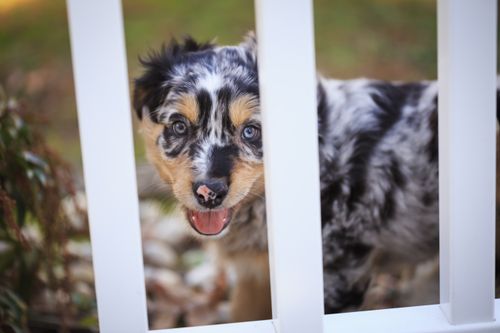
With its often spectacular merle coat and sometimes blue eyes, the Australian Shepherd is one of the most striking and currently most popular herding dogs. But anyone who only falls in love with the beautiful looks quickly overlooks the essential: the Aussie is a high-performance working dog with high demands on exercise and mental work.
This portrait shows where the Australian Shepherd really comes from, what defines it, who it suits and what the merle issue and health are about. The compact breed data is also in the Rassen-Wiki entry on the Australian Shepherd.
Origin and history
Despite its name, the Australian Shepherd does not come from Australia but was developed in the USA. Its ancestors arrived with Basque shepherds who emigrated to the American West via Australia, which explains the misleading name. There it was refined into a versatile farm and herding dog.
On the ranches the Aussie worked tirelessly with cattle and sheep and had to be independent, robust and weatherproof. This origin shapes it to this day: it wants to work, is closely bonded to people and needs a task to be balanced.
Appearance: size, weight and coat
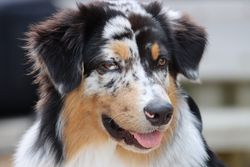
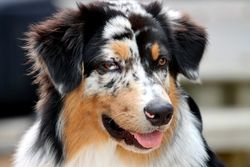
The Australian Shepherd is a medium-to-large, solidly built dog with a shoulder height of about 46 to 58 centimetres and a weight of around 16 to 32 kilograms. Males are noticeably larger than females. The expression is alert, friendly and attentive.
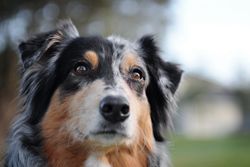
The medium-length coat with undercoat comes in various colours, including the eponymous merle pattern in blue and red as well as solid variants with markings. It sheds and needs regular care, especially at the feathering. The guide to coat care gives pointers.
Temperament and character
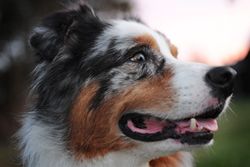
The Australian Shepherd is intelligent, eager to learn, willing to work and very people-oriented. Many Aussies are veritable velcro dogs that follow their person everywhere and seek closeness. Towards strangers some are at first reserved, which fits their herding past.
As with the Border Collie, the herding instinct is pronounced, so Aussies tend to want to control movement. Without sensible occupation and clear leadership, this energy can quickly turn into nervousness, control behaviour or over-arousal. The balance of work and rest is decisive.
Who is the Australian Shepherd right for?
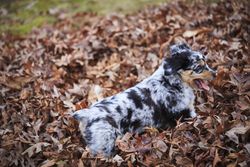
The Aussie suits active, ideally experienced people who give it a real task, whether in dog sport, herding training, extensive nose work or in an active everyday life with lots of joint occupation. It wants to think along and take part.
As a mere beginner or family dog for cosy couch evenings, it is the wrong choice. An under-challenged Aussie finds tasks for itself, often with an undesired result. Anyone who brings time, activity and consistency, by contrast, finds an enthusiastic partner.
Exercise and training
The Australian Shepherd needs the combination of physical movement, mental work and real rest phases. Merely wearing it out through hours of running is counterproductive, because it keeps driving up fitness. Clever occupation and impulse control matter more than sheer kilometres.
Channel the control and herding instinct into permitted paths and build a reliable recall. The guides on chase and control behaviour, on dog training and on socialisation help, precisely because of the reserve of some Aussies.
Understanding the merle issue
The beautiful merle pattern is more than looks. If two merle dogs are mated, so-called double-merle puppies can result, which often suffer from serious sight and hearing damage, up to blindness and deafness. Such a mating is irresponsible.
Serious breeders therefore never mate merle with merle. When buying a puppy, be sure that the breeding operation observes this and the parent animals are selected accordingly. A beautiful coat must never come at the expense of health.
Health and typical illnesses
Well bred, the Australian Shepherd is quite robust and often lives long. Typical of the breed are, besides the merle issue, the MDR1 gene defect, which can trigger a dangerous drug hypersensitivity, as well as hip dysplasia and various eye conditions such as Collie Eye Anomaly.
Responsible breeding tests the parent animals for MDR1, eyes and joints. Ask for the results when buying and inform your vet of a possible MDR1 status before medications are given. For health questions, the vet is always the right place.
Getting one in Switzerland
An Australian Shepherd puppy from a serious breeder costs in Switzerland about 1500 to 2500 francs. Look for a breeding operation that does not do merle-merle matings, carries out the health tests mentioned and honestly checks whether the demanding Aussie suits your life.
Do not be guided by looks alone, but by health and character. Registration in the dog database is mandatory, see the guide on AMICUS. The basic equipment for the start is in the puppy starter kit.
Conclusion: is the Australian Shepherd right for you?
The Australian Shepherd is a beautiful, clever and hard-working dog that rewards active people with great enthusiasm. Anyone who does it justice physically and mentally and finds the balance of work and rest gets a loyal, versatile partner.
Anyone who instead is guided by looks alone or is looking for a calm companion does not do the Aussie justice. As with the Border Collie: the honest question of whether you are up to this breed comes before the decision.
Frequently asked questions
Does the Australian Shepherd really come from Australia? No. Despite the name, it was developed in the USA. The name goes back to Basque shepherds who immigrated via Australia.
Is the Aussie a beginner's dog? Rather not. Its work drive and herding instinct easily overwhelm beginners. It needs active owners with time for real exercise and clear leadership.
What does the merle issue mean? Two merle dogs must not be mated, as the puppies can suffer serious sight and hearing damage. Serious breeders strictly avoid this.
How much occupation does an Aussie need? A lot and varied: movement, mental work and conscious rest. Just running turns it into a restless perpetual runner.
Note: this guide offers general orientation and does not replace a veterinary examination or advice. If your dog has a health problem or in an emergency, please consult your vet.