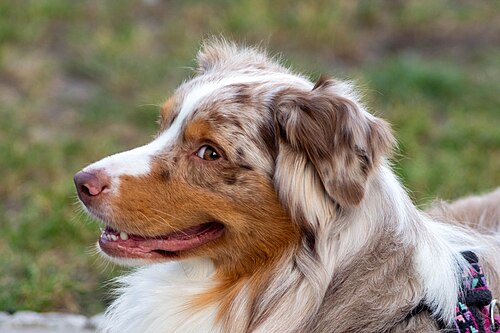
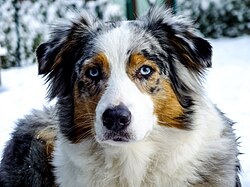
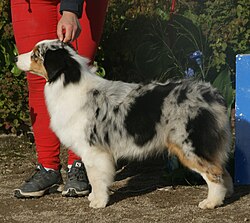
Australian Shepherd
🧠 Temperament & character
The Australian Shepherd is highly intelligent, energetic and extremely people-oriented. He wants to be part of everything, learns incredibly fast and truly flourishes when he has a set task. He can react warily and sensitively towards strangers, which is why early socialisation is important. Without enough physical and mental activity he quickly develops bad habits — this is not a dog to keep on the side.
📜 Origin & history
Contrary to its name, the Australian Shepherd emerged in the 19th and early 20th centuries in the western United States. Basque shepherds, some of whom immigrated via Australia, brought their herding dogs with them, and American ranchers refined these further into an agile all-rounder. Rodeo and western shows made the 'Aussie' popular in the mid-20th century, until it developed into a herding and sporting dog valued worldwide.
✂️ Grooming, care & training
The medium-length coat needs regular brushing, especially during the moult, when the Aussie sheds a lot. Far more important, however, is keeping him occupied: this dog needs plenty of daily exercise combined with demanding mental work. Dog sports such as agility, obedience, dog dancing or tracking are ideal for channelling his will to work. He is very eager to learn and easy to handle, but needs clear, fair rules.
🩺 Health
The Australian Shepherd usually reaches an age of 12 to 15 years, but is predisposed to several hereditary conditions. Particularly important is the MDR1 gene defect, which can cause severe intolerance to certain medications. In addition there are hip dysplasia and eye conditions such as Collie Eye Anomaly (CEA). Reputable breeders test for MDR1, have the eyes examined and avoid risky merle-to-merle matings, which can result in deaf and blind puppies.
🏡 Who is this breed right for?
The Aussie suits active, committed people who spend a lot of time with their dog and want to keep him meaningfully occupied. For quiet first-time owners, very busy people, or as a pure apartment dog with no programme, he is the wrong choice. In a sporty family with older children, on the other hand, he is a loyal, affectionate companion. Anyone who hikes, does dog sports or lives on a farm will find in him an enthusiastic partner.