Dental care for dogs: healthy teeth, fresh breath
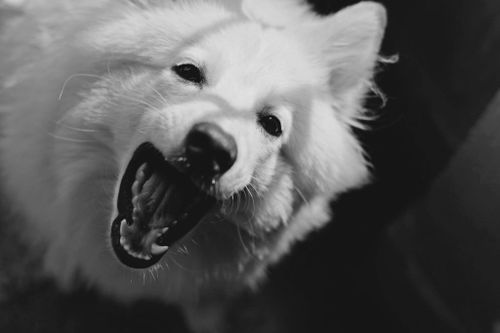
Your dog greets you in the morning, bounds up to you full of joy — and then that smell hits you and makes you take a step back. Many people accept dog breath as a given, as if it simply comes with the territory. But it doesn't. A mouth that smells foul is rarely just unpleasant; most of the time it's a warning sign. Behind it are bacteria, plaque and often already inflamed gums. Dental problems are among the most common health issues in adult dogs of all — and because they develop slowly and quietly, they go unnoticed for a long time. The good news: with a little knowledge and a small routine, you can prevent most of it. Here's how.
What happens inside a dog's mouth
It all starts with dental plaque. That's a soft, sticky film of bacteria, saliva and food residue that forms anew on the teeth every day — in your dog just as in you. As long as this film is soft, it can simply be brushed away. But if it's left in place, it hardens within a few days into tartar: that yellowish-brown, solid crust that sits mainly where the tooth meets the gum. And tartar is something you can no longer remove at home — it has to come off at the vet.
Rough tartar is the ideal breeding ground for even more bacteria. They migrate under the gum line, and that's where the real trouble begins. First the gum becomes inflamed — it turns red, swollen and bleeds easily. This is called gingivitis, and at this stage everything is still reversible. If no one deals with it, the inflammation reaches deeper and gradually destroys the tooth's support structure: gum, fibres, bone. Gingivitis turns into periodontitis. It hurts, the teeth loosen and, in the worst case, fall out.
And that's not all: a chronically inflamed mouth is a constant gateway for bacteria into the body. Through the bloodstream they can put a strain on organs such as the heart and kidneys. That's why dental care is never just cosmetic or a question of fresh breath — it's a genuine part of health care. The tricky part: dogs barely show pain in the mouth. They keep eating, keep wagging, don't complain. To us, a dog with really bad teeth often seems completely normal — until the problem is big. That's exactly why you have to look before your dog shows you that something is wrong.
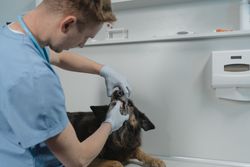
Brushing: the gold standard
It sounds like a lot of effort at first, but it's by far the most effective measure: brushing the teeth. Nothing else removes the soft plaque as reliably before it turns into tartar. No chew, no special food, no powder comes close. You only need two things: a dog toothbrush or a finger brush that you slip over your finger, and a dog toothpaste.
Very important, please burn this into your memory: never use human toothpaste. It can contain xylitol and fluoride, and both are toxic for dogs. Your dog doesn't spit the paste out, he swallows it — so it absolutely has to be a toothpaste made for dogs. It comes in flavours like chicken or liver, and that's exactly what makes your job easier, because your dog is then more likely to enjoy the brushing.
How to get your dog used to brushing
The key is: slowly and in a good mood. Anyone who tries to shove the brush into the dog's mouth on day one has already lost. Better to go step by step:
- First just let him lick the toothpaste off your finger, for a few days. It should be a treat for him.
- Then run your finger gently along the gums and teeth, just for a few seconds.
- Next the brush joins in, first on the big molars on the outside, where the most tartar forms.
- Build it up week by week, until you're brushing in small circles along the gum line.
- Praise and a little something afterwards turn brushing into a good ritual.
Daily brushing does the most, because the plaque forms anew every day. If you can't manage that, several times a week is still clearly better than nothing at all. What matters most is the outer surface of the teeth — that's where the plaque collects most heavily, and the tongue cleans a good part of the inner surface itself.
Chewing, chews and dental food
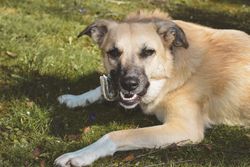
Chewing isn't just an activity for dogs, it also keeps the teeth cleaner. As they gnaw, part of the soft plaque is mechanically rubbed off. There are dental chew snacks made specifically for this, along with suitable chews, and some manufacturers offer special dental-care food whose kibble is shaped so that the teeth are gently cleaned as the dog chews.
An honest word on this: all of it is good support, but no substitute for brushing. No chew reaches every surface, least of all the delicate gum line. See it as a sensible addition — the brush stays the boss. With chews it's also worth a second look: very hard things like some bones, horns or antler pieces can chip teeth. As a rough rule of thumb, a good chew should still be easy to dent with your fingernail. And give your dog calorie-rich snacks in moderation, otherwise the dental care ends up on the hips.
Recognising the warning signs
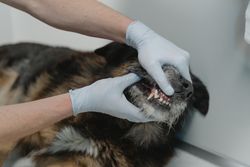
Because your dog can't tell you that something hurts, you are his early-warning system. Lift his lips now and then and take a calm look at the teeth and gums. You should take these signs seriously:
- bad breath that smells strikingly foul or rotten
- yellow-brown tartar along the gum line
- red, swollen or bleeding gums
- increased drooling
- food falling out of the mouth, or your dog only chewing on one side
- he rubs or scratches at his mouth with a paw
If you notice any of these, it's time for an appointment at the vet. The earlier an inflammation is spotted, the more easily and cheaply it can be treated.
Professional teeth cleaning at the vet
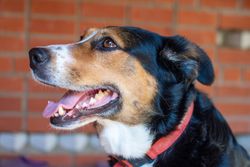
Once the tartar is there and the gum is inflamed, brushing no longer helps — then it's the professional's turn. The vet carries out a professional teeth cleaning, and in dogs this takes place under general anaesthesia. There's a good reason for that: it's the only way to thoroughly clean the surfaces under the gum line and between the teeth too, without the dog feeling fear or pain.
In the process the tartar is removed, the teeth are polished so that new plaque settles less easily, and loose or badly damaged teeth are pulled if needed. A treatment like this costs something; it's an item you should budget for. And this is exactly where good home care pays off: it pushes such procedures further out or makes them necessary less often.
Start early and stay with it
Everything is easiest if your dog is used to having its mouth handled from an early age. A puppy that's used to you regularly looking into its muzzle and lifting its lips will later take the brushing far more calmly. The change from milk teeth to the permanent set, by the way, is a good moment to look into the mouth more often and check that everything is coming through cleanly. But an adult dog can still learn this too — it just takes a bit more patience.
Keep in mind, too, that not all dogs are equally prone. Small breeds often have a harder time here: in their small jaw the teeth stand close together, plaque and tartar collect more easily, and problems appear earlier. Anyone with a small dog should therefore keep a particularly close eye on the teeth and not wait too long with the care. Make the short mouth check a fixed part of your everyday life, for example during the evening cuddle. One look a week is already enough to notice changes early.
Dental care isn't a big project but a small habit that pays off across a whole dog's life: with less pain, fresher breath and fewer vet visits. Start small, stay with it and look into your dog's mouth regularly. If you're unsure or spot one of the warning signs, have the teeth checked by a professional — you'll find vets near you in our overview of services. What you should roughly expect to pay for a professional teeth cleaning is something we put into context in our guide to the costs of owning a dog. And because food also helps decide how the teeth and gums fare, it's worth a look at our guide to canine nutrition.
Note: this guide offers general orientation and does not replace a veterinary examination or advice. If your dog has a health problem or in an emergency, please consult your vet.