Switching Dog Food: How to Avoid Diarrhoea
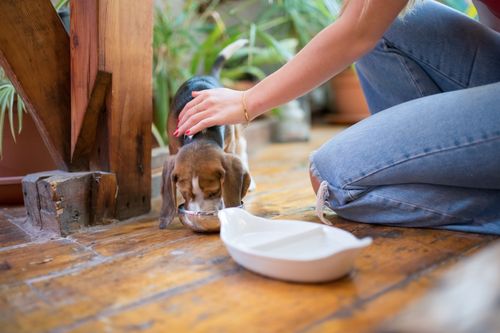
Whether because of a new life stage, a vet’s recommendation or because the old food is no longer well tolerated: almost every dog household eventually faces a food change. What many underestimate is that the change itself needs good planning. Too fast a switch is the most common cause of sudden diarrhoea, soft stool or vomiting – and then it is not the new food that is to blame, but the pace of the change.
The reason is digestion: the dog’s gut and its bacterial flora are attuned to the familiar food. If something completely different is served overnight, this finely balanced system is thrown off. This guide shows you how to switch food gently enough that your dog does not run into problems in the first place.
Why switching slowly matters so much
In your dog’s gut lives a huge community of microorganisms that help with digestion. This gut flora is specialised in the composition of the familiar food. If the diet changes abruptly, the bacteria cannot handle the new components at once – the result is fermentation, soft stool and, at worst, full-blown diarrhoea.
With a slow transition, by contrast, the flora has time to adapt. It shifts a little each day until it can make the most of the new food. That is why patience here is not a nice extra but the real key to success.
The 7-day plan
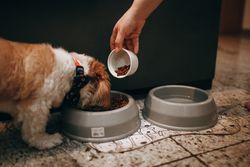
The proven rule of thumb is a gradual mix over seven days. On the first two days, mix about a quarter of new food into three quarters of old. On days three and four, move to a half-and-half mix. On days five and six, reverse it: three quarters new, one quarter old. From day seven, feed the new food entirely.
It is important to mix old and new food well rather than putting them separately in the bowl – otherwise some dogs pick out only the familiar part. In sensitive dogs, stretch the plan to ten or fourteen days. Better a little slower than too fast.
How to tell it is going well
A successful food change shows above all in the stool: it stays firm and well formed, the frequency stays normal. Your dog eats with appetite, seems lively and shows no signs of a rumbling tummy. Coat and general well-being also stay stable.
Small, temporary fluctuations in stool consistency in the first days are not unusual and usually harmless, as long as your dog stays fit. Simply watch attentively and only move a step further once the current mix is well tolerated.
Warning signs to slow down
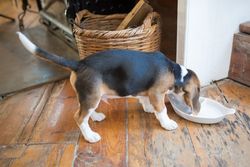
If soft stool, diarrhoea, vomiting, gas or loss of appetite appear, that is a signal to go back a step. Return to the last well-tolerated mix and stay there a few days longer before increasing again. Often this slowing down alone solves the problem.
If the complaints persist despite the slow approach, worsen, or are joined by lethargy, fever or blood in the stool, your dog belongs at the veterinary practice. There may then be more behind it than just the transition – an intolerance or another illness.
Special cases: puppies, seniors and sick dogs
In puppies the gut is especially sensitive, and growth often calls for a planned switch from puppy to junior food. A particularly gentle approach and, if in doubt, a brief word with the veterinary practice are worthwhile here. More on this in the guide Puppy.
Older dogs and those with a sensitive stomach also react more strongly to changes. For them, stretch the plan generously. If the food is changed for medical reasons – to a prescription diet – follow your vet’s instructions closely, including on the pace.
Switching the food type
Not only a change of variety: switching the food type also needs to be done gently. Moving from dry to wet food or vice versa strongly changes water content and consistency – the same gradual plan applies. What distinguishes the two types is covered in the guide Wet or dry food.
When moving to a completely different feeding form too, for example from finished food to a home-prepared ration, patience is needed. The greater the difference from the previous diet, the more time you should give digestion to adjust.
Common mistakes
The most common mistake is simply impatience: because the new food is already there, everything is switched overnight. The second is constant back and forth – anyone who changes food every few days never gives digestion any rest and repeatedly provokes problems.
Changing several things at once is also unwise: if you alter food, feeding times and amount all at once, you will not know what caused a problem. Change only one thing at a time where possible and give each transition its week.
Patience pays off
A food change is not a race. The extra week you take for a gentle transition often saves you and your dog twice over in days of diarrhoea. So plan the change deliberately into a calm phase without extra stress like a move or a trip.
If you are unsure which food is the right one at all, the overview in the guide dog nutrition will help. And remember: a food your dog tolerates well and that supplies everything does not need to be changed constantly – continuity is good for digestion.
Frequently asked questions
How long does a food change take? Usually seven days, ten to fourteen for sensitive dogs. More important than the exact number is that your dog tolerates each stage well before you go on.
My dog has diarrhoea despite a slow change – what to do? Go back a step to the last good mix and stay there longer. If the diarrhoea lasts more than two days or other symptoms appear, see the vet.
Do I need to be careful when switching treats too? Larger amounts of new treats can also upset the stomach. Introduce them in moderation and gradually as well.
How often should I change the food? Not constantly. A well-tolerated food can be fed long-term; frequent changes tend to burden digestion.