Wet or Dry Food for Dogs: Which Is Better?
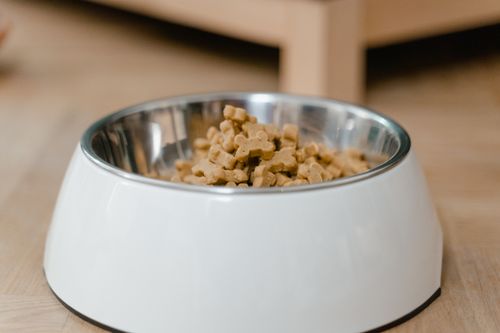
The question of whether wet or dry food is the right choice occupies almost every dog household. Both variants feed millions of dogs healthily through life – so there is no fundamental right or wrong. Still, the two food types have different properties that, depending on the dog, daily life and preferences, speak sometimes for one and sometimes for the other. Knowing the differences makes for a more conscious choice.
In this guide we calmly look at the strengths and weaknesses of wet and dry food: from dental health through weight management to drinking behaviour. By the end you will know which variant suits your dog – or whether the combination of both is the best solution for you.
The biggest difference: water content
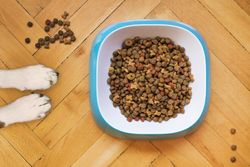
The central difference between the two food types is the moisture content. Wet food is about 70 to 80 percent water, dry food only around 8 to 10 percent. This explains almost all the other pros and cons: at the same weight, wet food provides far less energy but often fills better through volume. Dry food, by contrast, is compact and goes a long way.
This difference has practical consequences for the amount in the bowl. Of wet food your dog needs a considerably larger portion in grams to reach the same energy. When switching types, do not be fooled by the portion size – how to calculate the amount correctly is in the guide How much food does my dog need?.
Advantages of dry food
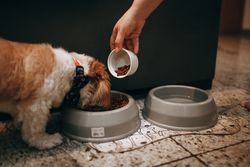
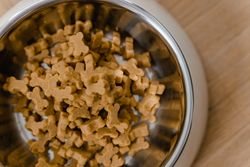
Dry food scores above all on practicality. It is easy to store and portion and can sit in the bowl for a while without spoiling. This makes it ideal for food games, sniffing mats and as training treats. It is also usually cheaper per kilo of energy and, thanks to its concentration, very economical, which is an argument especially for large dogs.
A frequently cited advantage is the slight abrasion on the teeth during chewing. This effect is real but limited – dry food alone does not replace dental care. How to truly prevent tartar is covered in the guide Tartar in dogs. As a rule of thumb: dry food can slightly support dental health but is no substitute for brushing.
Advantages of wet food
Wet food convinces first through taste: most dogs eat it especially eagerly, which is a big advantage with fussy eaters, sick or older dogs. The high water content also ensures a natural fluid intake through the food – helpful for dogs that drink little on their own, and gentle on the urinary tract.
Because wet food delivers a lot of volume for little energy, it suits weight control well: the dog gets full without taking in too many calories. This can be a real advantage for dogs prone to overweight. The downsides are the higher price per unit of energy and the fact that opened cans must be refrigerated and used up quickly.
The combination of both
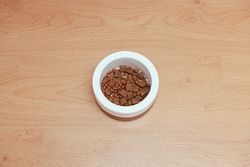
For many dogs mixed feeding is the most practical solution: dry food in the morning, wet food in the evening – or both combined in one meal. This unites the advantages of both worlds: the practicality and economy of dry food with the taste and moisture of wet food. Dogs that drink too little especially benefit from a wet-food share.
The right calculation matters when mixing: calculate each part by its own table and combine them proportionally so the energy does not add up unnoticed. Also make sure to combine high-quality products – a mix is only as good as its components.
What really matters in the choice
In the end it is not the food form that decides but the quality and the fit to your dog. A high-quality dry food is superior to a poor wet food, and vice versa. Look for a clearly declared protein source, traceable ingredients and a product that fully covers the nutritional needs – the basics are in the guide dog nutrition.
Consider individual needs: a dog prone to urinary stones benefits from the high water content of wet food, a very active large dog from the economy of dry food. Watch how your dog does on the chosen food – coat, digestion, energy and weight are the best indicators.
How to make the switch work
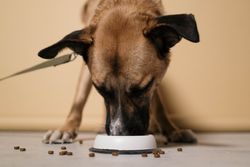
If you want to switch from one form to the other, never do it abruptly. A sudden change overwhelms the gut and often ends in soft stool or diarrhoea. Mix the new food into the familiar one over seven to ten days in an increasing proportion until the switch is complete.
Watch your dog closely during the transition. If digestion stays firm and it eats willingly, you can keep the pace. If problems appear, slow down. If complaints persist, a visit to the veterinary practice is worthwhile to rule out an intolerance.
Puppies, seniors and sick dogs
The right food form also depends on the life stage. Growing puppies have a high energy need and still-small teeth – here a high-quality moistened dry food or a combination is often practical, because it delivers a lot of energy in little space while being easy to take in. A food specially formulated for puppies is important.
Older dogs and those with dental problems often cope better with soft wet food, because it needs little chewing and stimulates the appetite. Sick or recovering dogs also tend to eat wet food more willingly. For certain conditions – kidney or urinary tract – the high water content of wet food can even be therapeutically useful; the precise recommendation always comes from the veterinary practice.
Frequently asked questions
Is dry food bad for the kidneys? No, as long as your dog drinks enough. It is important that fresh water is always available on pure dry feeding. Dogs that drink little benefit from a wet-food share.
Does wet food cause weight gain? No, on the contrary – at the same energy it provides more volume and fills well. What matters, as always, is the total amount of energy, not the food form.
Can I mix wet and dry food? Yes, this is completely unproblematic and ideal for many dogs. Just make sure to calculate the total amount correctly.
Which is better for the teeth? Dry food has a slight cleaning effect but does not replace real dental care. Regular brushing matters regardless of the food form.