Bernese Mountain Dog: Temperament, Care and Health in Portrait
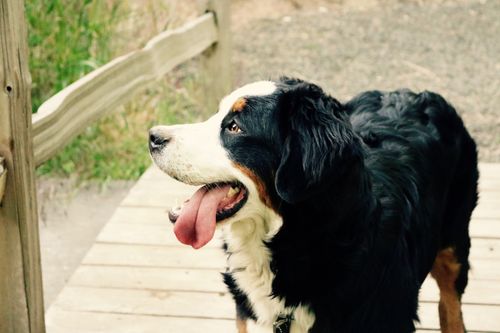
Few dogs are as closely tied to Switzerland as the Bernese Mountain Dog. With its glossy tricolour coat, powerful body and good-natured gaze, it embodies the calm, reliable family dog. But the gentle giant from the canton of Bern also has its shadows, above all a sadly short life expectancy.
This portrait shows where the Bernese comes from, what defines it, who it suits and what to watch for especially in terms of care and health. The compact breed data is also in the Rassen-Wiki entry on the Bernese Mountain Dog.
Origin and history
The Bernese Mountain Dog is one of four Swiss mountain dogs and comes from the Bernese midlands, in particular the region around Dürnten and the Emmental. Originally it was a versatile farm and droving dog that drove cattle, guarded the farm and pulled carts with milk churns.
In the early 20th century the breed was systematically recorded and bred on, with the Bernese Mountain Dog club playing a central role. From the robust working dog emerged a popular family and companion dog that has kept its calm, down-to-earth nature to this day.
Appearance: size, weight and coat
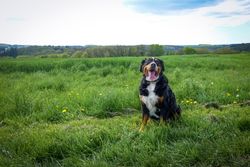
The Bernese Mountain Dog is a large, powerful dog. Males reach about 64 to 70 centimetres at the withers, females 58 to 66 centimetres, the weight is, depending on sex, around 38 to 50 kilograms. The build is massive but agile.
The long, slightly wavy coat is unmistakably tricolour: deep black with rich tan markings and white patches on head, chest and paws. This dense coat protects from cold but troubles the dog in heat and needs regular care, see the guide to coat care.
Temperament and character
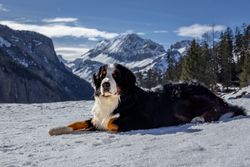
The Bernese Mountain Dog is considered good-natured, balanced and very family-oriented. It is self-assured without being pushy, watchful without sharpness and mostly calm in everyday life. Towards its family it is affectionate and cuddly, towards strangers at first reserved, but not fearful.
Worth knowing: the Bernese is late-maturing and stays playful and a little clumsy for a long time. Some show a gentle stubbornness. With calm, friendly leadership and good socialisation it becomes a pleasant, reliable companion.
Who is the Bernese Mountain Dog right for?
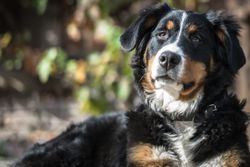
The Bernese is a great family dog for people with space, time and a liking for a large dog. It suits calmer, nature-loving owners who like being outdoors but do not need extreme athletes. With children it is usually patient and affectionate.
It is less suitable for a small city flat without exercise, for very sporty people looking for an endurance partner, or for anyone who cannot cope, emotionally and financially, with the short life expectancy and possible health costs.
Exercise, activity and training
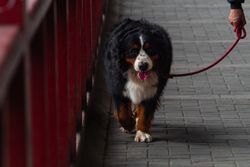
The Bernese needs regular, moderate exercise and loves leisurely hikes and tasks with its person. Exaggerated high-performance sport does not suit it, and during growth the joints of this heavy dog must be spared. Short, clever sessions with mental work fit well.
In training it is capable of learning, but not a blind-obedience dog, it works from trust. Positive reinforcement and consistency without harshness lead to the goal. In the young dog, be sure to ensure joint-friendly exercise, few stairs and no jumping from height.
Everyday care
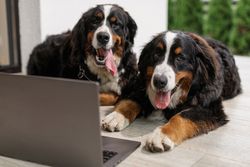
The long coat with undercoat needs brushing several times a week, daily during the moult, to manage dead undercoat and knots. Behind the ears, on the legs and on the trousers, knots form easily. Bathing is only done when needed.
Because of its dense black coat, the Bernese is heat-sensitive. In summer avoid the midday heat, provide shade and water and move activities to cool times of day. Also think of nails, teeth and paws, see paw care.
Health and life expectancy
Honestly, health is the great downside of this wonderful breed. The life expectancy, at around seven to nine years, is well below that of many other dogs. Bernese tend towards certain cancers, unfortunately more common in the breed, as well as hip and elbow dysplasia.
All the more important is serious breeding that examines the parent animals thoroughly and selects for health. Keep the weight lean to relieve the joints, and go to the vet early with any abnormalities. Given the possible costs, a look at dog insurance is worthwhile.
Getting one in Switzerland
As a Swiss national breed, the Bernese Mountain Dog is well represented here. A puppy from a serious breeder costs about 2000 to 3000 francs. Be sure to look for a breeder affiliated with the Bernese Mountain Dog club, with complete health examinations of the parent animals.
Avoid cheap offers and puppy mills, precisely for a breed with known health risks. Registration in the dog database is mandatory, see the guide on AMICUS. What a puppy needs at the start is in the puppy starter kit.
Conclusion: is the Bernese Mountain Dog right for you?
The Bernese Mountain Dog is a big-hearted, calm family dog and a piece of Swiss cultural heritage. Anyone with space, time and love for a large, affectionate dog who consciously accepts the intense but often short shared time finds a wonderful companion.
One should, however, be aware of the responsibility: coat care, heat sensitivity, joint-friendly keeping and above all the health reality are part of an honest decision for this breed.
Frequently asked questions
How old does a Bernese Mountain Dog get? Sadly, the breed reaches on average only about seven to nine years. Serious breeding and a healthy, lean life can improve the odds but guarantee nothing.
Is the Bernese a good family dog? Yes, it is considered good-natured, patient and fond of children. Important are enough space, time and respectful handling of the dog by children.
How much exercise does it need? Moderate, regular exercise and leisurely hikes. High-performance sport is not for it, and during growth the joints must be especially spared.
Does the Bernese cope with heat? Only to a limited extent. The dense black coat makes it heat-sensitive. In summer, shade, water and cool times of day are important.
Note: this guide offers general orientation and does not replace a veterinary examination or advice. If your dog has a health problem or in an emergency, please consult your vet.