Vomiting in Dogs: Causes, Warning Signs and What Helps
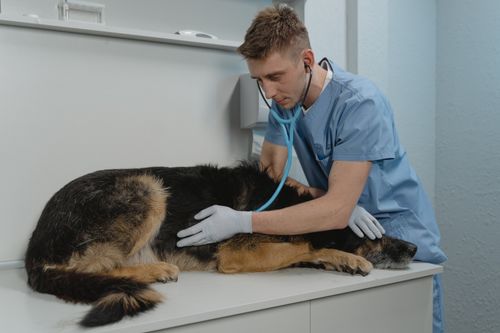
Almost every dog vomits at some point, and usually there is nothing serious behind it. Dogs gag more readily than humans and thus free themselves of something that does not agree with them. Still, vomiting can also be a warning sign of a serious illness or poisoning. The art lies in telling one from the other.
This guide helps you read vomiting correctly: when you can observe and support with a suitable diet yourself, and when the dog needs the vet immediately. Important upfront: it does not replace an examination, but helps you react faster and more calmly when it matters.
When vomiting is usually harmless
A one-off vomit in an otherwise lively, fit adult dog that keeps drinking and behaves normally is often harmless. Common harmless triggers are eating too fast, grass, an empty stomach in the morning with yellowish foam or a small intolerance.
In such cases, observation and a short food break usually suffice. The overall impression is decisive: a dog that eats again, plays and seems normal after vomiting differs clearly from one that is listless, in pain or apathetic.
Vomiting or regurgitation?
Not everything that comes up is true vomiting. In vomiting the dog actively retches, the belly pumps, and partly digested food comes up with stomach acid. In regurgitation, by contrast, undigested food comes back out almost effortlessly and without retching, often shortly after eating and in a tube-like shape.
This distinction is important for the vet, because it points to different causes. So note how the bringing-up happened, what the content looked like and in what relation to eating it occurred.
Common causes
The range is wide. More harmless causes are eating spoiled food, gulping too fast, a change of food or a mild stomach upset. More serious causes range from infections, parasites and foreign objects in the digestive tract to organ diseases and poisoning.
A wrong or too-fast change of food can also irritate the stomach. How to switch food gently, see the guide to changing food. If there is a suspicion that the dog has eaten something toxic, the overview of toxic foods helps.
Warning signs: when to go to the vet fast
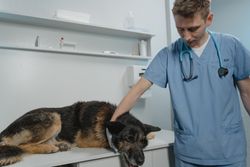
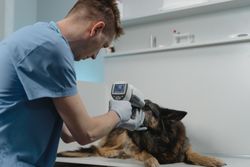
Certain signs mean you should not wait but act quickly: repeated vomiting in a short time, blood in the vomit, a bloated, hard belly, unsuccessful retching with no result, severe pain, apathy, fever, circulatory problems or simultaneous violent diarrhoea.
Especially alarming is unsuccessful retching with a bloated belly, because it can indicate a life-threatening gastric torsion. What is behind it and why every minute counts is explained in the guide to gastric torsion. In such cases: straight to the practice or clinic.
What to do with a one-off vomit
If an otherwise fit adult dog has vomited once and seems normal afterwards, you can rest its stomach with a short food break of a few hours. Water should stay available in small amounts so it does not dehydrate, but not in large gulps at once.
Then start with a light bland diet in small portions, for example cooked lean chicken with rice or potato, spread over the day. If everything stays down and the dog is well, increase slowly and switch back to the usual food over a few days.
Fluids and dehydration
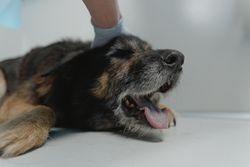
Vomiting robs the body of fluid. Especially if diarrhoea is added, dehydration threatens quickly. A simple guide is the skin-fold test: if you lift the skin on the neck slightly and it stays up instead of snapping back at once, that can point to a fluid deficit.
Dry, sticky gums and sunken eyes are further warning signs. If the dog cannot keep water down or vomits up even what it drank, it needs the vet, because it then often needs a drip. More on accompanying diarrhoea in the corresponding guide.
When never to doctor around yourself
In puppies, very old dogs and chronically ill animals the reserve is small; here seek veterinary advice early even with mild vomiting. The same applies with suspected poisoning, swallowed foreign objects or if your dog takes medication.
Never give human medicine-cabinet drugs on your own initiative. Many are unsuitable or toxic for dogs. Inducing vomiting should also only be done on veterinary instruction, because with certain poisons and objects it does more harm than good.
Preventing in everyday life
Many cases can be avoided: feed at fixed times and suitable amounts, avoid gulping too fast for example with a slow-feeder bowl and let the dog rest after eating. Keep rubbish, food scraps and toxic substances consistently out of reach.
On walks, make sure your dog does not eat scraps, carrion or unknown things. Regular deworming and prevention lower the risk of infectious causes. A slow, planned change of food additionally spares the stomach.
What the vomit reveals
The appearance of the vomit often gives clues. Yellowish, foamy vomit indicates an empty stomach, undigested food a meal eaten too fast or regurgitation. Fresh, bright red blood or dark, coffee-ground-like material, by contrast, are serious warning signs and should be checked.
Photograph the vomit calmly if it is unusual, and note frequency and times. This information often helps the vet with the diagnosis more than a plain description from memory and can save unnecessary examinations.
Frequently asked questions
My dog vomits yellow foam in the morning, is that bad? Often not. Yellowish foam on an empty stomach happens. If a small late meal or an earlier breakfast does not help and it occurs often, have it checked.
How long a food break with vomiting? In a fit adult dog, a few hours, then a bland diet in small portions. Puppies and old dogs should not fast for long, here rather go to the vet early.
May I give my dog something for nausea? Only on veterinary instruction. Human medicines can be dangerous. The cause matters more than merely suppressing the symptom.
When does repeated vomiting become an emergency? Several vomits in a short time, blood, a bloated belly, unsuccessful retching or a listless, painful dog are reason to go to the vet immediately.
Note: this guide offers general orientation and does not replace a veterinary examination or advice. If your dog has a health problem or in an emergency, please consult your vet.