Gastric Torsion in Dogs: Spotting the Emergency in Time
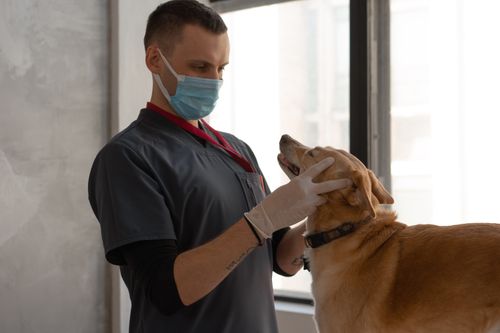
Gastric torsion – medically gastric dilatation-volvulus or GDV – is one of the most dramatic emergencies in canine medicine. The stomach fills with gas and rotates on its own axis. The exit is blocked, the gas can no longer escape and the bloated stomach presses on large blood vessels. Within hours the outcome can be fatal.
First things first: gastric torsion is always an absolute emergency. There is no home remedy and no waiting. If you recognise the signs, every minute counts – go straight to the nearest veterinary clinic or the emergency vet. This guide helps you assess the situation and prevent it.
What happens during a torsion
Normally the stomach sits loosely in the abdomen. In a torsion it first bloats strongly (dilatation) and then rotates on its long axis (volvulus). The stomach entrance and exit close off – neither food, gas nor fluid can escape.
The tightly filled stomach presses on the large vena cava and disturbs the return of blood to the heart. Circulation collapses, the stomach wall is no longer supplied with blood and begins to die. It is exactly this chain reaction that makes torsion so quickly life-threatening – often only one to two hours remain.
The signs you must recognise at once
The most typical sign is unproductive retching: the dog repeatedly tries to vomit, but nothing comes up or only stringy mucus. Added to this are a visibly bloated, hard belly, strong restlessness, panting, increased drooling and the vain attempt to find a comfortable position.
Pale gums, a fast pulse and weakness up to collapse can also appear. If your dog suddenly becomes restless after eating, bloats the belly and retches in vain, do not assume it will “pass”. Drive to the clinic immediately and call on the way so the team is ready. The basics for emergencies are also in the guide First aid for dogs.
Which dogs are most at risk
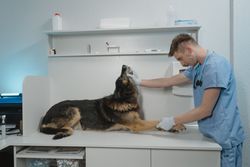
The most affected are large breeds with a deep, narrow chest: Great Dane, German Shepherd, Weimaraner, Boxer, setters, Doberman and the Standard Poodle. Age plays a part too: older dogs are affected more often than young ones.
There are also contributing factors: eating large amounts very fast, only one big meal a day, drinking a lot or romping wildly right after eating, as well as stress and anxiety. A dog that has already had a torsion is especially at risk.
How to prevent it
Split the daily ration into two, or better several smaller meals rather than one big one – how to divide the amount correctly is covered in the guide How much food does my dog need?. Ensure about an hour of rest after eating and avoid wild play or exercise right before and after the meal.
If your dog eats very fast, a slow-feeder bowl brings the pace down. Avoid stress around feeding, especially in multi-dog homes. For very high-risk breeds, discuss preventive gastropexy with your vet – a procedure that fixes the stomach to the abdominal wall so it can no longer twist. Important: raised bowls are often recommended but are suspected of increasing the risk instead – check with your practice.
What happens at the vet
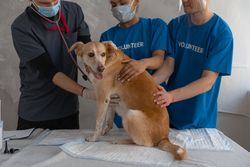
At the clinic, circulation is stabilised at once and pressure is taken off the stomach, usually via a tube or a decompression puncture. An X-ray confirms the diagnosis. Almost always an emergency operation follows: the stomach is turned back, checked for dead tissue and often fixed to the abdominal wall right away.
The sooner the dog is treated, the better the chances. That is why awareness matters so much: knowing the signs and acting without hesitation can save your dog’s life. This text does not replace veterinary advice – if in doubt, always go straight to the clinic.
After the operation: recovery
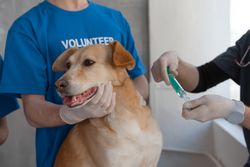
Once the dog has come through the emergency operation, it usually stays in the clinic for a few days under observation, because heart rhythm disturbances can occur even after the procedure. At home a rest period of several weeks follows, on the leash and calm, so the abdominal wall and the fixed stomach heal safely.
Feeding is handled with particular care in this phase: several small, easily digestible meals across the day, no hasty eating and rest afterwards. Your vet gives you a precise plan – follow it strictly, even if the dog quickly seems fit again.
Worth knowing: if the stomach was fixed to the abdominal wall during the operation (gastropexy), the risk of another torsion drops markedly. Without this fixation the recurrence risk is high. Discuss long-term prevention – feeding, exercise, stress avoidance – calmly with your practice.
Why every minute counts
In hardly any other emergency does time decide survival as directly as in gastric torsion. With every hour the twisted stomach goes untreated, more tissue dies and the circulatory crisis worsens. Dogs treated within the first one to two hours have markedly better survival chances than those where someone “waited a bit first”.
The golden rule is therefore: when in doubt, always drive at once. It is no mistake to arrive at the clinic with a suspicion that turns out harmless – a missed emergency, by contrast, can be fatal. Save the number of your nearest emergency vet in your phone so you do not have to search when it matters.
Frequently asked questions
Can I do anything at home? No. There is no home remedy. Any attempt to relieve the stomach yourself only costs precious time. Go to the clinic immediately.
Does it only affect large dogs? Mostly, but not only. Medium-sized deep-chested dogs can be affected too – the signs apply to all.
Is preventive surgery worthwhile? For very high-risk breeds yes, often together with neutering. You make the decision with your vet.
How do I tell this apart from harmless bloating? The decisive warning sign is unproductive retching together with a hard, distended belly and strong restlessness. When in doubt, always: better one trip too many to the clinic than one too few – its cost is nothing against a lost life.
Note: this guide offers general orientation and does not replace a veterinary examination or advice. If your dog has a health problem or in an emergency, please consult your vet.