Finding the right dog breed: the honest guide for Switzerland
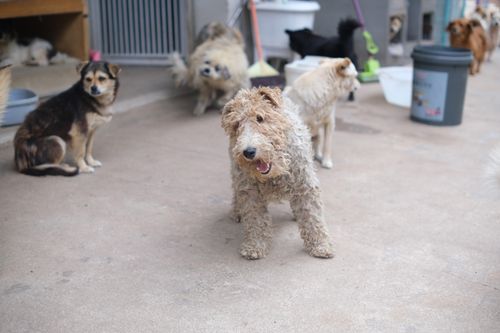
It happens fast: you see a puppy with big round eyes, a Border Collie sweeping elegantly across the meadow, or a little Frenchie with a wrinkled face — and you're done for. Understandable. But that's exactly the most common mistake when choosing a breed: falling in love with a look instead of with a character that fits your own everyday life.
A dog doesn't move in with you for a weekend but for many years, often for a whole decade. In that time you'll share morning walks in the rain, holidays, house moves, perhaps children or a new job with different working hours. The honest question is therefore not “Which dog is the most beautiful?” but “Which dog fits the life I really lead — and not the one I sometimes imagine for myself?” This guide goes through the points that really matter here. A ranking of the best breeds you won't find here, because there's no such thing.
The questions that come before the breed
Before you even google a breed name, an honest look at yourself and your household is worth it — best of all with everyone who'll be living with the dog.
- Exercise: How many hours a day can you realistically be outside — even in January, even after a long working day?
- Space: Small city flat, house with a garden, rented (dogs allowed?) or owned?
- Time: How long is the dog alone during the day, and who takes over when you're ill or away?
- Household: Do small children, older people or other animals live with you? Is it calm or lively at your place?
- Experience: First dog or already some practice? Some breeds forgive beginners' mistakes more easily than others.
- Budget: Food, the vet, insurance, equipment and, depending on the coat, the groomer add up — month after month.
These answers are your filter. A dog isn't a decoration you set out at the weekend, but a family member with its own needs. Anyone who's honest here saves themselves and the dog a lot of frustration later.
Energy and the trap with working dogs
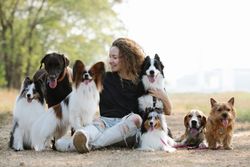
The most expensive mistake in thinking concerns the energy requirement. Breeds like the Border Collie, the Australian Shepherd or the Malinois are fascinating: highly intelligent, fast, eager to work. But that's exactly their demand too. They were bred to work all day — to herd sheep, to work together with people, to solve tasks. They need real daily workload, physically and mentally.
Put a dog like that into a quiet flat and take one short loop around the block once a day, and he won't become relaxed but unhappy. Under-challenged working dogs find their own job: they herd joggers and bikes, bark out of boredom or develop behavioural problems. That doesn't mean these dogs belong only on the farm — anyone who likes to run, hike and builds mental work into their training will find great partners in them. But anyone who mainly wants their peace after work is better served with a calmer companion dog. There's a suitable breed for every activity level.

Space, size and your everyday life
Size is more than a question of square metres. A very large breed quickly gets cramped in a small flat. But size also concerns everything around it: a big, heavy dog has to walk under control on the lead, fit in the car, take up a reasonable amount of space on the train and, in an emergency, perhaps be carried.
Conversely, small breeds are not automatically the relaxed flat solution. A small dog too needs exercise, mental work and clear rules — a Jack Russell, for example, is full of temperament and hunting drive and is anything but a sofa cushion. When it comes to space, think about the surroundings too: meadows and forest nearby, or into the car first for every walk? That often says more about the right size than the picture in your head.
Coat, grooming and allergies: the honest version
The coat tends to be overlooked while you're falling in love and is then very present in everyday life — on the sofa, on your clothes and all over the car. Double-coated and long-haired breeds shed heavily in part and need regular grooming, some additionally the professional groomer. That costs time (brushing, often several times a week) and money. Before you fall for a fluffy coat, honestly reckon whether that fits your everyday life.
On the subject of allergies, a lot of half-knowledge circulates. The honest truth is: a truly hypoallergenic dog does not exist. The allergens are found not only in the hair, but also in skin flakes and saliva. Some low-shedding breeds are, however, better tolerated by sensitive people. If someone in your household is prone to allergies, a simple rule therefore applies: first test the real contact — several times, over a longer period, with exactly the breed or the dog you want to take on — and don't trust an advertising promise.
Heat, short noses and health
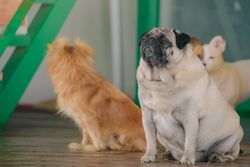
Some breeds look adorable and pay a high health price for it. Especially affected are the short-nosed (brachycephalic) breeds like the French Bulldog and the Pug. Their flat muzzle looks cute but makes breathing harder. In the Swiss summer they quickly reach their limits — dogs regulate their temperature above all through panting, and that's exactly what short-nosed dogs find difficult.
On top of that, many of these breeds have more frequent problems with eyes, airways and back. That's a genuine question of animal welfare and of costs that add up over a dog's life. Health belongs on your list in general: many breeds bring typical predispositions with them, and life expectancy also differs. Before buying, inform yourself about the breed-typical issues and about which health examinations are usual in the parent animals.
What applies in your canton
In Switzerland, dog law is a matter for the cantons — and that can be decisive when choosing a breed. Some breeds are on cantonal lists: sometimes you need a permit, sometimes a certificate of competence, in certain cantons particular breeds are entirely banned. What's allowed in one canton can require a permit in the neighbouring canton.
So clarify the legal situation before you commit — all the more if you're toying with a so-called listed breed or might soon be moving to another canton. Nothing is more bitter than falling in love with a dog you're not even allowed to keep at your own home. Which breeds are affected and how the rules work you'll find in detail in the article on listed dogs.
Swiss breeds and what's popular here
Switzerland has its own breeds, and many are wonderful family dogs. The best-known are the four Sennenhunde, the Swiss mountain dogs: the Bernese Mountain Dog, the Greater Swiss Mountain Dog, the Appenzeller Sennenhund and the Entlebucher Mountain Dog. Added to these are the Swiss Hounds (the Schweizer Laufhunde), classic hunting and tracking dogs with a fine nose. They too need space, exercise and grooming and are not purely decorative dogs.
On Swiss meadows you also see certain breeds especially often: the Labrador and the Golden Retriever, the French Bulldog, the Chihuahua, the Jack Russell — and, of course, the Sennenhunde. But popular doesn't automatically mean “fits me”: a Labrador is friendly and eager to learn, but also greedy and hungry for exercise. Take popularity as a hint, not as a decision. By the way, dog breeds are internationally divided into ten FCI groups — from herding and driving dogs through terriers, dachshunds and spitz breeds to scent hounds and pointers, retrievers, companion dogs and sighthounds. Our Breed Wiki is built along this same logic too.
Purebred, mixed breed, breeder or shelter
Once you've found a direction, the question of where from arises — almost as important as the breed itself. The first reputable route is a good breeder, best of all one affiliated with an SKG club. There the parent animals are health-tested, you're allowed to see the mother and the whole litter, and a good breeder asks you at least as many questions as you ask them. How to recognise a well-raised puppy you can read in the article on the puppy.
The second route leads to the animal shelter or a rescue organisation. With an adult dog, character, size and coat are already set — you're not buying a cat in a bag, and many wonderful dogs are waiting there for a home. A mixed breed can be a great companion too; it's just that with a puppy you can't always predict how big he'll get and what nature he'll bring.
What we strongly advise against: spontaneous purchases and dubious imports. A puppy out of a car boot or from illegal importation seems cheap and quick — but the risk of illness, behavioural problems and legal trouble is great, and the suffering behind it greater still. The few weeks' more patience for the right route always pay off.
And now? Take your time and use the tools that make the choice easier. In our Breed Wiki you'll find over 340 breeds with their characteristics, neatly sorted by FCI group. If you'd rather start from your own life than from a breed name, our quiz “Which breed suits me?” leads you step by step to fitting suggestions. Where needed, dig into the rules on the listed dogs of your canton and into our puppy guide. The most beautiful dog is, in the end, the one that fits your life — and you'll find it with honesty, not with the first big-eyed glance.