Listed dogs in Switzerland: which rules apply where?
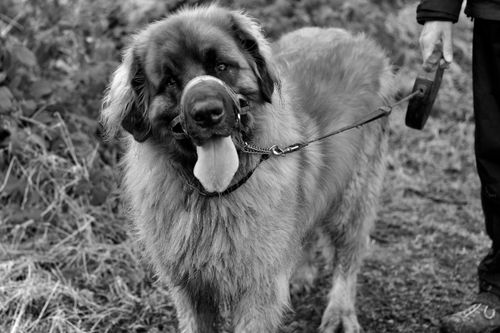
Imagine you move with your dog across a canton border — and all at once completely different rules apply to this very animal. What is entirely inconspicuous on one side of the border can, less than 20 kilometres further on, require a permit or even be banned. Welcome to the Swiss patchwork around the so-called Listenhunde, the listed dogs. Anyone who keeps a powerful dog or wants to get one should know this patchwork — otherwise the anticipation quickly turns into a legal problem.
There is no national breed list
The most important thing first, because it surprises many: a nationwide breed list valid for the whole of Switzerland does not exist. There isn't a single federal catalogue that defines which dogs count as dangerous and which don't. Instead, each canton regulates for itself whether and how it treats certain breeds or types of dog specially. This means the rules diverge strongly from canton to canton — from no special rules at all to a complete ban on keeping them.
How it became a cantonal matter
That we have so many different approaches today instead of one clear Swiss solution has a sad background. In 2005, in Oberglatt in the canton of Zürich, a small boy was mauled to death by dogs. The case shook the whole country, and the call for a national fighting-dog list grew loud and politically powerful. But in the end no such list prevailed at federal level — responsibility stayed with the cantons. It's precisely from this that today's patchwork arose: each canton has since chosen its own path, and these paths keep changing.
Three regimes: from nothing at all to a ban
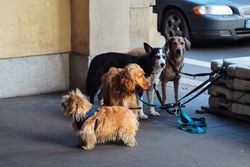
Broadly, the cantons can be divided into three groups. According to the current state of our canton data it looks like this — though you should never rely on it alone, because the details keep shifting:
- No special breed rules: Bern, Luzern, Uri, Schwyz, Obwalden, Nidwalden, Zug, Appenzell Ausserrhoden, Appenzell Innerrhoden, St. Gallen, Graubünden, Neuenburg and Jura. Here there's no breed list — which doesn't mean you'd have no duties at all. General rules such as a leash requirement in certain places, mandatory courses or the reporting of conspicuous dogs can still apply.
- Permit requirement: Glarus, Solothurn, Basel-Stadt, Basel-Landschaft, Schaffhausen, Aargau, Thurgau, Tessin and Waadt. In these cantons you may keep certain breeds or types only with a permit and under conditions.
- Ban on keeping: Zürich, Freiburg, Wallis and Genf. Here certain listed breeds are entirely banned — anyone wanting to keep such a dog has a very hard time or no chance at all.
This assignment is a snapshot. Which breed falls into which category specifically, what the transitional rules for dogs already kept look like and from when a new rule takes effect is always laid down in cantonal law — and that can change. So the rule is: never rely on hearsay, but check the official, current page of your canton.
Which breeds are typically listed
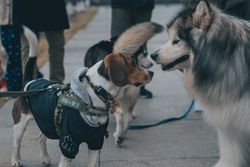
On the cantonal lists, molosser- and bull-type breeds and their crosses appear above all. Most often named are the American Staffordshire Terrier, the (American) Pit Bull Terrier, the Staffordshire Bull Terrier and the Bull Terrier — as well as crosses with these breeds. But the big caveat is important: which breeds are exactly on a list, how they're defined and from what proportion of crossbreeding a dog counts as listed varies from canton to canton and changes over time. So please take the named breeds only as examples of what frequently appears on cantonal lists — not as a definitive or universally valid list. The only reliable source is the current list of your canton of residence.
What a permit canton can require
If you live in a canton with a permit requirement, various conditions come your way depending on the regulation. Typical ones are — again with the note that it varies by canton:
- Proof that you know your way around dogs, often in the form of a course or a certificate of competence.
- A temperament test, in which the dog's behaviour is assessed by experts.
- A compulsory liability insurance for the dog.
- A leash and/or muzzle requirement in public spaces.
- A minimum age for the keeper.
- A good reputation, in part with an extract from the criminal record.
Not every canton requires all of this, and the requirements can be stricter or looser depending on the breed and situation. But you can see: a listed dog in a permit canton brings noticeably more effort with it than a dog without special conditions.

The move — the classic trap
The most common nasty surprise happens when changing home. A dog that you kept completely legally and without conditions in your previous canton can be subject to a permit or even banned in the new canton. The same applies if you take on a dog from the animal shelter or import one from abroad: what's decisive is always the canton in which the dog is ultimately meant to live. So before the move, before the adoption and before every import, clarify very specifically which rules apply at the destination. It's bitter when a lovingly chosen dog isn't allowed to stay at the new home — and unfortunately that's exactly what keeps happening.
Deed not breed: the debate around the lists
Breed lists are controversial, and the discussion about them is conducted with commitment. Many vets, behavioural experts and animal-welfare organisations argue under the banner of deed not breed. Their point: how a dog behaves depends first and foremost on upbringing, socialisation and the keeper, and not on the breed alone. Supporters of lists counter that certain breeds, through their strength, can do more damage in an emergency and that clear rules serve safety. Both sides put forward arguments, and the political debate is not settled — that too is one reason why the cantonal rules keep changing.
Before you get a dog or move
So that you're on the safe side, a short, concrete procedure is worth it:
- Check the current, official list of your canton before you decide on a dog.
- If you move, clarify the rules of the destination canton, not just those of your current home.
- If you take on a dog from the shelter or from abroad, ask early whether the breed is allowed at the destination.
- With listed dogs, reckon with extra costs and extra effort: course, temperament test, insurance, possibly a muzzle.
- Keep your dog's origin and papers neatly on file — that helps with queries from the authorities.
The good news: with a bit of preparation, all of this is manageable. The only bad thing would be not to inform yourself at all.
You'll find the exact cantonal rules laid out clearly on our canton pages on law & taxes. Anyone looking for a course, a temperament test or a dog school will find it in the services in your canton. And because in permit cantons a liability insurance is often compulsory, it's worth a look at our guide to dog insurance.