Cruciate Ligament Rupture in Dogs: Symptoms, Surgery and Rehab
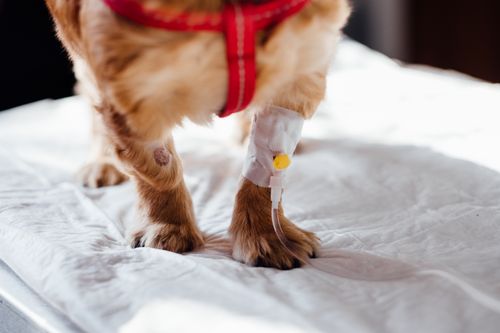
Rupture of the cranial cruciate ligament in the knee is one of the most common orthopaedic injuries in dogs and the most frequent cause of lasting hind-leg lameness. Unlike in humans, where an acute sports trauma is usually behind it, the cruciate ligament in dogs often ruptures after gradual degeneration – the ligament wears over time and then gives way during an everyday movement.
That is also why a cruciate rupture can occur at any age and without a dramatic accident. This guide explains how to recognise the signs, which treatment paths exist and how the often underestimated rehab succeeds. It does not replace a veterinary examination – if you suspect it, have your dog checked.
What the cruciate ligament does
The dog’s knee is stabilised by several ligaments. The cranial cruciate ligament prevents the shin from sliding forward relative to the thigh bone and secures the joint during flexion and extension. If it ruptures partially or fully, the knee becomes unstable – with every step the joint shifts slightly, which is painful and damages the cartilage.
This instability explains why an untreated rupture almost always leads to secondary damage. The joint tries to stabilise itself, which over time causes arthritis. A cruciate rupture is therefore not a problem you can simply wait out.
The typical symptoms
The most noticeable sign is sudden or increasing lameness in one hind leg. Some dogs no longer bear weight on the leg at all, others limp only at times, for example after getting up or after exertion. Often dogs also relieve the affected leg when sitting by stretching it out to the side.
With a partial tear the symptoms are often milder and fluctuating – sometimes it seems better, sometimes worse. That is exactly what tempts owners to wait. Since untreated it threatens the cartilage and the second ligament often follows, an early work-up is important.
How the diagnosis is made
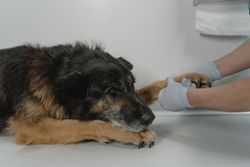
The vet first examines the knee manually and tests stability with specific manoeuvres such as the drawer or tibial compression test. This often already reveals the typical instability. To confirm and assess accompanying damage, an X-ray usually follows, sometimes supplemented by further imaging.
Examining the whole joint is important, because with a cruciate rupture the meniscus is frequently involved too. Only with a complete picture can the right treatment be planned – a thorough orthopaedic work-up is therefore the basis of every treatment decision.
Treatment: conservative or surgery
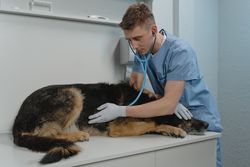
In principle there are two paths. For very mild, small or special cases, conservative treatment with strict rest, pain management, physiotherapy and weight control can be attempted. In most medium and large dogs, however, surgery leads to markedly better and more reliable results.
Which path is right depends on size, weight, activity and accompanying damage and is decided individually with the vet or a specialist clinic. One factor you can influence yourself is weight: overweight puts extra strain on the knee and worsens the prognosis.
The common surgical techniques
In larger dogs, realigning procedures are mostly used today that change the mechanics of the knee so that it is stable even without an intact cruciate ligament. Well-known methods are the TPLO and the TTA. They sound technical but pursue the same goal: to rebuild the joint so the instability is eliminated.
In smaller, lighter dogs, ligament-replacing techniques are also used, in which an artificial ligament takes over the function. The surgeon chooses the best-fitting technique for the individual case. More important than the method are often a clean execution and consistent aftercare.
Rehab: where success is decided
Whether conservative or surgical – treatment success stands or falls with rehab. The first weeks call for strict rest: controlled, short leash walks instead of romping, no jumping, no stairs, non-slip floors at home. This phase requires discipline but is decisive for healing.
Physiotherapy noticeably speeds recovery: targeted muscle building, mobility exercises and often an underwater treadmill help rebuild the muscles around the knee. Weight-bearing is increased slowly and to plan. Taking rehab seriously gives your dog the best chance of an active, pain-free life again.
Why the second leg often follows
An important, often surprising fact: in a large proportion of dogs, the cruciate ligament of the other hind leg also ruptures within one to two years. The reason is the underlying degeneration, which usually affects both knees, plus the extra strain on the healthy leg during recovery.
This is no reason to panic but a reason to pay attention. After the treatment is over, keep watching for a healthy weight, even exercise and good muscle. If the dog shows the first signs of lameness in the other leg, have it checked early.
What you can do in everyday life
The best prevention and aftercare at once is a lean, well-muscled dog. Keep your dog at its ideal weight, ensure regular, joint-friendly activity without extreme exertion peaks, and avoid it resting all week as a couch athlete only to become a performance athlete at the weekend.
Non-slip floors, ramps instead of jumps into the car and measured activity spare the knees further. In already affected or older dogs, it is worth looking at accompanying measures against arthritis, which often occurs as a consequence.
Costs and insurance
A cruciate ligament operation is a specialised procedure and therefore not cheap – depending on the technique, clinic and size of the dog, the costs, including diagnostics, anaesthesia, surgery and aftercare, can weigh heavily. If physiotherapy over several weeks is added, it adds up further. Your veterinary practice gives you the exact figures in advance in a cost estimate.
It is precisely for such predictably expensive procedures that the value of dog health insurance shows – it can cover a large part of the costs, provided it was taken out before the complaints appeared. What such insurance covers and what to look for when taking it out is explained in the guide Dog insurance.
Frequently asked questions
Does a cruciate rupture heal on its own? No. A torn cruciate ligament does not grow back together. Untreated, the knee stays unstable and progressive secondary damage develops.
How long does recovery after surgery take? Usually several months. The first six to eight weeks are strict, then weight-bearing is increased slowly – the exact plan comes from the clinic.
Will my dog walk normally again? With good treatment and consistent rehab, most dogs regain very good to normal function.
Is surgery always necessary? Not in every case, but in most medium and large dogs it is the most reliable approach. The specialist decides individually.
Note: this guide offers general orientation and does not replace a veterinary examination or advice. If your dog has a health problem or in an emergency, please consult your vet.