Separation Anxiety in Dogs: Building Calm Alone Time
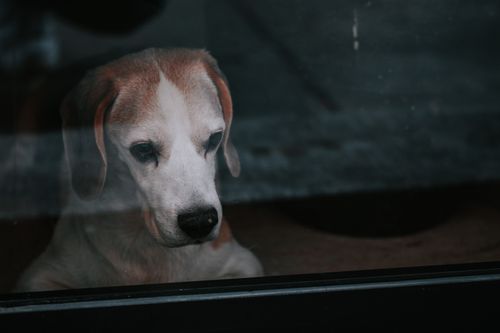
The door has barely closed when the dog starts barking, howling or gnawing at the furniture, and the neighbours complain. For many owners, being left alone is one of the biggest challenges of life with a dog. Behind it is often not a lack of training, but real fear or panic.
The good news: staying alone can be learned, and at almost any age. The key is a patient, small-step build-up that never overwhelms the dog. This guide shows how to recognise true separation anxiety, what the causes are and how to train relaxed alone time step by step.
What separation anxiety really is
Separation anxiety refers to the panic or strong agitation a dog feels when separated from its reference person. It is an emotional problem, not disobedience. The dog does not act out of spite, but because it cannot bear the situation. That is exactly why scolding does not help but makes the problem worse.
The distinction from boredom is important. An under-stimulated dog that chews or barks out of frustration needs more occupation and structure. A dog with true separation anxiety, by contrast, shows panic, often already at the signs of leaving, and does not calm down at all in your absence. The solutions differ clearly.

Recognising the signs correctly
Typical signs are continuous barking, howling or whining, destruction especially near doors and windows, soiling despite being house-trained, heavy salivation, panting and pacing back and forth. Many dogs already show agitation when the human reaches for keys or a jacket.
Because much of this happens in your absence, a video recording of the first minutes after leaving is useful. That way you can see whether the dog calms down after a short while or stays in constant stress. This helps to classify the problem and to measure progress later.
Possible causes
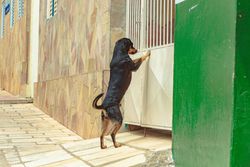
Separation anxiety can have many roots: a lack of practice being alone during the puppy period, an abrupt change in living circumstances, a move, the loss of a reference person or distressing experiences from the past. Dogs from rescue are sometimes affected too.
Sometimes physical factors play a part, such as pain or a developing illness that make the dog more insecure overall. That is why, with suddenly appearing anxiety, it makes sense to have the vet check that everything is physically in order too.
Building alone time from the start
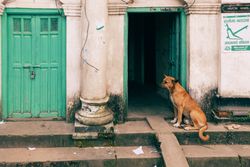
The easiest thing is not to let fear develop in the first place. Get a puppy or new dog used to being alone briefly early on and in tiny steps. Start by moving away within the room, then leaving the room, always only for as long as the dog stays relaxed.
Say goodbye and hello without fuss, no big drama. Leaving and returning should seem as normal as possible. That way the dog learns that your leaving is not a drama and that you reliably come back. Patience in this phase saves many later problems.
Training in small steps
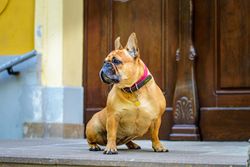
With an already anxious dog, work below the threshold at which panic arises. That can mean first just going to the door, touching the handle or briefly opening and closing the door without actually leaving. Only increase the duration if the dog stays calm.
Build the absence in many small units, sometimes longer, sometimes shorter again, so no linear pressure builds up. Setbacks are normal. The key is never to let the dog tip into panic, because every panic experience sets the training back. The basics of building signals are in the guide to dog training.

Preparing the environment
Make sure the dog is satisfied but not over-wound before being alone: a calm walk and a bit of mental work help it settle afterwards. A cosy, safe retreat and familiar sounds such as soft music or the radio can also soothe.
A well-filled chew or sniff item can make the moment of leaving positive, provided the dog accepts it in your absence at all. With strong fear the dog often does not eat at all, which in turn shows that the training needs to start in even smaller steps.
What does not help
Punishing, shouting or shutting the dog away in reaction to destroyed furniture worsens the fear, because it makes being alone even more threatening. The dog then associates your return with trouble, which further raises the tension before being alone. A second dog is not a reliable remedy either.
The other extreme is harmful too: excessive comforting and pitying can reinforce the fear. Stay friendly, but calm and matter-of-fact. The best path is patient, systematic build-up, not the attempt to mask the fear in the short term with attention or pressure.
When professional help makes sense
With pronounced separation anxiety that does not improve despite careful training, or if the dog injures itself, you should get competent support. An experienced behaviour consultant draws up an individual training plan and accompanies you through the difficult phases.
In some cases the vet can recommend supportive measures for a limited time that make the training easier. Such decisions always belong in the vet's hands and never replace the actual behaviour training, they accompany it. Invented remedies or dosages found on the internet are dangerous.
Everyday life and realistic expectations
As long as your dog does not yet master being alone safely, do not leave it alone longer than it can bear. This often requires organisation: a carer, a doggy daycare or the help of family and neighbours can bridge the training period.
Do not expect miracles overnight. Depending on the starting point, the build-up takes weeks to months. Celebrate small progress and stay consistent. A securely bonded, well-socialised dog often finds this easier, which is why work on socialisation pays off.
Frequently asked questions
How long may I leave my dog alone? As a guide, for a well-trained adult dog roughly four to six hours at most. A dog with separation anxiety should only stay alone for as long as it manages calmly.
Does a second dog help against separation anxiety? Not reliably. Some dogs are fixed on one particular person and stay stressed despite a second dog. A second dog should never be acquired as therapy.
My dog only destroys things when I am gone. Out of revenge? No. Dogs do not act out of revenge. Destruction in your absence is usually an expression of stress or boredom, not of intent.
Can separation anxiety be cured completely? Many dogs learn, with patient training, to stay alone calmly. In stubborn cases, a clear improvement is at least realistic with professional help.