Bladder Infection in Dogs: Signs and What Helps
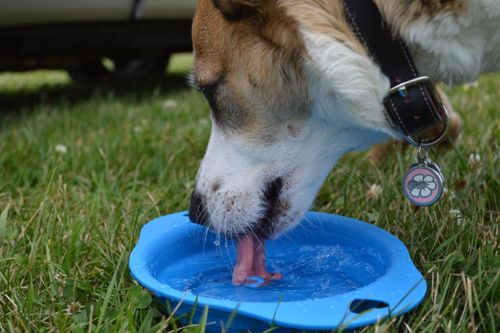
A bladder infection – medically cystitis – is one of the most common urinary problems in dogs. The bladder lining is irritated or inflamed, which is unpleasant to painful for the dog. Females are affected more often than males, because their shorter urethra makes it easier for germs to travel up into the bladder. In principle, however, any dog can be affected.
A bladder infection is very treatable but should not be taken lightly – partly because of the pain, partly because more serious causes such as bladder stones sometimes lie behind it. This guide shows you the signs, the causes and the path to treatment, but does not replace a veterinary examination.
How to recognise a bladder infection
The most typical sign is frequent urination in small amounts. Your dog needs to stop every few metres on the walk but only passes a little each time, or it asks to go out unusually often at home. Some dogs also pass urine involuntarily indoors, even though they are house-trained.
Other signs are visible straining or expressions of pain when urinating, blood in the urine, a changed, often stronger smell, and increased licking of the genital area. If your dog shows such symptoms, it belongs at the veterinary practice so the cause can be found and the dog freed from pain.
The most common causes
In most cases a bacterial infection is behind it: germs reach the bladder via the urethra and trigger the inflammation. This is encouraged by factors such as low water intake, infrequent urination, chilling, a weakened immune system or anatomical peculiarities.
There are also other causes: bladder stones or grit that irritate the lining, hormonal factors, tumours or, in younger dogs, sometimes congenital malformations. Precisely because the causes are so varied, the veterinary work-up is so important – the right treatment depends on the trigger.
Beware bladder stones
Urinary stones are a particularly important topic. They form when certain minerals crystallise in the urine, and range from fine grit to larger stones. They irritate the bladder, encourage infections and cause symptoms similar to a plain bladder infection – which is why they cannot be distinguished without examination.
Depending on their type, stones can be dissolved with a special prescription diet or must be removed surgically. For some stone types, diet also plays a role in prevention. Your vet chooses the right approach based on the analysis – here too: no self-treatment on suspicion.
An emergency in males: urinary retention
A point every dog owner should know: if a dog – especially a male – repeatedly tries to urinate, strains, but no urine or only drops come out, a stone may be blocking the urethra. This is an absolute emergency.
If the bladder can no longer empty, urine backs up, which becomes life-threatening within a short time. In this case, drive immediately to the nearest veterinary clinic or emergency vet – here every hour counts. Do not confuse this emergency with an ordinary bladder infection.

How diagnosis works
It usually begins with a urine examination. From a sample, signs of inflammation, blood, crystals and often the responsible bacteria can be detected. Ideally you bring a fresh sample or it is obtained at the practice. If needed, a bacterial culture with antibiogram, ultrasound or X-ray follows.
This work-up is important to choose the right treatment and to avoid missing stones or other causes. Especially with recurring infections, thorough diagnostics are worthwhile rather than repeatedly fighting only the symptoms.
The treatment
For a bacterial bladder infection, the vet usually prescribes a suitable antibiotic, ideally targeted to the culture result. It is important to keep to the prescribed duration consistently, even if symptoms improve after a few days – a course stopped too early encourages relapses and resistance.
In addition, pain relief is used if needed, and water intake is encouraged to flush the bladder well. Never use human medications on your own. For stones or other causes, treatment depends on the diagnosis.
Water intake and prevention
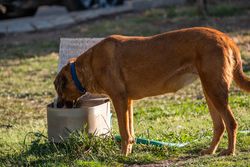
The most important lever in prevention is good water intake: the more the dog drinks, the better the bladder is flushed and the harder it is for germs and crystals. So ensure fresh water is always available in several places. A share of wet food naturally increases fluid intake.
Other helpful measures: give your dog regular chances to relieve itself so urine does not sit too long, protect it from cold and damp, and keep it at a healthy weight. If there is a known tendency to stones, a special food can help – the veterinary practice decides that.
When it keeps coming back
Some dogs suffer from recurring bladder infections. In these cases it is not enough to treat only the current flare-up each time – the underlying cause must be found. Behind it can lie stones, anatomical peculiarities, hormonal factors or underlying diseases.
In older dogs it is also worth looking at possible age-related diseases that encourage urinary problems – the guide Senior dog covers typical topics of old age. Recurring complaints should always be thoroughly investigated so your dog becomes lastingly free of symptoms.
When to see the vet
Signs of a bladder infection should be investigated promptly – not only because of the pain, but because untreated the infection can spread and, at worst, reach the kidneys. An appointment is always the right choice if your dog shows the described symptoms.
Act immediately and without hesitation with the described urinary retention, marked apathy, fever, vomiting or clear pain. In such cases drive straight to the clinic. This text is guidance but does not replace the veterinary assessment of your specific case.
Frequently asked questions
Can a bladder infection go away on its own? Do not rely on it. Some mild irritations improve, but many infections need targeted treatment – and stones can lie behind the symptoms.
Do cranberry or home remedies help? Such means can at best support but do not replace diagnosis and treatment. With symptoms, the path leads first to the veterinary practice.
How do I get a urine sample? Catch the urine in the morning at the first relief with a clean, flat container and bring it as fresh as possible. This makes diagnosis much easier.
Is frequent urination always a bladder infection? Not necessarily – other illnesses can also cause increased urge. That is exactly why the work-up is important.
Note: this guide offers general orientation and does not replace a veterinary examination or advice. If your dog has a health problem or in an emergency, please consult your vet.