Otterhound
🧠 Temperament & character
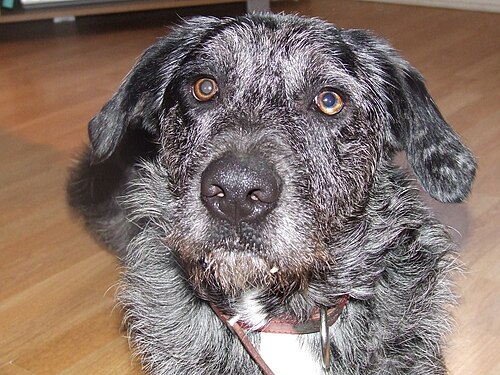
The Otterhound is cheerful, good-natured and remarkably people-oriented, yet headstrong and independent. He has an excellent nose and follows a trail with great stamina and a loud, deep voice, which is why he is then hard to recall. He usually meets strangers in a friendly way, which makes him a rather mediocre guard dog. His good humour and his charm make him an easy-going family dog for people with a sense of humour.
📜 Origin & history
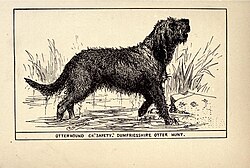
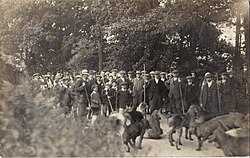
The Otterhound was bred in England over centuries for hunting otters in the water, in order to protect fish stocks. When otter hunting was banned in Great Britain in 1978, the breed lost its purpose and its numbers collapsed. Today it is one of the most endangered breeds of all, with often only a few hundred animals worldwide; the FCI lists it under No. 294. Conservation breeding programmes in Great Britain and the USA work for its survival.
✂️ Grooming, care & training
The Otterhound's dense, rough double coat needs regular, thorough brushing down to the skin to avoid matting; bathing too often would remove the protective oily film. Beard and ears catch water and dirt and should be kept clean. The Otterhound needs plenty of exercise and above all loves swimming, plus scent work for mental occupation. He is intelligent but wilful, which is why training demands patience, humour and plenty of positive motivation.
🩺 Health
Because of the very small gene pool, health is a central issue with the Otterhound. Typical of the breed are hip and elbow dysplasia, life-threatening gastric torsion and the hereditary bleeding disorder Glanzmann's thrombasthenia, for which a genetic test exists. Life expectancy is about ten to thirteen years. Responsible breeders x-ray hips and elbows, use the genetic test and plan matings carefully to preserve genetic diversity.
🏡 Who is this breed right for?
The Otterhound suits active, patient people with plenty of space, access to water and an appreciation of a wilful, large dog. A house with a well-fenced garden is a must, while a small apartment is unsuitable. Thanks to his friendly nature he usually gets along well with children and other dogs, but his size, his urge to move and his headstrongness do not make him a classic beginner's dog. In Switzerland he is extremely rare, and prospective owners must reckon with long waiting times and contacts abroad.