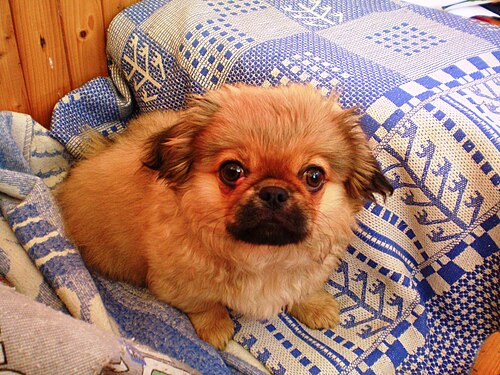
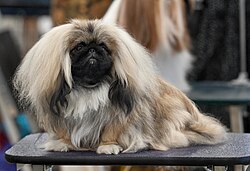
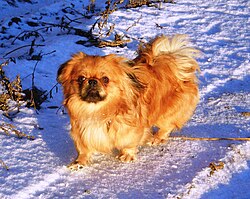
Pekingese
🧠 Temperament & character
The Pekingese is dignified, courageous and decidedly headstrong, while being faithful and loving towards his people. He usually bonds closely with one person and comes across as almost cat-like in his independence. Towards strangers he is reserved and an attentive warner, without being obtrusive. His lion-like self-assurance calls for patient, sensitive training without coercion.
📜 Origin & history
The Pekingese is one of the oldest dog breeds in China and was bred as a 'lion dog' at the imperial court, where he was reserved exclusively for the nobility. The smallest specimens, the so-called sleeve dogs, were carried in the wide sleeves of the robes. Only after the sacking of the Summer Palace in 1860 did some animals reach England, where Queen Victoria made the breed known. From there the Pekingese spread as an exclusive companion dog across the whole world.
✂️ Grooming, care & training
The Pekingese's long, dense double coat requires regular, ideally daily, brushing to prevent matting. Especially the skin folds and the area around the eyes must be kept clean and dry. The need for exercise is low, but leisurely walks in cool weather are important; heat and exertion are to be avoided because of the short nose. He is intelligent but headstrong, which is why loving consistency and short, varied training sessions work best.
🩺 Health
The Pekingese is a strongly short-headed breed and consequently often suffers from considerable breathing difficulty, eye ulcers and eye prolapses, problems with the skin folds and pronounced heat sensitivity. Intervertebral disc problems also occur because of the long back; life expectancy is about twelve to fourteen years. Responsible breeders select for freer breathing, healthier eyes and a more moderate face and have their breeding animals examined accordingly. In Switzerland, exaggerated features that cause suffering count as torture breeding, which is why the careful choice of provenance is especially important.
🏡 Who is this breed right for?
The Pekingese suits quiet households, seniors and people who value a dignified, independent companion. As a classic flat dog he needs little exercise, but plenty of closeness and a patient hand in training. He gets on with calm, considerate children, but is less suited to turbulent families with small children. Anyone looking for a Pekingese in Switzerland should deliberately pay attention to health-oriented breeding and take the breed's climatic limits seriously.