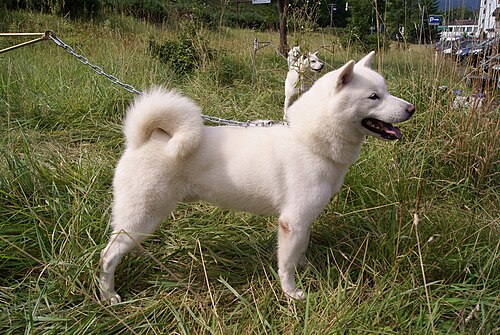
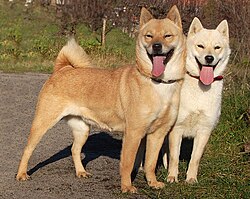
Hokkaido
🧠 Temperament & character
The Hokkaido is loyal, brave and enduring, while also being very alert and strongly bonded to his person. He is considered more balanced and calmer than some other Japanese breeds, but has a self-confident, original character. Towards strangers he is reserved, yet loyally devoted to and protective of his family. One characteristic is often the blue-black spotted tongue, a sign of his ancient ancestry.
📜 Origin & history
The Hokkaido, also called Ainu-ken, is one of the oldest dog breeds in Japan and accompanied the Ainu on the hunt for centuries. With him, hunters even brought bears and wild boar to bay – a task that demanded courage, strength and stamina. In 1937 he was declared a natural monument in Japan; outside his homeland he remains very rare to this day.
✂️ Grooming, care & training
The Hokkaido's hard, dense double coat is adapted to harsh winters and calls for regular brushing, especially during the moult. As a former hunting dog he needs plenty of exercise, tasks and mental activity to be content. He is intelligent and quick to learn, but independent, which is why patient, consistent and respectful training is crucial. Early socialisation helps to channel his natural reserve and his protective instinct.
🩺 Health
The Hokkaido is a robust, original breed with a life expectancy of around 12 to 15 years. Comparatively rarely, hereditary eye diseases such as Collie Eye Anomaly (CEA) occur, for which genetic tests are available. Responsible breeders test their breeding animals accordingly and pay attention to hip and knee health. Overall he is considered a thoroughly healthy dog with few breed-typical problems.
🏡 Who is this breed right for?
The Hokkaido is suited to active, dog-experienced people who value his originality and independence. He is less suitable for beginners, as he needs clear guidance, consistent training and an understanding of his character. He lives best in a house with a secure garden and plenty of access to nature. In Switzerland he is a real rarity and rather something for connoisseurs of the Japanese breeds.