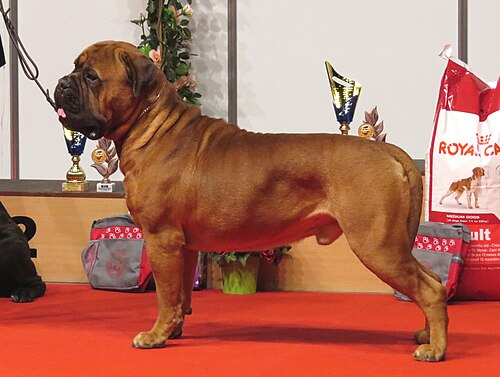
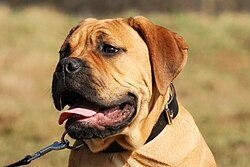
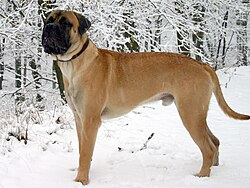
Bullmastiff
🧠 Temperament & character
The Bullmastiff is calm, self-assured and devotedly loyal to his family – a gentle giant that seeks a close bond and is hard to rattle. As a powerful guardian he is brave and protective, yet not aggressive without cause but level-headed and watchful. Towards strangers he is reserved, which is why early socialisation is important. He can be headstrong and therefore needs consistent, calm leadership without harshness. With the family's children he is usually patient and loving, but his size and strength call for constant supervision.
📜 Origin & history
The Bullmastiff arose in 19th-century England when gamekeepers needed a dog to catch poachers on the great estates and in the forests. By crossing the Mastiff and the Bulldog, a dog was created that was fast, brave and strong enough to bring an intruder to the ground and hold him without biting. He became known as the 'Gamekeeper's Night Dog'. Later he changed from a working dog into a valued guard and family dog.
✂️ Grooming, care & training
The short coat is uncomplicated and needs only occasional brushing; the facial folds should be kept clean and dry. The Bullmastiff has a moderate need for exercise and is content with daily, relaxed walks – prolonged exertion, especially in heat, should be avoided because of the somewhat shortened muzzle. He tends to drool and may snore. What matters most is an early, consistent and calm upbringing, so that the powerful dog is well socialised and safely manageable from an early age.
🩺 Health
The Bullmastiff has a relatively short life expectancy of around eight to ten years and carries several serious health risks. These include hip and elbow dysplasia, life-threatening gastric torsion, various types of cancer such as lymphoma, and heart disease; eyelid malpositions also occur. Responsible breeders X-ray the hips and elbows, examine the heart and choose breeding animals with a healthy build and a stable temperament. Excess weight and one-sided strain should be consistently avoided.
🏡 Who is this breed right for?
The Bullmastiff belongs in the hands of experienced, calm owners with a house, space and the necessary understanding of a powerful guardian. For beginners, very small apartments or people with little time for training he is not suitable. His gentle family nature makes him a loving companion, but his strength calls for early conditioning and consistent leadership. In Switzerland, special regulations may apply to large molossers depending on the canton, which should be clarified before acquiring one.