
Border Terrier
🧠 Temperament & character
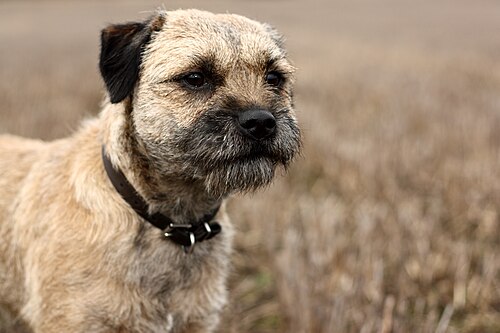
The Border Terrier is tough, steady in temperament and yet remarkably easy-going - noticeably more sociable than many of his terrier relatives. He is active, eager to work and has a healthy hunting drive, but fits well into family life. With children he is generally patient and friendly and usually gets on with other dogs too. Clever and keen to please, he enjoys learning, though he shows the typical terrier dose of stubbornness.
📜 Origin & history
The Border Terrier arose in the hilly border country between England and Scotland, where he followed the mounted hunters and their foxhounds on the fox hunt. His task was to corner the fox that had fled into rock crevices and earths - for this he needed long legs, stamina and a fearless character. Already valued in the 18th century as a working dog of farmers and shepherds, he was officially recognised as a breed in 1920. To this day he has retained his original toughness and naturalness.
✂️ Grooming, care & training
The dense, wiry outer coat of the Border Terrier with its soft undercoat is weatherproof and easy to care for; regular brushing and hand-stripping two to three times a year keep it in shape. He is an enduring dog that needs plenty of daily exercise - long walks, free running and opportunities to sniff and explore. Just as important is mental stimulation through training, search games or dog sports, because the clever Border otherwise easily gets bored. He learns willingly, which is why friendly, consistent training pays off.
🩺 Health
The Border Terrier is regarded as one of the healthiest and longest-lived terrier breeds and often lives thirteen to fifteen years or older. Nevertheless, patellar luxation, heart diseases and the breed-specific Canine Epileptoid Cramping Syndrome (CECS, also called Spike's Disease), a cramp-like disorder, can occur. Serious breeders pay attention to heart and knee health and exclude animals with CECS from breeding. Overall the Border is an uncomplicated, robust dog that rarely becomes seriously ill when kept appropriately.
🏡 Who is this breed right for?
The Border Terrier is an ideal dog for active families, hikers and sports enthusiasts who are looking for an uncomplicated, robust companion. Thanks to his friendly nature he is also well suited to first-time owners, provided they take his high need for exercise and his hunting drive seriously. He can live in an apartment if he is given ample daily activity, but a house with a garden and access to nature suits him better. In Switzerland he is a popular companion for hikes and dog sports and fits well into everyday life.