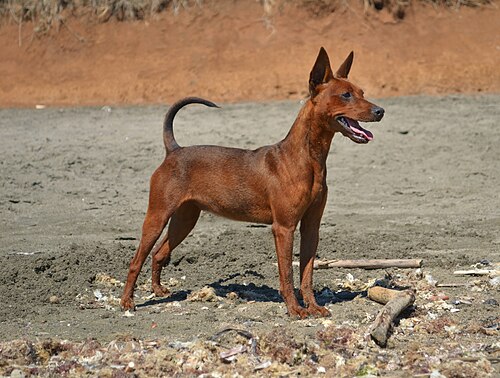
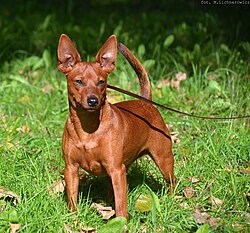
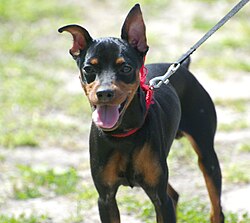
Miniature Pinscher
🧠 Temperament & character
The Miniature Pinscher is a true bundle of energy: self-confident, fearless and spirited, with the presence of a much larger dog. He is very affectionate towards his family, playful and alert, reliably announces every little thing and therefore tends to yap without training. Towards strangers he is attentive, sometimes reserved, and towards larger dogs he often shows an astonishing, sometimes unreasonable self-assurance. He is intelligent and willing to learn, but also headstrong – a little clown with character who needs clear, loving boundaries and mental occupation to stay balanced.
📜 Origin & history
The Miniature Pinscher, called 'Rehpinscher' in his homeland, is an old German breed that goes back to the smooth-haired German Pinscher and emerged as its miniaturised variety. For centuries he was a nimble, tireless rat- and mouse-catcher on farms and in stables, and an alert little yard dog. Contrary to what is often assumed, he is not related to the Dobermann, but is considerably older than him. At the end of the 19th century the breed was refined and selectively bred; today the Miniature Pinscher is a popular, elegant companion dog that has preserved his original temperament.
✂️ Grooming, care & training
The Miniature Pinscher's short, smooth and glossy coat is extremely easy to care for and needs only occasional brushing and the occasional wipe-down. Despite his small size he is a very active dog with a high need for exercise and occupation – daily walks, play and mental work are a must, otherwise he quickly becomes unbalanced and loud. He is intelligent and quick to learn, but headstrong, which is why consistent, friendly training and early socialisation are important, especially to keep his barking and his over-confidence towards big dogs under control. As a short-haired, small dog he gets cold easily and needs a coat in cold weather.
🩺 Health
The Miniature Pinscher is considered a robust, long-lived breed with a pleasing life expectancy of about 13 to 15 years. Occasional health issues include patellar luxation (slipping of the kneecap), hereditary eye diseases such as progressive retinal atrophy and, as is common in small breeds, dental problems. Responsible breeders examine the knee joints and have the eyes checked in order to remove hereditary diseases from breeding. With a balanced diet, a lean weight, good dental care and enough exercise, this lively little dog usually stays fit and vital well into old age.
🏡 Who is this breed right for?
The Miniature Pinscher suits active people and families who do not underestimate his great need for exercise and occupation and who give him consistent training despite his size. Thanks to his compact size he is well suited to an apartment, provided he gets enough exercise, play and mental work and his barking is channelled into orderly paths early on. For very small children he is only suitable to a limited extent because of his delicate build and his temperament, but he usually gets on well with older, considerate children. Committed first-time dog owners can also cope with him, but should be aware of the 'small dog, big character' challenge.