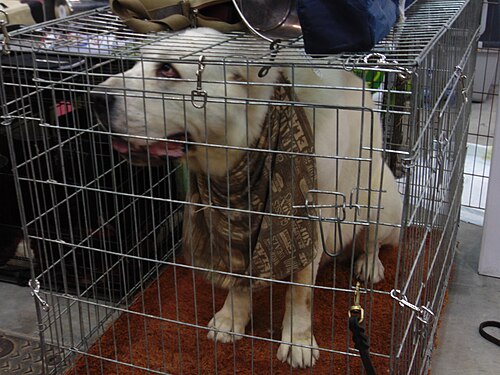
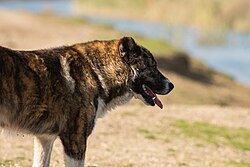
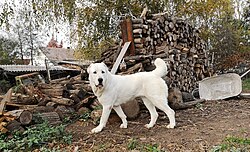
Central Asian Shepherd Dog
🧠 Temperament & character
The Central Asian Shepherd Dog is self-assured, calm and possessed of an impressive inner composure, paired with a very pronounced territorial and protective instinct. As an independent livestock guardian he thinks and acts entirely on his own, makes his own decisions in an emergency and does not blindly submit. Towards his family he is deeply loyal and calm, but towards strangers and unfamiliar animals he is suspicious and watchful, with clear defensive behaviour for his territory. He is not a playful buddy but a dignified, independent guardian who demands self-assured, respectful leadership and a great deal of understanding for his nature.
📜 Origin & history
The Central Asian Shepherd Dog is one of the oldest dog types in the world and developed over thousands of years in the vast steppes, deserts and mountains of Central Asia - from Turkmenistan through Uzbekistan to Kazakhstan and beyond. He arose not through planned breeding but through natural selection and the harsh demands of nomadic life: only the strongest, most weather-hardy and bravest dogs survived and protected flocks and caravans from wolves and thieves. In the Soviet era the breed was recorded and standardised. Today it is recognised by the FCI under Russian patronage; in its countries of origin the Alabai remains a highly valued working and guard dog.
✂️ Grooming, care & training
The Central Asian Shepherd Dog's dense double coat - short or medium-length depending on the strain - is weatherproof and relatively easy to care for, but must be brushed regularly, considerably more often during the heavy moult. As a deliberate, energy-conserving livestock guardian he needs no performance sport, but rather long, calm walks, plenty of space and ideally a genuine guarding task. In training, patience, consistency, respect and calm self-assurance are required - this independent dog cannot be drilled and responds to harshness with resistance. Early, consistent socialisation and an absolutely secure, high fence are essential, since he defends his territory in complete earnest.
🩺 Health
Thanks to thousands of years of natural selection, the Central Asian Shepherd Dog is considered a remarkably robust, original breed with a life expectancy of about 10 to 12 years. Most likely, as is common in large dogs, hip dysplasia occurs; as a large, deep-chested dog there is also a risk of gastric torsion. The broad, functional gene pool ensures overall a good constitution and resilience. Responsible breeders nonetheless x-ray the hips of their breeding animals and pay particular attention to a stable, steady temperament, which is of central importance for a dog of this size and strength.
🏡 Who is this breed right for?
The Central Asian Shepherd Dog is suitable exclusively for very experienced owners with plenty of space, a high and securely fenced property and ideally a genuine guarding task in a rural setting. For an apartment, for beginners, for insecure people or people without experience of large, independent guardian dogs he is completely unsuitable. Towards his family he is calm and loyal, but his enormous protective instinct, his size and his independence demand consistent socialisation and self-assured leadership. In Switzerland he is rare; before acquiring one, any cantonal regulations for large guardian breeds should definitely be clarified.