Welsh Terrier
🧠 Temperament & character
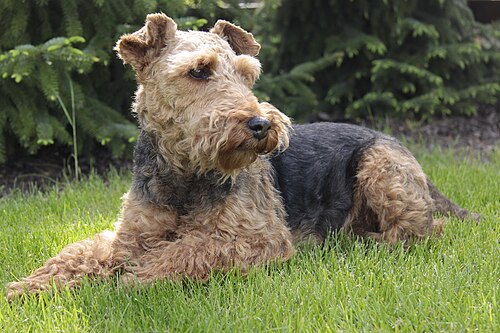
The Welsh Terrier is cheerful, courageous and spirited, but clearly more balanced and sociable than many another terrier. He is energetic, eager to learn and loves being active with his people. As an attentive dog he reliably gives the alarm without becoming a yapper. His terrier heritage shows in a pronounced play and hunting drive as well as a dose of self-will – but with fair, varied guidance he is easy to direct.
📜 Origin & history
The Welsh Terrier is one of the oldest terrier breeds and was bred in the mountain regions of Wales to hunt foxes, otters and badgers. He descends from the old Welsh black-and-tan working terrier and is closely related to the Lakeland Terrier and the Airedale Terrier, which he strongly resembles in colour and appearance – just in a more compact size. Over generations he proved himself as a tough, fearless hunting helper before he also found favour as a companion and show dog.
✂️ Grooming, care & training
The wiry, dense coat of the Welsh Terrier barely sheds but must be brushed regularly and professionally stripped (plucked) several times a year so that structure and colour are preserved. In terms of exercise he is a real terrier with a high need: daily extensive walks, off-leash running and play are a must, supplemented by scent work or dog sport. He is intelligent and eager to learn but likes to think for himself, which is why varied, motivating training pays off. Without enough activity he quickly becomes restless.
🩺 Health
The Welsh Terrier is considered a robust, long-lived breed with a life expectancy of around 12 to 15 years. Serious hereditary diseases are comparatively rare; lens luxation and glaucoma can occur, as well as occasionally an underactive thyroid and skin allergies. Responsible breeders have the eyes of their breeding animals examined and pay attention to healthy lines. Overall the Welsh Terrier is an uncomplicated, tough dog who, with good care, rarely falls seriously ill.
🏡 Who is this breed right for?
The Welsh Terrier suits active people and families who are looking for a cheerful, sporty companion with genuine terrier character and can offer him enough daily exercise and occupation. Thanks to his manageable size he is suitable for a house as well as an apartment, provided he is kept busy. His more balanced nature also makes him accessible to committed first-time owners; he gets on well with children. In Switzerland he is an ideal, robust companion for hikes, dog sport and an active family life.