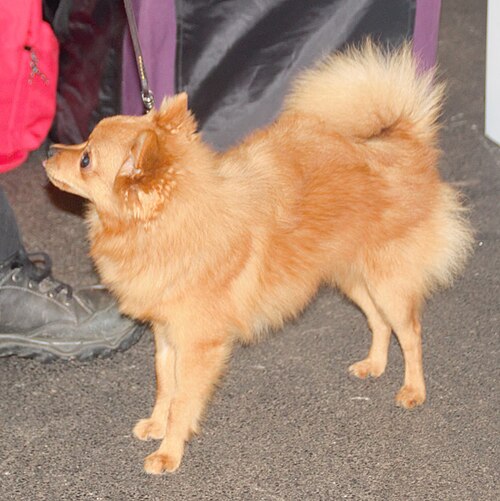
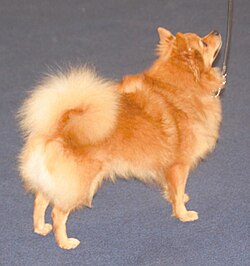
Volpino Italiano
🧠 Temperament & character
The Volpino Italiano is lively, playful and remarkably affectionate, an attentive, vocal little guardian with great self-confidence. He bonds closely with his family and wants to be part of everything, which makes him a warm, loyal companion. Towards strangers he is at first watchful and reliably gives the alarm, which is why he tends to bark if not trained out of it. With children and fellow dogs he usually gets along well, provided he was socialised early and is treated respectfully. He is intelligent and eager to learn, but also spirited and needs clear, loving rules.
📜 Origin & history
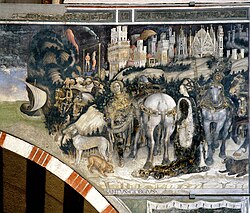
The Volpino Italiano belongs to the old European spitz family and has been known for centuries in Italy as a small farm and guard dog that attentively watched house and yard and raised the alarm with bright barking. He was popular both with simple farmers and in grand households and at princely courts; legend has it that even Michelangelo owned a Volpino. With the modernisation of country life his numbers declined sharply, and in the mid-20th century the breed was on the brink of extinction. Thanks to dedicated Italian breeders it was rebuilt from the 1980s onwards and is today a rare but lovable piece of Italian cultural heritage.
✂️ Grooming, care & training
The Volpino Italiano's long, standing-off white coat looks demanding but is surprisingly uncomplicated and above all needs regular brushing several times a week to keep it airy and free of knots. He sheds moderately and needs no elaborate trimming, only occasional baths. As a lively little dog he needs daily walks, play and mental occupation, but is not an extreme athlete and adapts well. He is intelligent and eager to learn, which is why positive, consistent training brings quick results; it is especially important to guide his barking behaviour in a friendly way from an early age.
🩺 Health
The Volpino Italiano is in principle a robust and remarkably long-lived breed that often reaches 14 to 16 years and older. Known health issues include patellar luxation (dislocation of the kneecap) and primary lens luxation (PLL), a hereditary eye condition for which a genetic test is available. Responsible breeders have knees and eyes examined and test for PLL to ensure healthy puppies. As with many small breeds, regular dental care is also important to prevent tartar and early tooth loss.
🏡 Who is this breed right for?
The Volpino Italiano suits people and families who seek an affectionate, lively little companion and value plenty of closeness. Thanks to his size he is well suited to apartment and city life, provided his barking behaviour is guided into calm channels early and he is given enough occupation. For beginners he is well suited, since he is eager to learn and easy-going, whereby a little consistency helps against the typical spitz stubbornness. In Switzerland he is still a rarity and makes a loyal family and companion dog that enjoys hiking, playing and being right in the middle of family life.