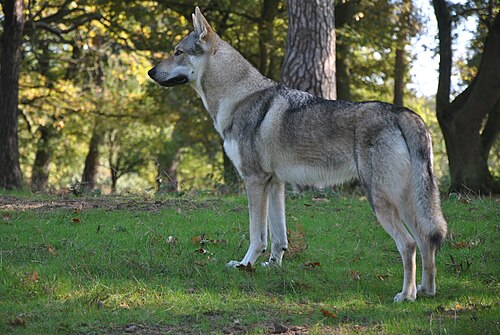
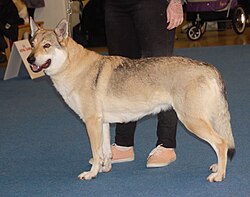
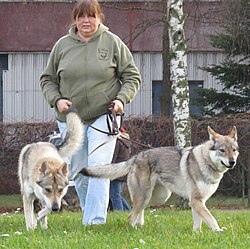
Czechoslovakian Wolfdog
🧠 Temperament & character
The Czechoslovakian Wolfdog is spirited, courageous and incredibly enduring. He is very people-oriented and clings closely to his pack, yet remains independent and likes to make his own decisions. Towards strangers he is often reserved and reacts sensitively to moods. His pronounced drive to move and to hunt, along with his need for company, make him a dog that does not like to be left alone. With the family's children he usually gets along well, but he needs clear structures and plenty of leadership experience.
📜 Origin & history
The breed emerged from 1955 onwards in the former Czechoslovakia out of a military experiment: German Shepherds were crossed with four Carpathian wolves to create a hardy border-patrol dog with the stamina of the wolf. From this breeding programme an independent type developed, which was officially recognised as a national breed in 1982. Today the Czechoslovakian Wolfdog is above all an endurance, tracking and sport dog for active people.
✂️ Grooming, care & training
The dense double coat is easy to care for and needs more intensive brushing only during the twice-yearly moult. Considerably more demanding is keeping him occupied: this dog needs hours of exercise, mental challenges and, ideally, a dog sport such as pulling sports, mantrailing or long hikes. In training he reacts sensitively and cannot be won over by pressure, only by motivation, fairness and variety. Anyone who under-challenges him risks frustration, barking and unwanted behaviour.
🩺 Health
With good breeding the Czechoslovakian Wolfdog reaches around twelve to fourteen years, but he carries a few hereditary risks. These include hip dysplasia, degenerative myelopathy (DM) and pituitary dwarfism. Responsible breeders have their animals' hips X-rayed and carry out DNA tests for DM and dwarfism in order to avoid affected matings. Anyone wanting a puppy should buy exclusively from breeders who openly document these examinations.
🏡 Who is this breed right for?
The Czechoslovakian Wolfdog is not a dog for beginners, for flats or for people with little time. He is ideal for very active, dog-experienced owners who are out and about a great deal and can give him both physical and mental outlets. In Switzerland he is a recognised breed, but some cantons list wolf-like dogs on breed lists or require permits - this should be clarified before acquiring one. For the right people he is a unique, deeply bonded partner.