
Tibetan Spaniel
🧠 Temperament & character
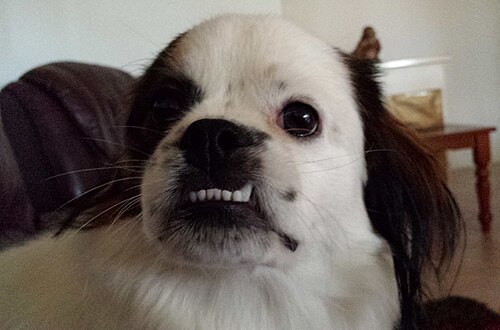
The Tibetan Spaniel is attentive, intelligent and self-confident, yet more independent and less submissive than many other small dogs. Towards his family he is loyal and affectionate, while he meets strangers rather reservedly and watchfully. He is considered very alert and announces reliably, without tending to become a constant yapper. His cat-like, independent nature makes him charming, but calls for an understanding of his sense of freedom.
📜 Origin & history
The Tibetan Spaniel was kept for centuries in the Buddhist monasteries of Tibet, where he served as a small watchdog and companion to the monks. He liked to sit on the monastery walls and sounded the alarm when strangers or larger guard dogs approached. As a treasured gift he reached courts and monasteries throughout Asia and was never sold, only given away. It was not until the end of the 19th century that the first Tibetan Spaniels came to Europe, where the breed gradually became established.
✂️ Grooming, care & training
The silky, medium-length coat of the Tibetan Spaniel is surprisingly easy to care for and needs only regular brushing, somewhat more during the moult. His need for exercise is moderate; daily walks and exploratory outings make him happy, and he also appreciates mental occupation. He is intelligent but learns independently and with a certain stubbornness, which is why motivating, varied training with patience is required. Because of his pronounced urge for freedom and his tendency to act on his own, recall should be practised early and patiently.
🩺 Health
The Tibetan Spaniel is regarded as a robust and mostly healthy breed with a life expectancy of about twelve to fifteen years. Breed-typical risks include PRA (progressive retinal atrophy), patellar luxation and occasionally a portosystemic shunt. Responsible breeders have the eyes examined regularly, check the knee joints and use available genetic tests. Because the nose is only slightly shortened, the Tibetan Spaniel generally has no pronounced breathing problems like strongly brachycephalic breeds.
🏡 Who is this breed right for?
The Tibetan Spaniel suits families, couples and singles well who value an affectionate but independent companion with a watchdog instinct. He feels just as comfortable in an apartment as in a house with a garden, as long as he is allowed to take a close part in family life. He is also suitable for first-time owners, provided they take his sense of freedom and his slight stubbornness with humour. In Switzerland he is a pleasant, alert companion that needs little exercise but plenty of closeness and mental stimulation.