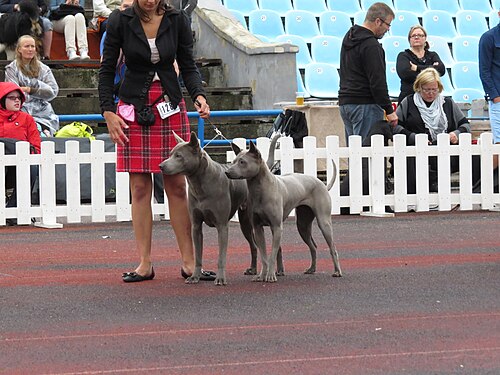
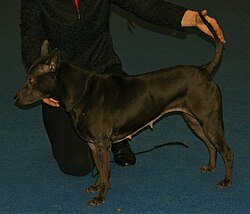
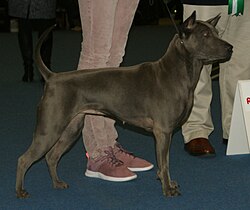
Thai Ridgeback
🧠 Temperament & character
The Thai Ridgeback is independent, intelligent and active, devotedly loyal to its family and reserved to mistrustful towards strangers. It has a pronounced guarding and hunting drive and is territorial by nature, which makes early, thorough socialisation indispensable. As an independently thinking dog it does not submit blindly, but wants to be led with conviction and respect, which is why it is not a dog for beginners. With familiar people and children it is affectionate and protective, but towards strange dogs and small prey animals it can be difficult. It is watchful, brave and self-assured and needs a confident owner who gives it structure and security.
📜 Origin & history
The Thai Ridgeback comes from the east of Thailand, where it was kept as a versatile farm, guard and hunting dog and, thanks to its geographical isolation, remained very primitive for a long time. It helped guard house and farm, hunted small game and served people as a loyal companion, sometimes also accompanying carts. Its striking ridge, which it shares with the Rhodesian Ridgeback and the Phu Quoc dog, is an old, genetically anchored feature. Only in the 20th century did the breed become known internationally; outside Thailand it has remained rare to this day.
✂️ Grooming, care & training
The Thai Ridgeback's short, smooth coat is extremely easy to care for and needs only occasional brushing and rarely a bath. All the more demanding is its mind: as an intelligent, independent dog it needs plenty of mental stimulation, clear rules and varied, motivating training that respects its independence. It needs daily exercise in the form of walks, play and safe opportunities to run, though its hunting drive makes off-lead freedom a challenge. Early socialisation and habituation to many people, animals and situations are essential; because of its short coat and its adaptation to heat, it needs a coat in cold weather.
🩺 Health
The Thai Ridgeback is generally regarded as a healthy, robust breed with a life expectancy of about 12 to 13 years. The most important breed-typical problem is the dermoid sinus, a congenital skin malformation closely linked to the ridge, which must be treated surgically; responsible breeders palpate the puppies carefully and select the breeding animals deliberately. Hip dysplasia can also occur, which is why hip x-rays of the parent animals are advisable. Anyone who wants a Thai Ridgeback should choose an experienced breeder who speaks openly about the dermoid sinus and the health of their lines.
🏡 Who is this breed right for?
The Thai Ridgeback suits experienced, confident people who can lead a primitive, watchful dog with a strong will of its own and who enjoy intensive relationship work. It is not suitable for absolute beginners, insecure owners or as a pure family cuddle dog. A house with a securely fenced garden suits it better than a cramped apartment, though with consistent guidance and activity it is adaptable. In Switzerland it is rare and suited to active, dog-experienced owners who socialise early, train consistently but fairly and channel its guarding tendencies responsibly.