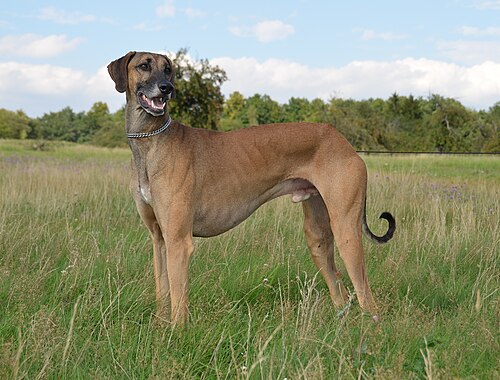
Sloughi
🧠 Temperament & character
The Sloughi is dignified, reserved and usually bonds especially closely to a single person. It meets strangers with reserve bordering on distrust, which is why early, careful socialisation is important. At home it is calm, sensitive and downright affectionate, while outdoors it shows a pronounced hunting instinct and impressive speed. It is proud and sensitive – it only forgives harshness or injustice with difficulty.
📜 Origin & history
The Sloughi looks back on centuries of history in North Africa, where Bedouins and Berber peoples kept it as a precious hunting companion. With it, hare, gazelle, jackal and even wild boar were hunted in the Maghreb, frequently in cooperation with the falcon. Unlike many dogs, it was not considered unclean but a worthy companion that lived closely with the family. In Europe the Sloughi remains a rare breed to this day, kept above all by enthusiasts and in coursing.
✂️ Grooming, care & training
The Sloughi's short, fine coat is exceptionally easy to care for and needs little more than occasional brushing; on the other hand, the slender dog with little body fat is sensitive to cold and wet. As a true sighthound it needs extensive daily exercise and the opportunity to run at full speed, ideally on secure terrain. It is intelligent and trainable, but independent and proud, which is why it needs a calm, fair and patient upbringing. Because of the strong hunting instinct, a reliable recall remains a permanent challenge.
🩺 Health
The Sloughi is considered a very robust and healthy breed with a life expectancy of around 12 to 14 years. Like all sighthounds, it reacts sensitively to anaesthetics – an important note for any veterinary treatment. The hereditary eye disease PRA (progressive retinal atrophy) occurs in the breed, for which a DNA test is available. Responsible breeders have their breeding animals tested accordingly to avoid this blindness.
🏡 Who is this breed right for?
The Sloughi is a dog for experienced, calm people who understand its sensitive, reserved manner and can offer it plenty of exercise. A house with a well-secured garden suits it better than a cramped city apartment, for it needs space and places to retreat. With familiar, respectful children it gets along well, but hectic or loud environments do not suit it. As a first dog it is only suitable to a limited extent – but anyone who gives it patience, structure and exercise gains a loyal and dignified companion.