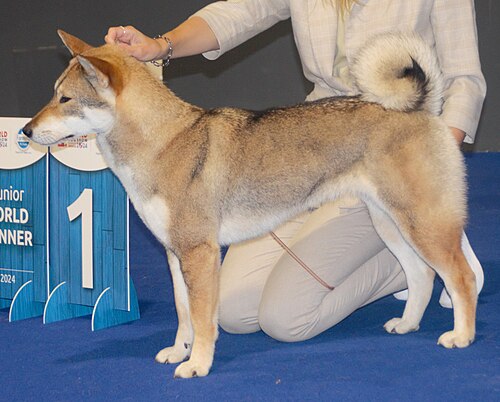
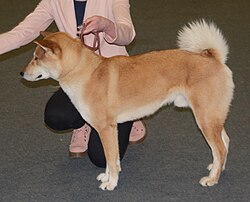
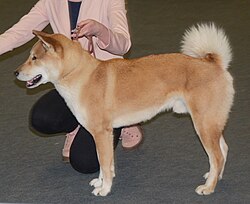
Shikoku
🧠 Temperament & character
The Shikoku is energetic, watchful, loyal and of primitive character, with a pronounced hunting drive deeply rooted within him. Towards his family he is affectionate and devoted, while with strangers he remains watchful and reserved, without being aggressive without reason. He is intelligent and capable of learning, but also independent and proud, which is why he appreciates a respectful, confident approach. With early socialisation he can live well with children and suitable other dogs, but towards small prey animals his instinct remains strong. On the whole he is an honest, enduring dog with a natural dignity.
📜 Origin & history
The Shikoku comes from the rugged mountain regions of the Japanese island of Shikoku, where the Matagi, traditional hunters, bred him over generations for hunting wild boar and other large game. The remote location ensured that the breed largely preserved its primitiveness and its close wolf-like features. Historically several local lines were distinguished, named after the valleys of their origin. In 1937 the Shikoku was declared a 'natural monument' in Japan; to this day he is rare and known to only a few outside Japan.
✂️ Grooming, care & training
The Shikoku's medium-length, dense double coat is uncomplicated and usually needs only weekly brushing, and much more often during the twice-yearly moult. As an active hunting dog he needs plenty of exercise, preferably in nature, as well as mental challenges such as scent work or varied training. He is intelligent and learns quickly, but likes to have a say in decisions, which is why fair, consistent and respectful leadership is important. Because of his strong hunting drive a securely fenced area is advisable, and off-lead time should only take place with a good recall or in safe places.
🩺 Health
The Shikoku is regarded as a robust, primitive natural breed with hardly any breed-typical diseases and a life expectancy of around 11 to 14 years. Because he was never bred for extreme physical features, he is by nature usually healthy and resilient. As with all breeds, breeders should nonetheless pay attention to healthy hips, clear eyes and a stable temperament and, because of the very small population, be mindful of genetic diversity. Anyone looking for a Shikoku should choose a reputable breeder with experience of this rare Japanese breed.
🏡 Who is this breed right for?
The Shikoku suits active, dog-experienced people who value a primitive, independent dog with a strong hunting drive and can offer him consistent, fair leadership. He is less suited to absolute beginners, since he thinks for himself and needs a lot of activity. A house with a securely fenced garden in a rural or nature-oriented setting suits him better than a purely urban apartment, even though he is adaptable given enough stimulation. In Switzerland he is a genuine rarity and is suited to owners who like to hike, spend time in nature and appreciate the special traits of a primitive hunting-spitz breed.