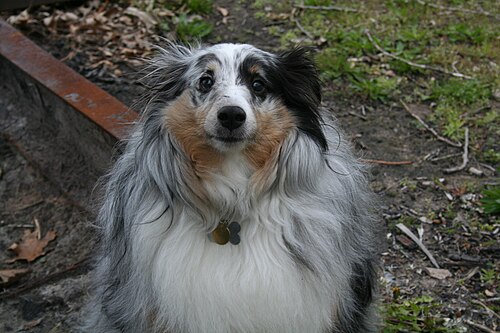
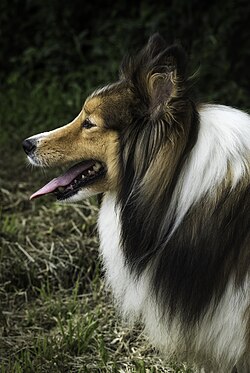
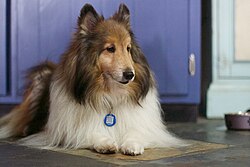
Shetland Sheepdog
🧠 Temperament & character
Attentive, gentle and very willing to learn, the Shetland Sheepdog is an affectionate and sensitive dog that is closely bonded to his family. He is fond of children, sociable and exceptionally cooperative, but often shows himself reserved towards strangers and tends to bark. As a sensitive dog he reacts strongly to moods and needs calm, friendly handling. His cleverness and his will to please make him one of the most eager-to-learn and easiest-to-handle of the small herding dogs.
📜 Origin & history
The Shetland Sheepdog comes from the rugged, barren Shetland Islands in the north of Scotland, where it herded the small, hardy flocks of sheep and ponies and guarded the farmstead. On the barren islands – as with the Shetland pony – a small, weather-hardy variety of herding dog developed. To refine the type, the Collie among others was later crossed in, to which the Sheltie owes its elegant appearance. Today the Shetland Sheepdog is above all a popular family, companion and sporting dog.
✂️ Grooming, care & training
The Shetland Sheepdog's long, dense double coat with its lush mane needs regular care: thorough brushing once or twice a week prevents matting, and during the moult daily brushing is necessary. As an active, clever herding dog he needs daily exercise and plenty of mental occupation to be content. Thanks to his intelligence and eagerness to learn he shines in dog sports such as agility, obedience and trick dogging. His sensitive nature and his fondness for barking call for a calm, motivating upbringing from the start.
🩺 Health
Several hereditary diseases are known in the Shetland Sheepdog: Collie Eye Anomaly (CEA) and progressive retinal atrophy (PRA) affect the eyes, while the MDR1 gene defect leads to a dangerous hypersensitivity to certain medications. DNA tests are available for all three, with which responsible breeders manage the risk; the MDR1 status should be known to every owner and vet. In addition, hip dysplasia and thyroid problems occasionally occur. Overall, with good breeding the Sheltie is a robust dog with a life expectancy of around twelve to fifteen years.
🏡 Who is this breed right for?
The Shetland Sheepdog is an excellent match for families and people who want an affectionate, clever and easily trainable dog and can offer it enough occupation. Thanks to its size it is well suited to an apartment, provided its need for exercise and its fondness for barking are addressed early on. Thanks to its gentleness and eagerness to learn it is also well suited to sensitive beginners and as a family dog with children. In Switzerland the weatherproof, sporty Sheltie is a popular companion for hikes, dog sports and an active family life.