Scottish Terrier
🧠 Temperament & character
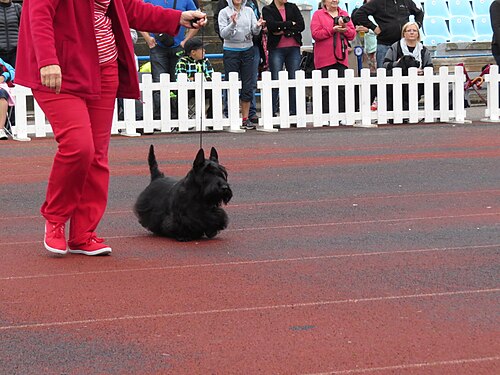
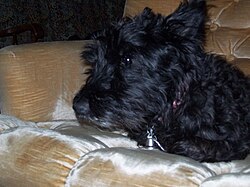
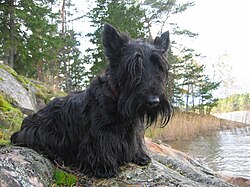
The Scottish Terrier is self-assured, independent and brave – a dog with a pronounced will of its own. To its family it is devotedly loyal and affectionate, but towards strangers it remains reserved and watchful. It is not a submissive cuddle dog, but a dignified partner that demands respect and wants to be led with consistency rather than harshness. Its strong hunting and prey drive as well as its stubbornness are as much a part of the Scottie as its loyalty and its dry humour.
📜 Origin & history
The Scottish Terrier is one of the old Highland terriers and was bred in the Scottish Highlands to hunt foxes, badgers and vermin among the rocks and in their dens. Its short, powerful legs and low-set build made it ideal for work underground. It is said to owe the nickname 'Diehard' to the tough terriers of the Earl of Dumbarton. In the 20th century the Scottie became world-famous – among other things as a companion of US President Roosevelt and as a playing piece in Monopoly.
✂️ Grooming, care & training
The Scottish Terrier's double coat – hard topcoat over soft undercoat – needs regular brushing and, to preserve texture and colour, expert stripping several times a year; the characteristic beard needs care after eating. In terms of exercise it is not an extreme athlete, but needs brisk daily walks and mental stimulation. Because of its stubbornness and its hunting drive, training requires patience, creativity and consistency – with the headstrong Scottie, force achieves little.
🩺 Health
The Scottish Terrier has a life expectancy of around 11 to 13 years and suffers, in a breed-typical way, from an increased cancer rate – bladder cancer in particular occurs more frequently in the Scottie than in other breeds. Also known are 'Scottie cramp', a benign, temporary movement disorder triggered by excitement, as well as the von Willebrand bleeding disorder and the bone overgrowth CMO (craniomandibular osteopathy) in young dogs. Responsible breeders test for von Willebrand and pay attention to healthy breeding lines.
🏡 Who is this breed right for?
The Scottish Terrier suits people who appreciate an independent, dignified character dog and approach it with calm consistency. Thanks to its manageable size and its moderate exercise needs it is well suited both to an apartment and to a house with a garden. For first-time owners it is only suitable to a limited extent because of its stubbornness; it gets on well with respectful, older children, but does not appreciate intrusive handling. In Switzerland it is a pleasant, unobtrusive city and family companion with personality.