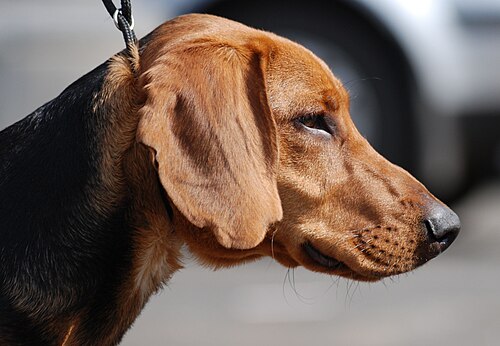
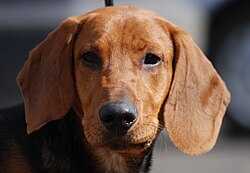
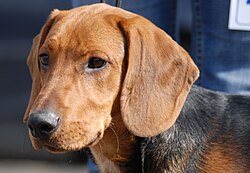
Schillerstövare
🧠 Temperament & character
The Schillerstövare is fast, eager and tough, while also friendly, even-tempered and people-oriented. As a solitary hunter it works independently but likes to keep contact with its handler. At home it is calm and affectionate, a pleasant companion with steady nerves. Its pronounced drive to hunt and to move, however, clearly determines its nature and needs to be satisfied.
📜 Origin & history
The Schillerstövare was developed in Sweden in the late 19th century and is named after the farmer and breeder Per Schiller, whose dogs caused a stir at an early dog show. From native Swedish scent hounds, combined with German and Swiss hounds, a fast hunter for the Nordic climate emerged. The breed was officially recognised in 1907; the FCI lists it under No. 131. In Sweden it is one of the most popular stövare, but outside Scandinavia it is rare.
✂️ Grooming, care & training
The Schillerstövare's short, hard coat is weatherproof and extremely easy to care for; occasional brushing is enough. As a fast, enduring hunter it needs a great deal of exercise and extensive nose work in order to be physically and mentally occupied. It is intelligent and willing to work, but follows a trail independently, which is why solid recall training and secure terrain are important. Without a real task it quickly gets bored and becomes unbalanced.
🩺 Health
The Schillerstövare is considered a robust, healthy breed with a pleasingly high life expectancy of about twelve to fourteen years. Serious breed-typical hereditary diseases are rare, which is attributable to solid, performance-oriented breeding. As with all scent hounds, the ears should be checked regularly, and after hunting outings one should watch for ticks and injuries. Responsible Swedish breeders place great value on hunting ability and health.
🏡 Who is this breed right for?
The Schillerstövare is first and foremost a hunting dog and is best suited to active, sporty people who can offer it plenty of exercise and meaningful tasks. For a pure city apartment without occupation it is unsuitable; ideal are a rural setting and plenty of time outdoors. Thanks to its friendly nature it is a pleasant companion, but it demands owners who take its drive to hunt and to move seriously. In Switzerland it is rare and found above all among people who are active in hunting.