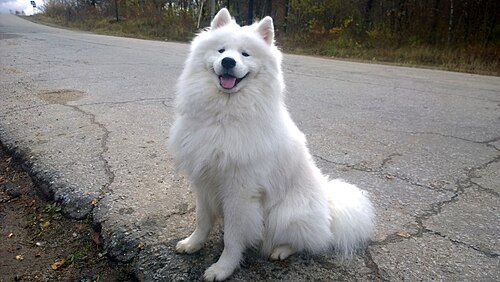
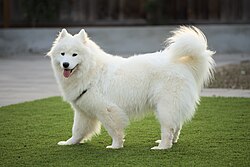
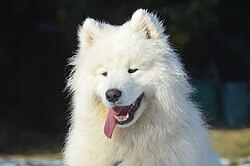
Samoyed
🧠 Temperament & character
The Samoyed is friendly, gentle, sociable and lively, attentive but without any aggression, and therefore a miserable guard dog but a wonderful companion. He is exceptionally people-oriented and copes badly with being kept alone or in a kennel; he wants to be right in the middle of family life. With children and other dogs he generally gets on superbly, which makes him a great family dog. His Siberian heritage shows in a wilful, playful streak and in a love of barking when he is bored. Whoever gives him plenty of closeness, occupation and affection is rewarded with a cheerful, loyal friend.
📜 Origin & history
The Samoyed owes his name to the Samoyedic peoples of northern Siberia, who kept him as a reindeer herder, draught and hunting dog and as a warming sleeping companion in their tents. This close partnership with humans over centuries shaped his friendly, trusting nature. In the late 19th and early 20th centuries, polar explorers brought the robust white dogs to Europe, where they took part, among other things, in expeditions to the Arctic and Antarctic. From these imported animals the present breed standard developed, and the Samoyed became popular worldwide as a beautiful, family-friendly companion dog.
✂️ Grooming, care & training
The lavish, white double coat of the Samoyed is his hallmark and needs regular care: brushing several times a week, daily during the moult, to prevent matting and remove the loose undercoat. He sheds heavily, especially twice a year, so hair around the house is part of the deal. As a former working dog he needs plenty of exercise, ideally sled-pulling sport, hiking or extended walks, as well as mental tasks, because an under-challenged Samoyed tends towards barking and mischief. He is intelligent but self-willed, so friendly, consistent and varied training pays off; caution is advised in the heat, even though his coat insulates surprisingly well.
🩺 Health
The Samoyed is usually a healthy, robust dog with a life expectancy of about 12 to 14 years, but the breed carries some hereditary risks to be taken seriously. Best known is Samoyed hereditary glomerulopathy (SHG), an inherited kidney disease for which a genetic test exists; responsible breeders test for it. In addition, hip dysplasia, the eye disease PRA and diabetes occur, which is why hip X-rays and regular eye examinations of the parent animals are important. Anyone who wants a Samoyed should specifically look for a breeder who carries out these examinations and speaks openly about the health of their lines.
🏡 Who is this breed right for?
The Samoyed suits sociable, active families and people who spend a lot of time with their dog and want to involve him in daily life. As a people-oriented breed he is not suited to long periods alone or being kept in a garden or kennel. He is possible in an apartment with enough exercise, but the heavy shedding and his urge to move should be considered; a cooler climate suits him. In Switzerland he is a great companion for hiking- and snow-loving owners who do not shy away from the coat care and the costs of serious health-focused breeding and who give him plenty of shared time.