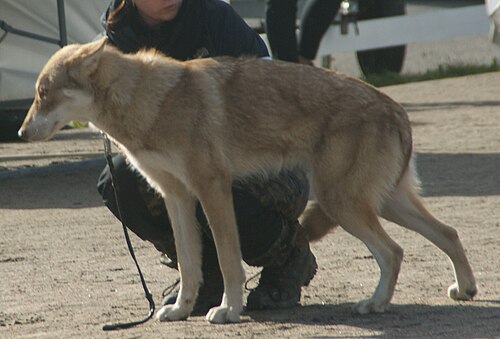
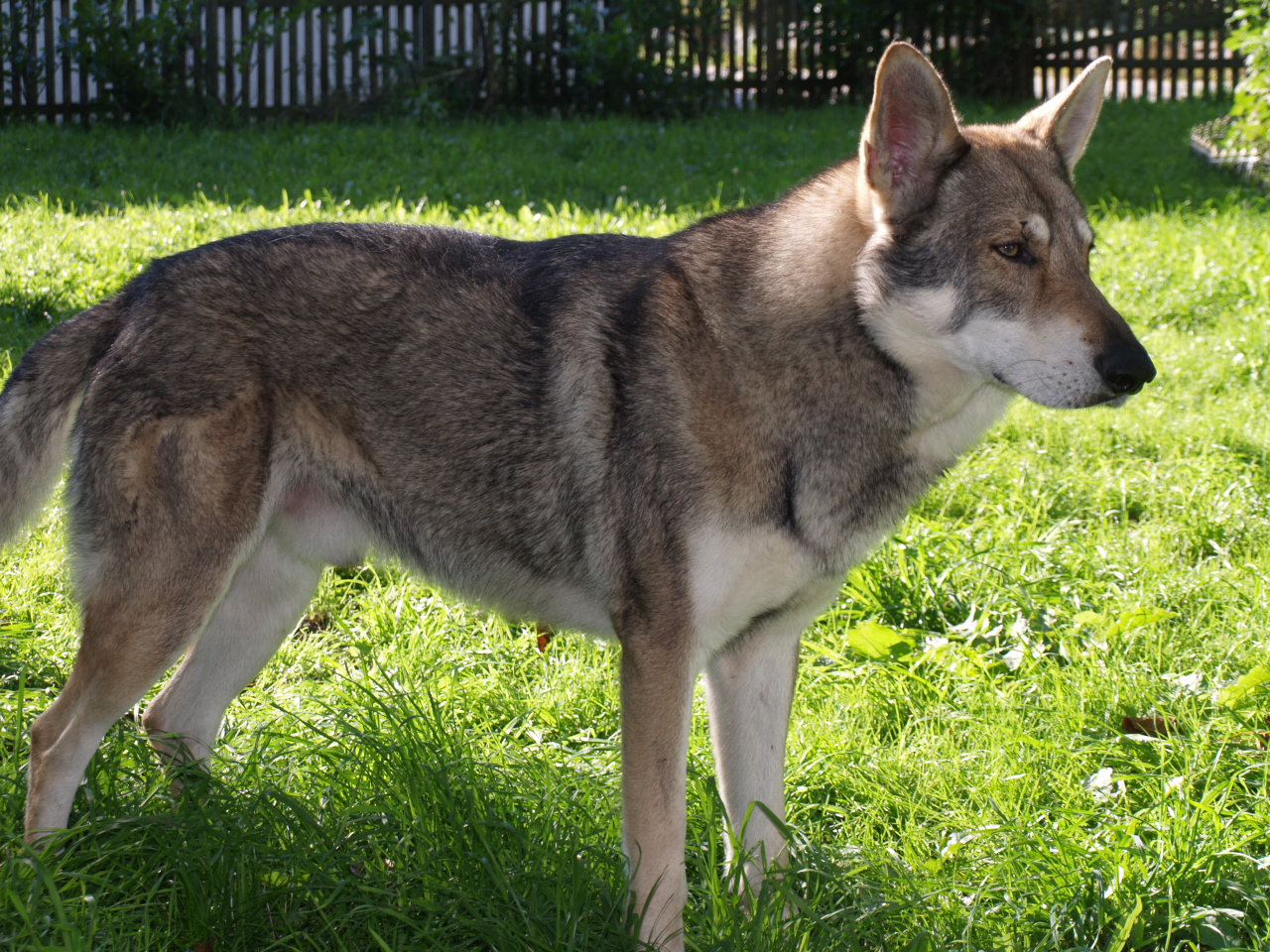
Saarloos Wolfdog
🧠 Temperament & character
Reserved, watchful and very people-oriented, the Saarloos Wolfdog is a sensitive dog with a pronounced need for a pack, one who needs the closeness of his people and of other dogs. Towards strangers and new situations he is by nature cautious and reserved, at times shy. He is not an eager barking watchdog and is rarely aggressive; rather, he tends to avoid conflict. His wolf-like, independent nature cannot be called up on command as with a classic working dog, which is why he needs a great deal of understanding, patience and gentle socialisation.
📜 Origin & history
The Saarloos Wolfdog goes back to the Dutchman Leendert Saarloos, who in the 1930s crossed a German Shepherd Dog with a European she-wolf. His goal was a more robust, more primal working dog; the result, however, was a very wolf-like, reserved dog that was hardly suited to classic service work. In 1975 the breed was recognised by the Dutch Kennel Club and named after its creator. Today the Saarloos Wolfdog is bred as a family and companion dog for experienced owners.
✂️ Grooming, care & training
The Saarloos Wolfdog's dense coat is weatherproof and low-maintenance; regular brushing suffices, though during the twice-yearly moult he sheds plenty of undercoat. As a movement-loving dog he needs plenty of daily exercise out in nature, ideally in the company of other dogs, for he is very much a pack animal. He should never be left alone for long and feels most at ease with close family contact. In training, sensitive, patient and extremely consistent leadership as well as very early, thorough socialisation are decisive.
🩺 Health
Several hereditary burdens are known in the Saarloos Wolfdog: hip dysplasia, the progressive nerve disease degenerative myelopathy (DM), and hereditary pituitary dwarfism. DNA tests exist for DM and dwarfism, with which responsible breeders avoid affected matings. Since the breed arose from a narrow breeding base, careful breeding selection and health testing are especially important. Life expectancy is around ten to twelve years.
🏡 Who is this breed right for?
The Saarloos Wolfdog is emphatically not a dog for beginners and places high demands on its owners' experience, time and understanding. He needs plenty of space, ideally a house with a large, absolutely escape-proof garden, and preferably the company of other dogs. He is unsuited to flats, city life or people who expect an easily handled, obedient dog. In Switzerland you should be sure to check the cantonal regulations before acquiring one, as wolf-like breeds are subject to a permit requirement in some places.